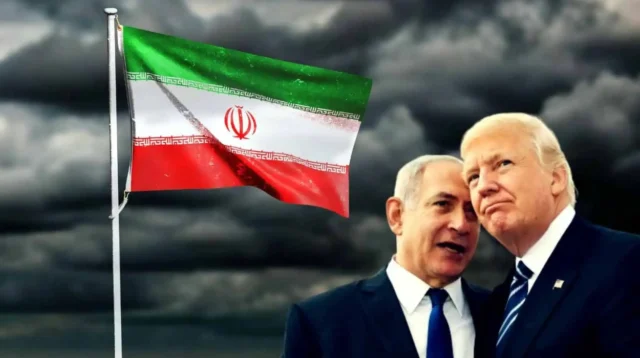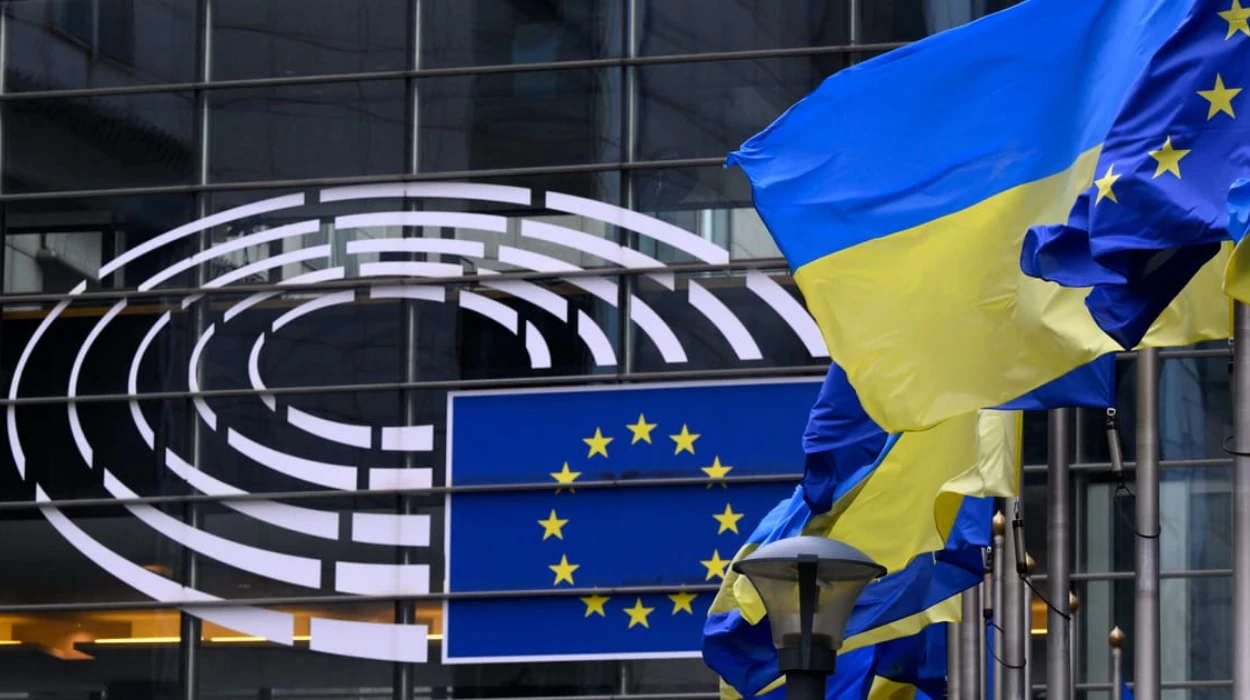
The 2025 Trump peace framework for Ukraine introduced a financial model that has drawn significant resistance across Europe. The plan proposes reallocating a large share of the $300 billion in Russian central bank reserves immobilized in Western institutions, with a substantial portion held inside the European Union. It assigns $100 billion to a US-managed reconstruction fund for Ukraine and reserves another $100 billion in European contributions, even though Brussels has already shouldered most of Kyiv’s non-military financial burden since 2022.
A particularly controversial feature involves transferring control of roughly $200 billion in frozen assets into a joint US-Russia investment vehicle. The idea is presented as a future-oriented mechanism for cooperation, but European policymakers argue it effectively diverts European-held funds into a structure Washington would dominate. Since the US controls only a fraction of the frozen reserves about 1.5% the EU fears the arrangement shifts financial power away from Europe at a pivotal moment for Ukraine’s stability.
European officials cite this as a critical sovereignty issue, with diplomats cautioning privately that the proposal appears to offer Washington a disproportionate advantage while reducing Europe’s capacity to direct Ukraine-focused aid. The sense of urgency has escalated since late 2025, with leaders warning that if the plan gains traction, European options for safeguarding the frozen reserves could narrow dramatically.
Europe’s financial exposure and Ukraine’s precarious needs
Ukraine’s financial needs remain acute, with updated IMF projections in 2025 placing Kyiv’s non-military deficit at around $65 billion for 2026–27. Including defense expenditures, the gap could reach $155 billion, exacerbating reliance on external support. EU capitals increasingly view the frozen reserves as the most realistic long-term funding source for Ukraine’s reconstruction and macroeconomic stability.
Threats to access under the proposed framework
If the US plan progresses without amendments, Ukraine may see reduced access to these reserves. The risk is amplified by the possibility of stalled or inconclusive ceasefire negotiations, as Moscow has maintained maximalist demands and continues to reject territorial compromises. Should the political process fail, Ukraine could be left without the security of guaranteed financial transfers from the frozen assets, pushing Kyiv toward higher-interest borrowing and emergency IMF support.
Europe’s concerns about strategic imbalance
European economic advisers frequently describe the US financial model as granting Washington a “signing bonus,” since the US would gain influence over a pool of resources that largely originates from European institutions. For Europe, which has already absorbed the higher energy costs, refugee support, and defense spending triggered by the war, the framework risks both fiscal imbalance and reduced political leverage.
Transatlantic tensions over asset control
By late 2025, EU states, once cautious about outright seizure of Russian reserves particularly Germany and France, have moved closer to supporting rapid action. Their objective is to assert European ownership before the US framework redefines the distribution of control. This shift reflects a growing sentiment that European strategic autonomy is at stake.
American assumptions and European backlash
US negotiators emphasize that the structure aims to ensure long-term economic stability for Ukraine while creating incentives for Russia to agree to a negotiated settlement. However, European policymakers argue that tying $200 billion of frozen assets to a joint investment vehicle with Russia risks normalizing economic engagement before accountability mechanisms are achieved. They also warn that the plan may unintentionally weaken sanctions regimes that have been central to Western strategy since 2022.
Shifting political calculations
President Trump’s political incentives, particularly his repeated public claims that only he can end the war quickly shape perceptions of urgency in Washington. European leaders, meanwhile, prioritize institutional processes and financial transparency, arguing that rapid adoption of the plan could marginalize multilateral decision-making. These differing approaches highlight structural tensions in transatlantic crisis management.
Geopolitical stakes surrounding the frozen reserves
The debate over frozen reserves intersects with diplomatic demands from both Kyiv and Moscow. Russia continues to insist on NATO security guarantees and recognition of annexed territories, while Ukraine seeks a framework that maintains sovereignty and ensures sustainable financing. Because the reserves constitute one of the few major sources of potential leverage, any premature reallocation could reshape negotiating power in ways detrimental to Kyiv.
Risk of legitimizing premature cooperation
European strategists express concern that the proposed US-Russia investment vehicle may signal readiness for economic normalization with Moscow despite ongoing violations of international law. For policymakers in Warsaw, Vilnius, and other frontline states, integrating Russia into a shared financial mechanism so soon after large-scale conflict could undermine deterrence and weaken collective defense narratives.
The IMF dimension
Ukraine’s upcoming negotiations for a renewed IMF facility illustrate the stakes. The Fund is expected to tie new financing assurances to credible long-term revenue streams. If Europe cannot demonstrate control over the frozen reserves, Ukraine could face delays in receiving IMF disbursements, widening uncertainty around donor coordination for 2026. The IMF’s board has already cautioned that fragmented financing structures may reduce investor confidence and complicate Ukraine’s macroeconomic planning.
Europe’s strategic autonomy and the future of the frozen assets
The broader debate highlights the evolving question of Europe’s geopolitical autonomy. Since the war began, the EU has increasingly sought instruments that reduce dependence on external decision-making, from defense procurement to energy diversification. Financial sovereignty over the frozen Russian reserves now joins this list, as Brussels weighs the long-term implications of allowing Washington to design and control the majority of asset deployment.
Some European legal advisers argue that seizing the assets outright, an approach previously viewed as extreme may now be the most straightforward path to retaining control. Others caution that full seizure risks legal challenge and retaliatory measures, yet agree that the assets cannot be left in a framework where Europe lacks primary authority. With several EU member states preparing national legislation enabling the repurposing of frozen reserves, Europe is accelerating efforts to establish a unified stance ahead of any renewed US pressure.
As the diplomatic and financial contest over the $200 billion frozen assets intensifies, the choices Europe makes in the coming months will shape not only Ukraine’s reconstruction but also the distribution of power within the Western alliance. Whether Europe solidifies control of the reserves or accepts a US-designed structure may determine how effectively Kyiv can rebuild and how the balance between Washington and Brussels evolves in an international order still unsettled by war and shifting geopolitical priorities.