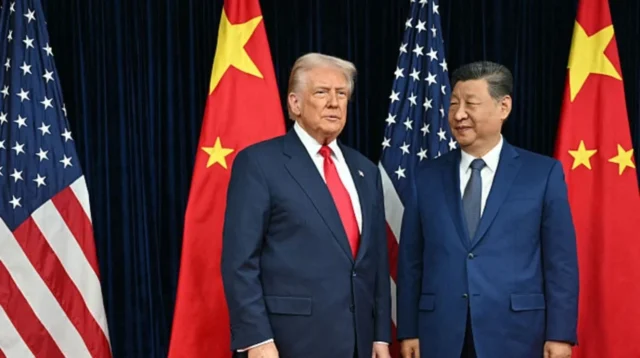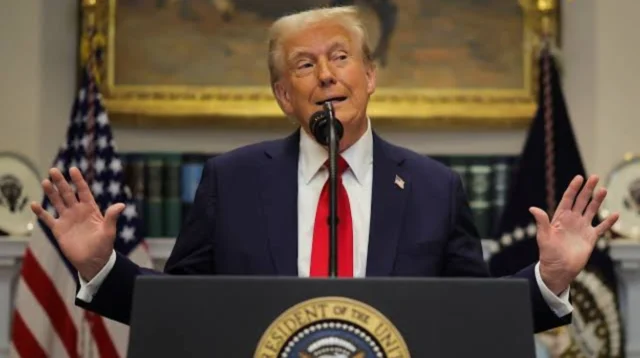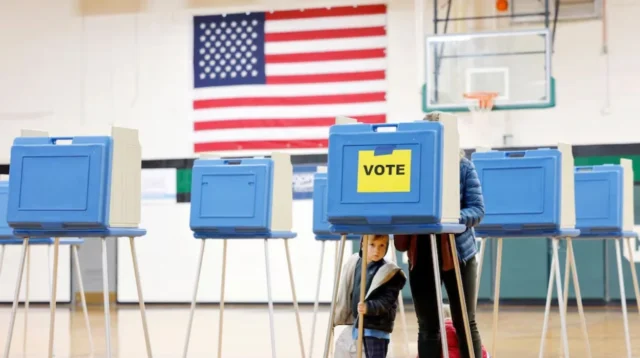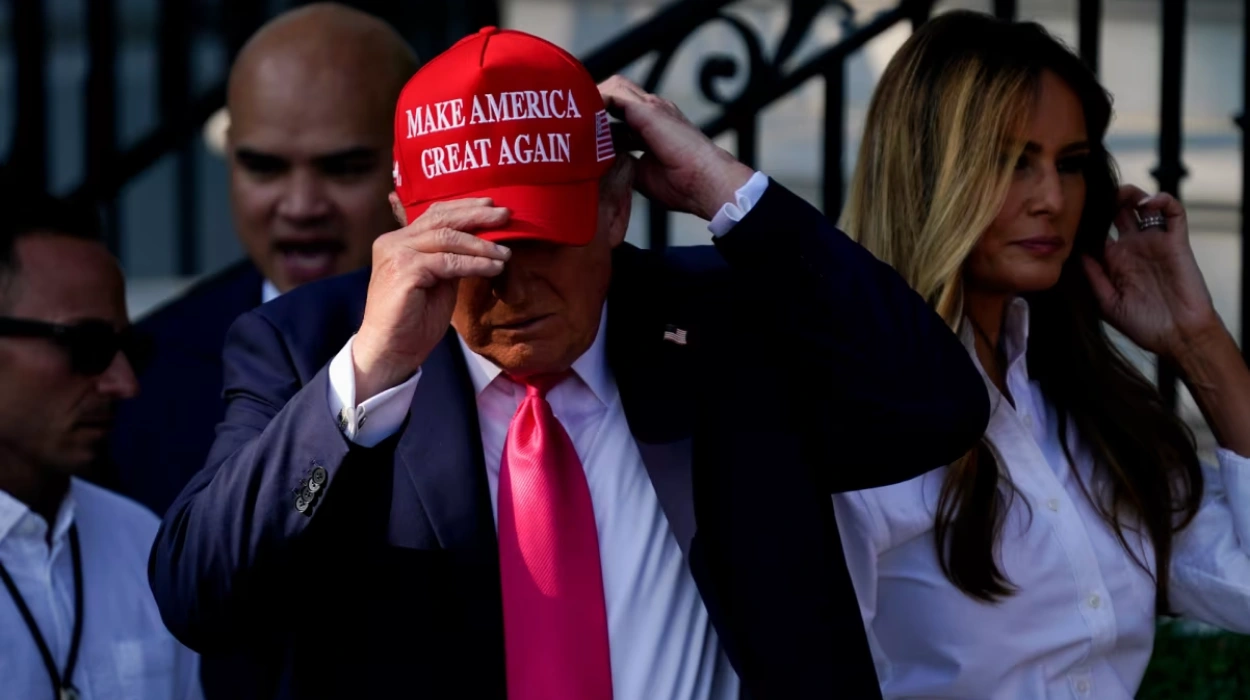
The majority of American presidents have publicly claimed that they do not intervene in the domestic politics and elections of other countries, although there are countless instances that prove otherwise. Donald Trump, however, has abandoned this diplomatic tradition.
A leader who rebuilt his party along radically personalized lines to build a movement based on personal loyalty or political leverage, Trump is not constrained by national borders. Unlike his predecessors, he explicitly favors foreign politicians, influences judicial systems, or seeks to affect electoral outcomes around the world in ways that reflect his populist-nationalist ideology.
Why does Trump see himself as a global political power broker?
In his second term, Trump has come to assume the role not only as the President of the United States but as the self-appointed leader of an international nationalist movement. These interventions have come across various continents, ranging from Latin America, Africa, Asia, to Europe, aimed at various countries such as Argentina, Brazil, Colombia, Honduras, South Korea, Venezuela, and South Africa.
Usually, Trump has expressed his support for or admiration of these leaders because of their personal affection for him, their shared ideology of populism, or the fact that they face legal problems that resemble his own. This manner of Trump’s foreign policy approach indicates that common traits in ideology and affinity appear to be prioritized over traditional diplomatic principles.
How did Trump intervene in Israel’s domestic politics?
Trump’s latest intervention came in Israel, where he retains significant popularity and political influence ahead of an expected general election next year. Speaking to reporters, Trump claimed that a pardon he had previously urged for Israeli Prime Minister Benjamin Netanyahu—who is facing bribery and fraud charges—was “on its way” following a conversation with Israeli President Isaac Herzog.
“He’s a wartime prime minister who’s a hero. How do you not give a pardon?”
Trump said, framing the legal case as incompatible with Netanyahu’s leadership during conflict.
Herzog’s office quickly contradicted Trump’s account, clarifying that no such conversation had taken place and that any legal process would follow standard procedures.
What would Netanyahu gain from Trump’s intervention?
If Trump were able to help protect Netanyahu from a criminal trial, this could dramatically reduce the personal legal pressures on the Israeli leader and might even bolster his electoral fortunes. It would also further cement Netanyahu’s political indebtedness to Trump, reinforcing one of the most unusual relationships between world leaders in recent decades-a relationship built almost exclusively on mutual praise and symbolic gestures.
When they met at his Mar-a-Lago resort, Netanyahu said Trump would be the first foreign recipient of Israel’s highest cultural honor, the Israel Prize, under a new category called Peace. On one of his earlier visits, Netanyahu had suggested Trump for the Nobel Peace Prize—another example of how personal diplomacy and political flattery have become central to their relationship.
How did Trump effectively write Netanyahu’s reelection pitch?
Despite quiet frustration among some of Trump’s advisers over Israeli delays in advancing phase two of the Gaza ceasefire deal, Netanyahu left the meeting with a powerful public endorsement.
“If you had eight out of ten prime ministers in his position right now, you wouldn’t have Israel any longer,”
Trump said.
“You needed a very special man.” In just a few sentences, Trump offered Netanyahu a ready-made campaign narrative.
Why do US presidents traditionally avoid overt foreign political meddling?
There are several reasons why American presidents have always refrained from making their influence felt in foreign elections in a visible manner. If it is made overt in nature, it may trigger some form of retaliation in domestic elections in America itself.
It also goes against the basic democratic idea that the decision of who should govern them rests not with other leaders abroad but with the voters themselves. This is something that Donald Trump too has challenged time and again, including when he rejected the outcome of the 2020 US Presidential Election.
How has Trump pressured elections in Latin America?
Despite these risks, Trump has repeatedly used US power to influence political outcomes across the Western Hemisphere. In Honduras, he warned there would be “hell to pay” if conservative candidate Nasry Asfura did not win a disputed election. Asfura ultimately prevailed after a prolonged count.
Democracy is on trial in the coming Elections in the beautiful country of Honduras on November 30th. Will Maduro and his Narcoterrorists take over another country like they have taken over Cuba, Nicaragua, and Venezuela? The man who is standing up for Democracy, and fighting…
— Donald J. Trump (@realDonaldTrump) November 28, 2025
Defeated rival Salvador Nasralla claimed Trump’s interventions—including the pardoning of a former Honduran president imprisoned in the US for drug trafficking—undermined his campaign.
How does Trump weaponize economic and military pressure?
Trump’s increasing reliance on tariffs, sanctions, and the military can certainly be termed as the use of these matters as political tools. Trump had imposed a 50% tariff on Brazilian imports because of the lawsuits filed against former Brazilian President Jair Bolsonaro.
On Trade, I have decided, for purposes of Fairness, that I will charge a RECIPROCAL Tariff meaning, whatever Countries charge the United States of America, we will charge them – No more, no less!
— Donald J. Trump (@realDonaldTrump) February 17, 2025
For purposes of this United States Policy, we will consider Countries that use the…
In Venezuela, Trump has been using an American naval convoy with the official objective of fighting the flow of drugs. Though it might be true that Venezuela needs the ousting of Nicolás Maduro, it is observed that Trump has been motivated by the objective of establishing another regime, that of either Venezuela or other leftist leaders like Cuba, which has ideological similarities with the American administration.
To all Airlines, Pilots, Drug Dealers, and Human Traffickers, please consider THE AIRSPACE ABOVE AND SURROUNDING VENEZUELA TO BE CLOSED IN ITS ENTIRETY. Thank you for your attention to this matter! PRESIDENT DONALD J. TRUMP
— Donald J. Trump (@realDonaldTrump) November 29, 2025
What role does Trump see for himself in future elections?
Trump has already signaled interest in Colombia’s upcoming presidential election, issuing veiled threats against President Gustavo Petro. Petro has suggested that Trump’s pressure on Venezuela is driven by oil interests rather than democratic principles.
In Argentina, Trump openly tied a proposed $20 billion economic bailout to the political survival of his ally, President Javier Milei.
“If he doesn’t win, we’re gone,”
Trump warned.
How far does Trump’s global political reach extend?
Trump’s political tactics extend well beyond the Americas. During a meeting with South African President Cyril Ramaphosa, Trump circulated a video alleging a genocide against White South Africans, undermining Ramaphosa domestically.
In South Korea, Trump posted inflammatory claims about church raids just before talks with President Lee Jae Myung, placing his counterpart on the defensive during a critical diplomatic visit.
Why is Europe now a key target?
Trump’s administration has increasingly positioned itself against centrist and left-leaning governments in Europe. The new US national security strategy argues that European culture is under threat from “civilizational erasure” caused by Muslim immigration and openly endorses far-right populist parties.
Leaders in France, Germany, and the UK warn that Trump-aligned movements such as National Rally, Alternative for Germany, and Reform UK threaten liberal democracy. Few expected the United States—long Europe’s primary security guarantor—to emerge as a destabilizing political force.
Is Trump unique in meddling abroad?
However, Trump is not the first president to involve the country internationally. Right from the CIA-led coup in Iran in 1953 through the change of governments in Latin America to the invasion of Iraq, America has been characterized by interventionist policies in the name of democracy.
Even Barack Obama criticized Barack Obama in 2016 when he told the UK that they would be “at the back of the queue” if they chose to have a Brexit vote.