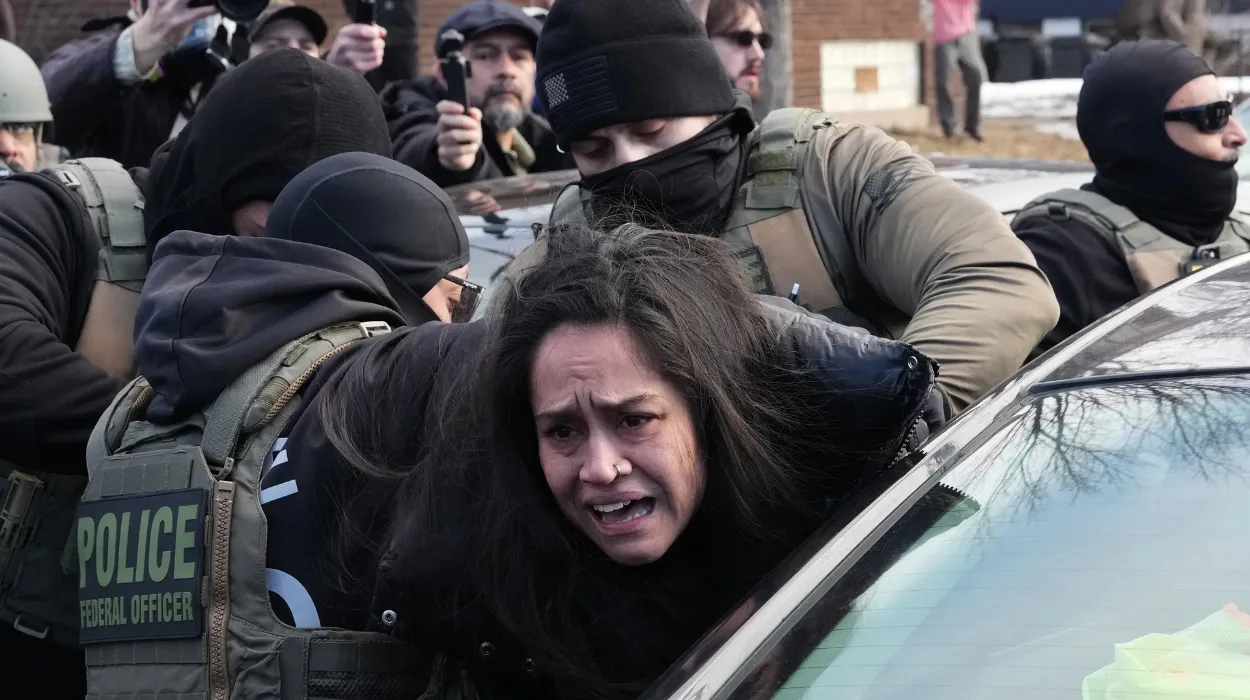
In a significant indication of an impending judicial blow to the Trump administration’s intense enforcement posture, a federal judge in the state of Minnesota on Friday issued a preliminary injunction to limit the actions of federal immigration agents against protestors. This has come at a time of mounting unrest, both in Minneapolis and across the state, and represents more than just the struggle surrounding “Operation Metro Surge.”
What did the judge order?
Judge Kate M. Menendez, appointed by President Joe Biden, ordered that immigration agents in Minnesota:
- must not retaliate against peaceful protest activity, including “unobstructive” demonstrations
- cannot use pepper spray or other crowd dispersal tools in response to protected speech
- cannot detain protesters in vehicles unless they are forcibly obstructing agents
The injunction was prompted by a lawsuit filed by activists alleging that agents had violated constitutional rights. Importantly, the order did not prevent agents from enforcing immigration laws. Instead, it aimed to curb excessive and retaliatory use of force.
What sparked the ruling?
This lawsuit was prior to the death of Renee Good, who was a 37-year-old woman that was shot and killed by an immigration agent on January 7 after she partly blocked a road. It was reported that she failed to obey instructions to get out of her SUV and attempted to move away as the immigration officer opened fire.
This situation has emerged as one of the main issues in the escalating conflict in Minnesota. Another shooting took place this week, and this time a man was shot and wounded by an agent.
Why the ruling matters: a deeper legal and political struggle
The injunction is not just a response to one violent incident. It is part of a growing nationwide legal backlash against federal agents’ tactics. Similar lawsuits have been filed in California, Illinois, and Washington, D.C., with civil rights organizations seeking to limit federal enforcement methods.
The Illinois case is particularly revealing. There, a federal judge issued a sweeping injunction that placed broad limits on force and interactions with protesters. However, the ruling was later blocked by an appellate court for being too broad and prescriptive. This illustrates the legal tension between limiting government overreach and allowing federal agencies broad discretion in law enforcement.
Is this just about protests?
No. This case draws attention to a much larger concern – is the federal immigration agency a political intimidation instrument?
Authorities in the state of Minnesota, as well as activists there, believe that the surge has little to do with immigration enforcement, but is actually a means of penalizing a Democratic-run state for its political opposition. In response, the Trump administration asserts that the surge is a response to the problem of illegal immigration and social services scams.
The fact is that the surge has become a sort of counter-protest mission, with agents living and working within neighborhoods, interacting with locals, and finding themselves in the sights of public anger. This, in turn, has created a volatile environment that has resulted in violence, arrests, and deaths amongst civilians.
Did agents actually face violence?
The Department of Homeland Security (DHS) defended its actions, stating that agents faced assaults, fireworks attacks, and tire slashing. DHS spokesperson Tricia McLaughlin said agents used the minimum force necessary and were protecting themselves and federal property.
But this raises a key question: when does “protecting officers” become a justification for suppressing protests?
Many activists argue that the enforcement campaign has turned federal agents into an occupying force, one that is not accountable to local communities and operates with military-style tactics. The use of pepper spray, crowd-control equipment, and forceful detentions is seen as part of a broader pattern of escalating repression.
The Minnesota conflict in historical context
Minnesota has a long history of protest movements and civil rights activism. The current situation echoes past episodes where federal law enforcement clashed with local populations. For example:
- The 1930s labor movements in Minneapolis were met with heavy-handed police and federal intervention.
- The civil rights protests of the 1960s often faced federal surveillance and local crackdowns.
- The 2020 Minneapolis protests following George Floyd’s murder saw a militarized response from police, and the federal government’s involvement raised national alarm.
The current surge can be seen as an extension of this pattern: federal forces intervening in domestic disputes with a law enforcement posture that often escalates rather than resolves tensions.
The most controversial part: the role of federal authority
The judge’s order clarified that the injunction does not stop immigration enforcement. Yet it signals a crucial point: federal agents are not above constitutional constraints, even in states where federal policy is politically controversial.
This is a significant legal statement. It asserts that:
- protesters have protected rights
- federal agents must follow constitutional rules
- the government cannot use force as a tool of intimidation
Why the administration may be losing the narrative
The Trump administration has attempted to frame the protests as violent and lawless. However, the video evidence and independent analysis challenge that narrative. For example, a New York Times video analysis suggests that Renee Good was steering away from the agent when she was shot, contradicting federal claims that she tried to ram the agent.
This discrepancy highlights a major problem: the government is trying to control the story while its actions are increasingly visible and disputed.
The politics of weaponizing law enforcement
On Friday, the Trump administration reportedly opened a criminal investigation into Minnesota Gov. Tim Walz and Minneapolis Mayor Jacob Frey for allegedly conspiring to impede federal agents. Both officials called the investigation a political weaponization of law enforcement power.
This is a critical development because it signals a shift from enforcement to political retaliation. It suggests that federal agencies may be used not only to enforce immigration laws but also to intimidate and punish local political leaders.