The recent exchange between White House press secretary Karoline Leavitt and CBS News anchor Tony Dokoupil is more than just a blunt attempt to control media coverage. It represents a deeper erosion of the boundary between journalism and political power — and it highlights how the Trump administration is increasingly using intimidation, lawsuits, and financial pressure to influence what Americans see and hear.
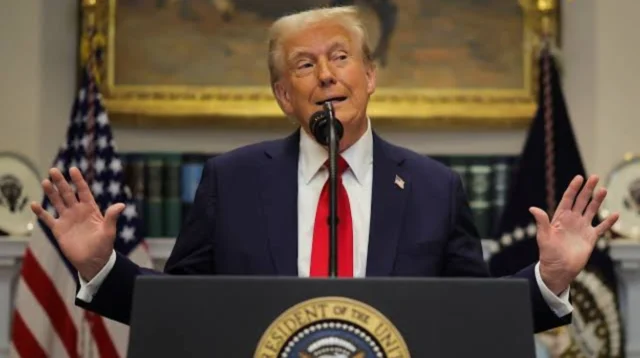
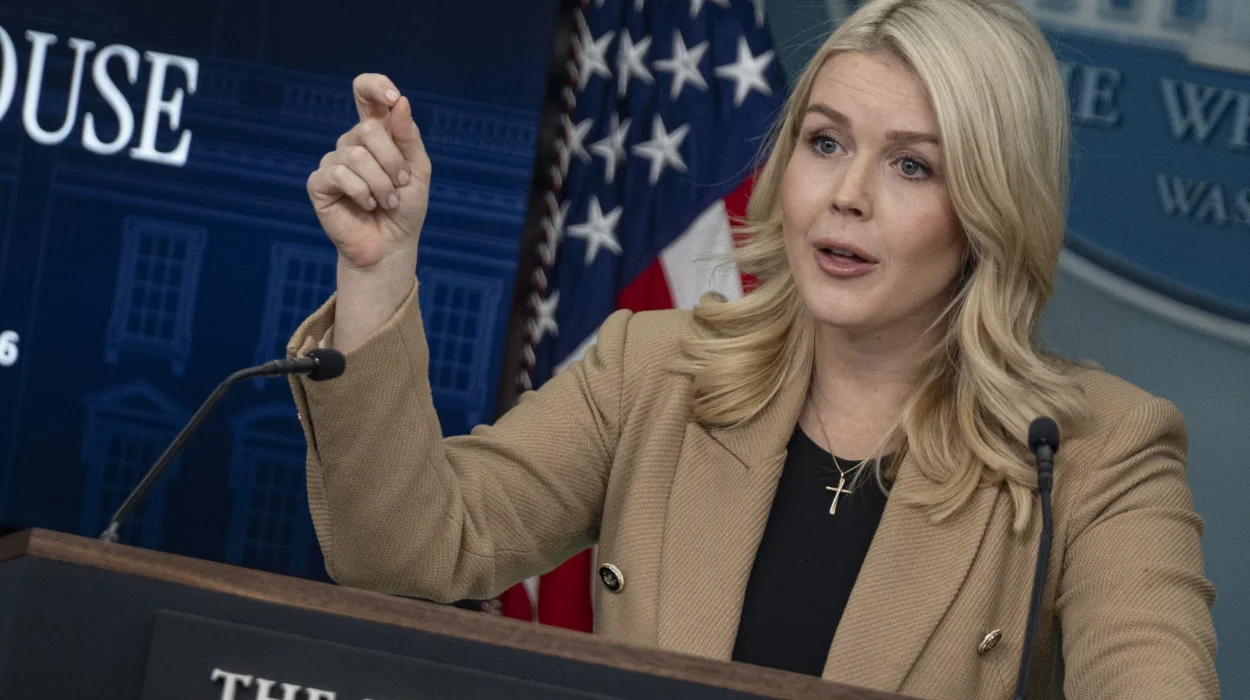
In a recorded conversation reported by The New York Times, Leavitt warned CBS that President Donald Trump demanded his interview be aired “in full” and without edits — and that the network would face legal consequences if it failed to comply.
“If it’s not out in full, we’ll sue your ass off,”
Leavitt said. This statement wasn’t merely blunt; it was a direct threat that suggests the White House is treating major news outlets as negotiable extensions of its own propaganda apparatus.
The audio exchange also illustrates the blurred lines between political messaging and journalistic independence under Trump’s White House — an administration that has repeatedly attacked, sued, and pressured media organizations for reporting that does not align with its preferred narrative.
Why This Threat Matters
The threat is significant for several reasons. First, it reveals how the Trump administration views the media: not as a watchdog, but as a tool to be coerced.
Second, the statement comes amid a broader climate in which lawsuits and legal threats are increasingly used as weapons against journalists. This is not a hypothetical danger. Trump’s political allies have already demonstrated a willingness to use the courts to intimidate critics — and the fact that the White House is openly threatening CBS shows a new level of brazenness.
Finally, the threat comes on the heels of a recent settlement that exposed CBS’s vulnerability to Trump’s legal tactics. In July, Paramount — CBS’s parent company — agreed to pay Trump $16 million over a previous edited interview that Trump claimed was misleading. The settlement was widely viewed as evidence of the financial risk major media organizations face when they challenge the White House.
The Bigger Picture: CBS’s Editorial Independence Under Question
The CBS interview controversy also sheds light on the state of editorial independence within the network itself.
CBS News is now overseen by Bari Weiss, the former New York Times columnist who became CBS News editor-in-chief in October. Weiss has been criticized for promoting conservative viewpoints and for alleged favoritism toward the Trump administration. Critics argue her appointment has created a conflict between journalistic integrity and political ideology — and this latest exchange adds fuel to that fire.
Adding to the controversy, CBS is now controlled by Paramount Skydance, a media company founded by David Ellison, son of Oracle billionaire Larry Ellison — a known Trump ally. In October, Paramount Skydance also acquired Weiss’s conservative media company Free Press, raising questions about whether the network’s leadership has become overly aligned with pro-Trump interests.
This matters because the corporate structure of a media organization often shapes its editorial culture. When ownership aligns with political interests, it becomes harder to maintain independent reporting — and the threat to “sue” a news network for editing an interview becomes more than a single incident. It becomes a tool that reinforces a broader power structure.
What the Trump Administration Gains from Legal Intimidation
Trump’s administration has repeatedly used the threat of litigation to punish media organizations for unfavorable coverage. The CBS incident shows that this tactic is not limited to opponents or critics — it’s being applied even to major mainstream outlets that have historically enjoyed a level of protection due to their prominence.
The goal is not simply to avoid edits. It is to set a precedent:
- Journalists are forced to air Trump’s statements without context or clarification
- Media outlets risk financial ruin if they challenge or even question the President
- The public receives raw political messaging disguised as neutral reporting
This approach is consistent with the administration’s broader strategy of controlling the narrative through legal intimidation. By forcing networks to air unedited content, the White House effectively prevents journalists from using basic editorial standards — such as context, fact-checking, and time-limited editing — that help audiences understand the truth.
The Danger of “Unedited” Interviews
In theory, airing a full interview sounds like transparency. But in practice, it can be a form of propaganda.
When a president speaks, they often rely on soundbites, falsehoods, and misleading claims. Editing is not simply a journalistic convenience; it is a way to provide context, clarify misleading statements, and prevent manipulation.
A fully unedited interview can be weaponized. A president can use the platform to repeat unverified claims, spread disinformation, and distract from policy failures — without the network being able to responsibly limit or correct false statements.
In the Trump administration’s worldview, “unedited” is not about truth — it is about control.
CBS’s Response: A Public Relations Defense, Not a Legal Stand
CBS quickly responded to the threat by insisting that the interview would air unedited, saying:
“The moment we booked this interview, we made the independent decision to air it unedited and in its entirety.”
But the statement is not just about independence. It is also about risk management.
CBS was already burned by the $16 million settlement with Trump. That case revealed that even major networks can be financially vulnerable to litigation — and that lawsuits can be used to silence or control media coverage.
This creates a chilling effect. When news organizations fear legal retaliation, they are less likely to challenge the administration. This is a direct threat to press freedom.
A Broader Pattern of Media Control
The CBS incident is not isolated. It fits into a larger pattern of Trump’s antagonistic relationship with the press:
- Repeated attacks on journalists as “enemies of the people”
- Using social media to vilify reporters and media outlets
- Threatening legal action against critical coverage
- Encouraging supporters to harass journalists and media organizations
The White House’s actions suggest that the Trump administration views the press as a tool to be managed rather than a democratic institution to be respected.
The exchange between Leavitt and Dokoupil is a warning sign. It shows how the Trump administration is pushing the boundaries of acceptable political behavior — using threats, lawsuits, and intimidation to control what Americans see.
A free press is essential to democracy. When a president treats news outlets as extensions of the state and threatens them for exercising editorial judgment, it undermines the public’s ability to receive truthful information.
This incident is not just about an interview. It is about the growing normalization of political coercion — and the shrinking space for independent journalism in an era of power-driven media manipulation.