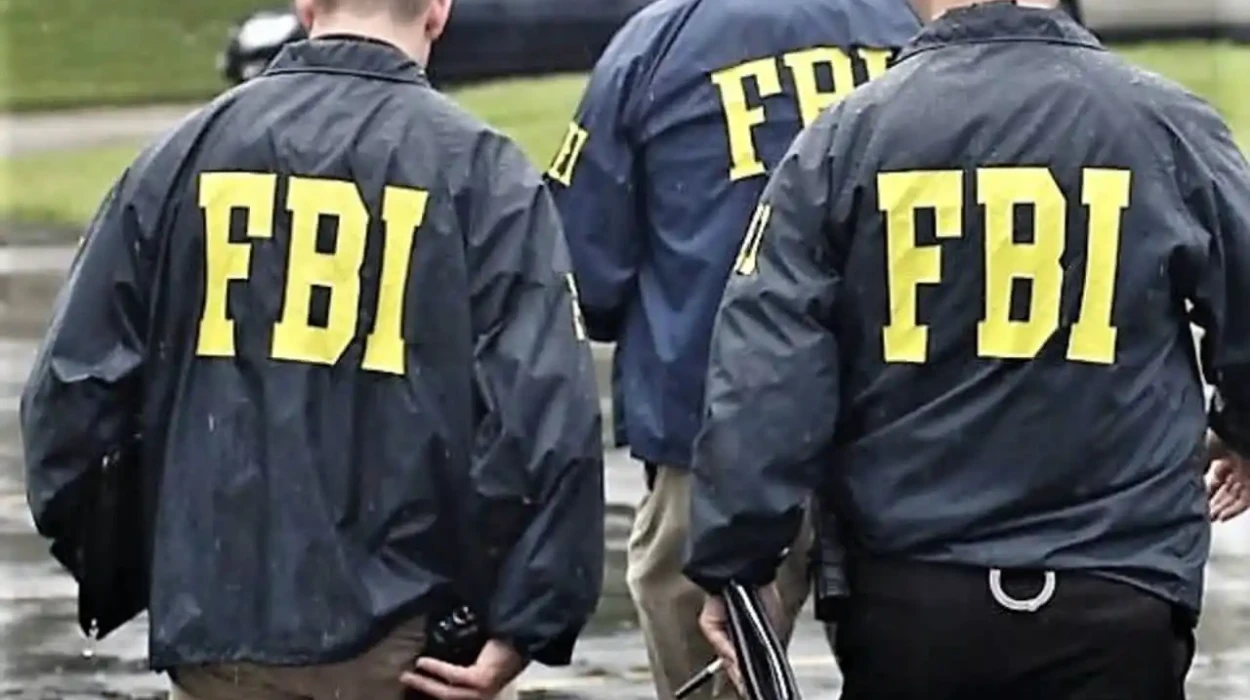
Newly unsealed court filings in the Jackson public corruption case reveal the extent to which undercover federal agents embedded themselves in the city’s political and social ecosystem—spending thousands of dollars on a local lobbyist to gain proximity to elected officials and influential intermediaries.
According to documents filed last week in US District Court, agents posing as out-of-state developers entered into a six-month contract in 2023 with Cornerstone Government Affairs, working directly with lobbyist Elliott Flaggs. The stated goal: to
“gain access to public officials in the Jackson city government,”
as well as another lobbyist, Quincy Mukoro.
The revelations shed new light not only on the alleged bribery scheme but also on the aggressive and unconventional investigative methods used by federal authorities.
Was the Lobbyist a Target—or an Unwitting Conduit?
Flaggs, who was never charged and has not been accused of wrongdoing, initially believed the agents were simply well-connected businessmen. Court filings indicate he later became uneasy about the relationship, expressing concern to FBI agents that his professional reputation could be damaged by continued association.
At no point do prosecutors allege that Flaggs or Cornerstone knowingly participated in criminal conduct. Instead, the filings suggest Flaggs functioned as a gateway into Jackson’s political and business circles—raising questions about how far investigators can go in leveraging lawful actors to pursue alleged corruption.
Who Has Been Charged—and Who Has Already Pleaded Guilty?
The broader investigation culminated in October 2024, when a federal grand jury indicted:
- Hinds County District Attorney Jody Owens
- Former Jackson Mayor Chokwe Antar Lumumba
- Former Ward Six Councilman Aaron Banks
Two additional figures—former Ward Two Councilwoman Angelique Lee and businessman Sherik Marve’ Smith—pleaded guilty to their roles in the scheme.
The case centers on allegations that officials accepted bribes in connection with efforts to bring a convention center hotel to downtown Jackson, a project that has long been politically and economically contentious.
Did Federal Investigators Cross Ethical or Legal Lines?
Owens’ legal team argues they did.
Last week, Owens filed a motion to dismiss the charges, accusing federal authorities of misleading the grand jury and engaging in what he describes as “outrageous government conduct.” Most strikingly, Owens alleges investigators exploited his diagnosed alcoholism, intentionally placing him in social environments designed to weaken his resistance and draw him into criminal conduct.
The US government moved quickly to seal the filings, and US District Judge Daniel Jordan granted the request. However, the documents had already been accessed via the federal court’s online database, offering the public an unusually detailed look inside the investigation.
How Was Access to Officials Manufactured?
According to the exhibits, the FBI’s Financial Surveillance Team paid approximately $3,000 per month to retain Cornerstone Government Affairs. Agents deliberately sought meetings in familiar social settings—restaurants, golf courses, cigar lounges—known to be frequented by city leaders and politically connected figures.
Federal reports show agents consciously chose locations not for convenience, but for strategic proximity to targets.
A Timeline of Social Engineering
Court filings outline a methodical progression:
- November 1, 2022: Agents receive authorization to record conversations involving Flaggs, Mukoro, Lumumba, and others.
- December 14, 2022: A confidential human source (CHS) lunches with Flaggs at Kiefer’s Restaurant, where Flaggs indicates he can facilitate meetings with influential individuals.
- May 2023: An undercover agent plays golf with Flaggs at the Country Club of Jackson.
- July 25, 2023: CHS meets Flaggs at Walker’s Drive-In.
- July 26, 2023: Golf meeting at the Refuge in Flowood, followed by a visit to Downtown Cigar Company.
- June 10, 2024: FBI formally interviews Flaggs.
Each encounter deepened social familiarity while subtly steering conversations toward development opportunities and city-owned property.
Was Casual Conversation Used to Normalize Corruption?
One of the most troubling revelations concerns conversations at Downtown Cigar Company, where the CHS met manager A.J. Roberts—later identified by the FBI as a key facilitator.
According to FBI reports, Roberts told the CHS that paying off officials in Jackson was “how it worked,” adding that corruption in the city would be “cheap” compared to other places. He allegedly offered to arrange meetings with officials, including Mayor Lumumba and District Attorney Owens.
The CHS’s texts suggest those meetings did occur, with Roberts coordinating schedules and confirming availability.
If accurate, these exchanges raise difficult questions: Were investigators uncovering endemic corruption—or reinforcing and amplifying it through suggestion and expectation?
Did the Operation Shift From Detection to Inducement?
Critics of aggressive undercover tactics argue that corruption stings risk crossing into entrapment when investigators introduce criminal ideas, normalize illicit behavior, or apply psychological pressure.
Owens’ defense claims that the Nashville trip—where agents allegedly flew him out and deepened discussions—was the moment where inducement replaced observation.
Whether that argument holds in court remains to be seen, but the filings highlight how thin the line can be between exposing corruption and engineering it.
What Does This Case Reveal About Power and Trust in Jackson?
Beyond individual culpability, the case paints a stark picture of a city where access, informal networks, and social spaces appear deeply intertwined with governance. The ease with which undercover agents embedded themselves into political circles suggests structural vulnerabilities that extend beyond any one official.
A Trial That Could Redefine Federal Corruption Probes
As motions to dismiss, suppress evidence, and challenge investigative conduct move forward, the Jackson case may become a test not just of political integrity, but of how corruption investigations themselves are conducted.
If courts find that federal agents overstepped legal or ethical boundaries, the implications could ripple far beyond Mississippi—reshaping how prosecutors nationwide deploy undercover operations against public officials.
For now, the filings leave Jackson confronting two uncomfortable questions at once: how deep corruption may run, and how far the government is willing to go to expose it.