Just hours after federal immigration agents gunned down a man in Minneapolis, the two leading contenders in Texas to run in a U.S. Senate election as Democrats stood together on a debate stage and presented a united front: Immigration and Customs Enforcement, they agreed, needs to fundamentally change.
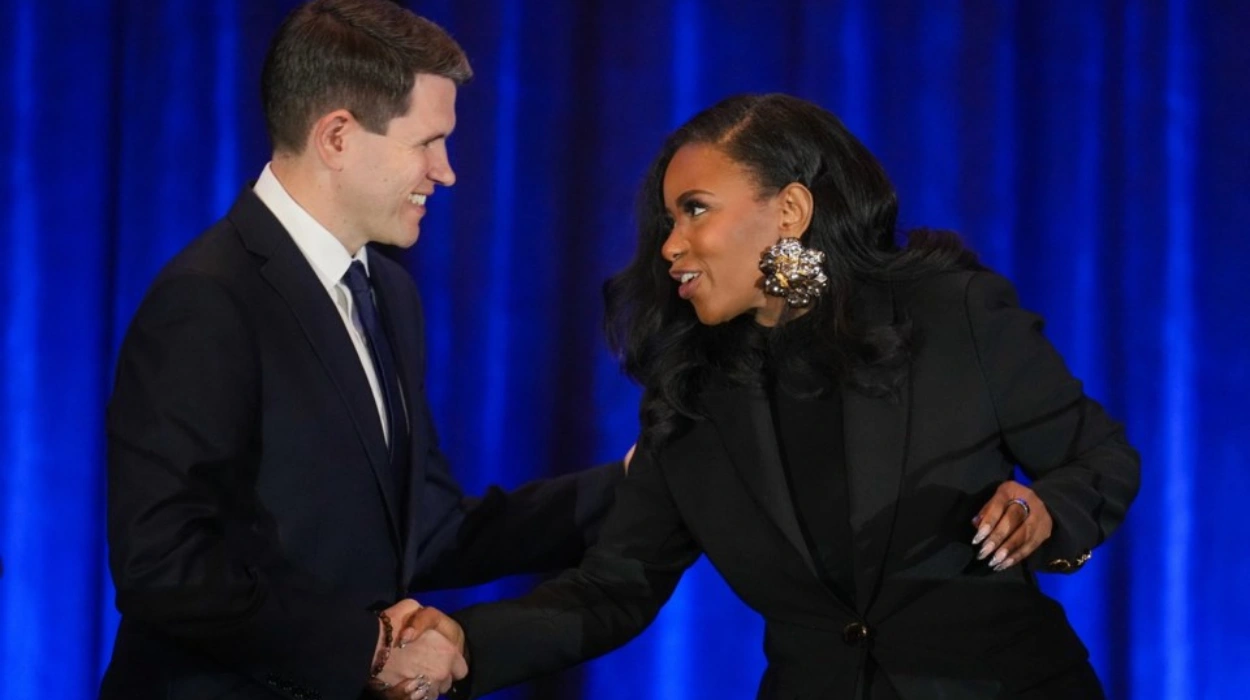
The debate between Rep. Jasmine Crockett and State Rep. James Talarico, sponsored by the Texas AFL-CIO and moderated by KXAN-TV and The Dallas Morning News, began in the midst of growing national outrage surrounding immigration raids by U.S. agents.
Within minutes, Crockett invoked the Minneapolis shooting to frame the stakes of the March 3 Democratic primary.
“This is not politics as usual,”
she said.
“Just today, we had another person gunned down in the streets in Minneapolis. Anyone who thinks we can respond to this in a normal way has it wrong.”
A Shared Call to Dismantle ICE
Both candidates supported drastic action towards ICE, as they labeled it an agency that is “beyond control.”
Defense of Her Vote
Crockett sought to justify her decision in a vote against the funding of the Department of Homeland Security by advocating for the need to stop funding a “rogue organization” which is violating citizens’ rights in the United States. Following further scrutiny concerning whether she was advocating for the abolition of ICE, she noted,
“We absolutely have to clean house, whatever that looks like.”
Talarico went further, calling for the agency’s complete dismantling.
“ICE shot a mother in the face. ICE kidnapped a five-year-old boy. ICE executed a man in broad daylight,”
he said.
“It’s time to tear down this secret police force and replace it with an agency that actually focuses on public safety.”
Both candidates also said they support impeaching Homeland Security Secretary Kristi Noem.
Navigating Immigration Politics in a Red State
It underscored the political challenge, too, of running on aggressive immigration reform in Texas, which President Donald Trump won by 14 points in 2024 and where deportation policies enjoy significant public support. Crockett claimed that ICE has surpassed all limits of its authority and even has worked to target U.S. citizens and legally documented immigrants.
“They are supposed to do Immigration and Customs Enforcement,”
she said.
“Not go after people because of their accent or the color of their skin.”
Talarico, whose family has roots in a Texas border town, emphasized balance.
“Our southern border should be like our front porch,”
he said.
“A welcome mat out front and a lock on the door. We can welcome immigrants who want the American dream while keeping out people who mean us harm.”
Linking Domestic Unrest to Global Conflict
As the debate wore on, both candidates worked to tie together issues on immigration enforcement, civil unrest, and foreign policy. Crockett charged that Trump was trying to drive the country toward chaos at home and abroad, that he was
“trying to plunge us into a civil war with ICE”
while courting a wider global conflict through his foreign policy.
Talarico echoed that framing during a discussion on potential military action in Iran, comparing violence against protesters abroad to clashes unfolding in Minnesota.
“We’re seeing innocent civilians murdered on their streets there,”
he said.
“And we’re seeing it here as we speak.”
Impeachment, Trump, and the Republican Field
Democrats both strongly condemned the administration of President Trump, agreeing on the need for his impeachment, but disagreeing on other points.
“There is more than enough to impeach Donald Trump. Period,”
Crockett said, naming tariff policies and abuses of power.
Talarico acknowledged that such an action occurred, but emphasized his need to carefully consider the evidence, comparing his role in impeachment trials to jury duty in general in front of Congress.
The candidates are seeking a shot at running against Republican Senator John Cornyn, who is in a fifth term of service and is facing a tough GOP primary, possibly against Attorney General Ken Paxton or Representative Wesley Hunt.
Strategy Divides: Electability, Money, and the Filibuster
While the debate revealed broad ideological alignment, differences emerged over political strategy. Crockett argued she is better positioned to win statewide, citing her visibility, confrontational style, and support among working-class, Black, and female voters.
“People want someone unafraid,”
she said.
“They want someone willing to stand up to someone who believes he’s a king.”
Talarico adopted a populist stance in his campaign, emphasizing opposition to the “economic elite” and rejecting corporate money from political action committees. However, he supported donations from progambling political action committees funded by GOP megdonor Miriam Adelson; he described them as not being “ideologically-driven.”
Another area where both candidates differ is regarding Senate procedure. For instance, Talarico advocates for a complete abolition of the filibuster, whereas Crockett indicated that carveouts for issues like voting may be reasonable.
Supreme Court Reform and the Stakes of November
Both politicians offered support to key changes in the operation of the Supreme Court. On one hand, whereas Crockett advocated in favor of increasing the number of members in the Court, on the other, Talarico was not opposed to it but offered to support term limitation so that some control over partisanship could be maintained in future elections, especially in Texas’ Senate seat. The former closed with a sense of heightened importance attached to Texas’ Senate election.
In addition, tangible consequences of losing to Democrats would mean more closed schools, less access to healthcare, and loss of rights, as cited in Talarico. Notably, Crockett had received death threats as she took on theTrump administrations, stating that whoever would succeed her must prepare for what she called ‘real war.’
“This is life or death,”
she said, pointing again to events in Minnesota.
“That’s where we are.”