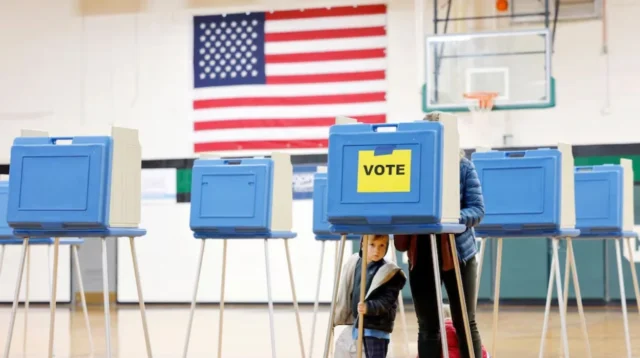
The American Israel Public Affairs Committee, or AIPAC, has generated controversy after spending about 2 million dollars in a special New Jersey democratic primary, all in an effort to take down former congressman Tom Malinowski, who, aside from being a democratic centrist, had voted against an unconditional U.S. military aid commitment to Israel.
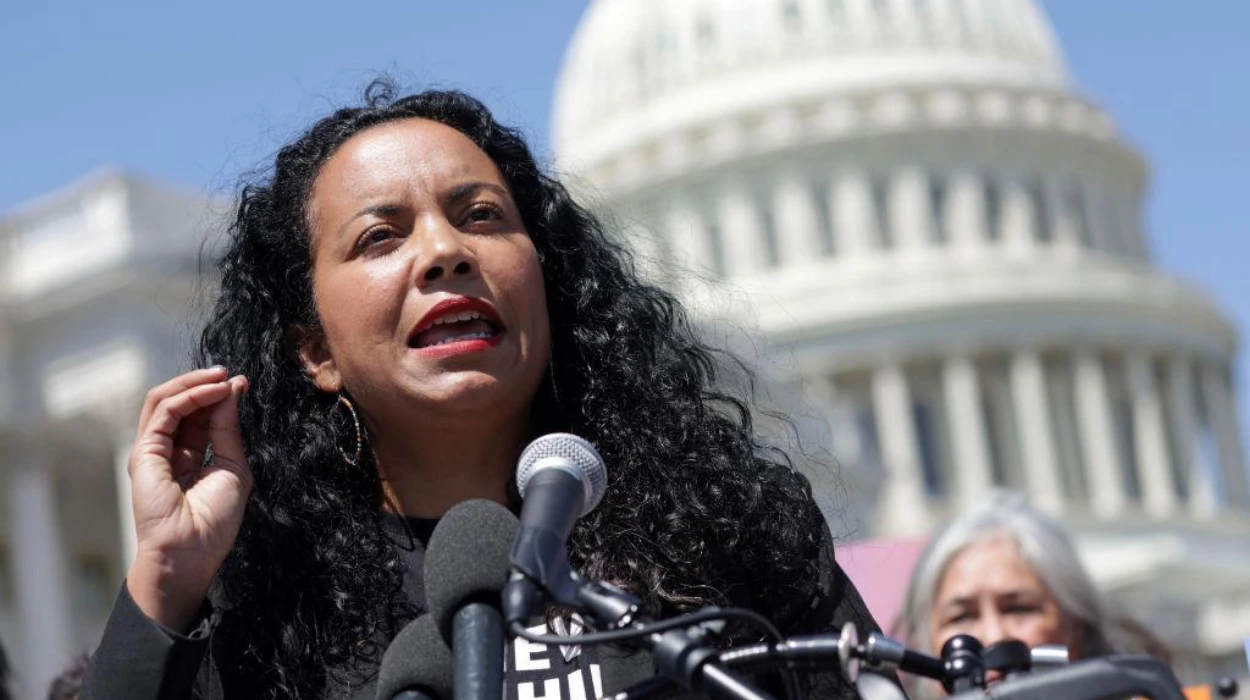
Running through its super PAC, Unite Democracy Project (UDP), AIPAC unleashed an aggressive negative campaign for Malinowski. The move backfires, instead providing momentum for the progressive challenger Analilia Mejia, a staunch supporter of organizer-turned-candidate Bernie Sanders, who accused the Jewish state of perpetrating genocide in Gaza.
As votes are being counted, Malinowski is behind Mejia by about 500 votes, and there is growing concern among Democratic moderates that AIPAC’s approach inadvertently helped a far-left candidate.
AIPAC’s First Major Test of the 2026 Cycle
The contest in New Jersey was the first important Democratic primary intervention by AIPAC leading up to the 2026 election cycle, during which millions will be spent on Democratic candidates across America.
Strategists predict that AIPAC will become involved in Illinois House primaries in March, with a possible expansion into prominent Senate primaries in Michigan and Minnesota. The results in New Jersey are viewed as a barometer of how Democratic voters react to high expenditures in Israel-related policy debates.
Moderate Democrats Alarmed by Strategic Fallout
This led Centrist Democratic politicians to respond in frustration with the moves of AIPAC, indicating that the moves could undermine the ability of the party’s Centrist wing. Bennett, the co-founder of the think tank Third Way, a Left-leaning think tank, described the moves of AIPAC as
“one of the greatest own-goals in American political history.”
“The tactics they’re using there raise eyebrows,”
said Rep. Brad Schneider, an AIPAC backer and chairman of the New Democrat Coalition.
“The worry is that seat could go to a far left candidate rather than a centrist democrat.”
Former Democratic campaign chief Steve Israel also criticized the approach, saying that he wouldn’t have employed such a strategy, even though he believes that many political miscalculations take place.
Malinowski Warns of Loyalty Demands
Malinowski framed AIPAC’s campaign against him as a warning shot to mainstream Democrats who deviate from hardline pro-Israel positions.
“They are now demanding 100 percent fealty,”
he said, suggesting AIPAC may prefer ideologically rigid candidates over pragmatic centrists who show even limited dissent.
He also described the New Jersey race as a “beta test” for how outside money could reshape Democratic primaries in the coming cycle.
AIPAC Defends Strategy Despite Backlash
This was affirmed by a Unite Democracy Project spokesperson who commented that the outcome had been expected in New Jersey and that AIPAC would go on to engage and influence many primaries with the aim of electing pro-Israeli politicians. This implies political involvement beyond just the June primary and November 2026 general election.
Progressives Celebrate and Claim Momentum
The progressive groups perceived this outcome as a symbol of victory over pro-Israel lobbying power. The communications director of Justice Democrats, Usamah Andrabi, said in relation to this issue that
“AIPAC money is a kiss of death in Democratic primaries; progressive activism has clearly reduced AIPAC’s power.”
Mejia even criticized the campaign strategies of AIPAC, stating that voters had turned down excessive funds and pressures in politics. Senator Bernie Sanders stated that there is a possibility for Democratic candidates to campaign in the near future, targeting funds by AIPAC as a strength instead of a weakness.
Controversial Campaign Tactics and Broader Political Context
AIPAC’s super PAC attacked Malinowski on unrelated issues, including a 2019 House vote funding Immigration and Customs Enforcement (ICE)—a sensitive topic amid recent immigration enforcement controversies and deadly protests during the Trump administration’s crackdown.
The campaign reflects a broader trend in U.S. politics, where foreign policy lobbying groups increasingly shape domestic primaries through dark money advertising on unrelated policy issues.
Expanding Influence and Shadow Super PACs
In Illinois, newly formed super PACs Elect Chicago Women Now and Affordable Chicago Now have begun backing Democratic candidates with large TV ad buys. Some opponents have accused these groups of being AIPAC-linked shell organizations, although disclosure filings are pending.
Democratic strategists warn that AIPAC could attempt to influence three to four open House seats in Illinois, an unusually high number in a single cycle.
Electoral Outlook in New Jersey
The winner of the special primary will face Republican councilmember Joe Hathaway in an April 16 special election, followed by another Democratic primary in June.
Despite centrist concerns that Mejia’s rise could weaken Democratic prospects, analysts believe a Republican victory remains unlikely. Pollster Patrick Murray noted persistent anti-Trump sentiment and stronger Democratic voter motivation since the 2025 election.
A Broader Challenge for the Democratic Party
The New Jersey race highlights a growing challenge for Democrats: the increasing influence of outside money in internal party contests and the ideological fracture between moderates and progressives.
With dark money expected to saturate Democratic primaries in 2026, party unity and candidate selection processes may face unprecedented strain. As Malinowski warned, the New Jersey election may be only the beginning of a larger battle over the Democratic Party’s future direction.