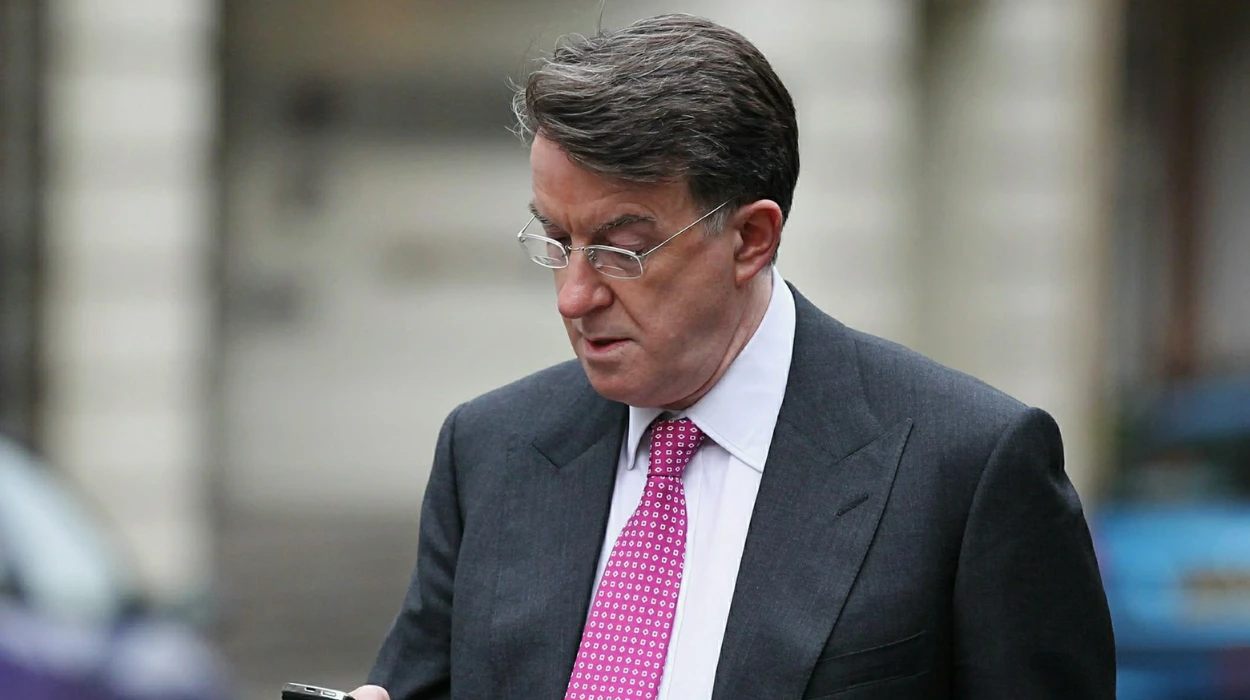
Purported emails obtained from the Jeffrey Epstein investigation show that Peter Mandelson’s old lobbying firm, Global Counsel, targeted rich contracts from companies that were owned by the Russian and Chinese governments, just after leaving the government as a minister. In the emails, which were forwarded to him by Jeffrey Epstein, Peter Mandelson and co-founder Benjamin Wegg-Prosser were shown to be actively seeking rich contracts from abroad even during his days in the House of Lords.
Potential clients included Rusnano, a Russian state technology investment fund, and China International Capital Corporation (CICC), a state-backed Chinese financial services firm. The revelations raise serious questions about influence, ethics, and national security implications of post-ministerial lobbying.
Links to Jeffrey Epstein Raise Serious Political and Ethical Questions
The emails also reveal that Wegg-Prosser visited Epstein’s New York townhouse in 2010 to discuss Global Counsel’s business plans. A source close to the meeting said it was requested by Mandelson and lasted around 25 minutes. Wegg-Prosser has resigned as chief executive of Global Counsel as scrutiny mounted.
The disclosures are part of a trove of more than 3 million files released from investigations into Epstein, who served a prison sentence in 2008 for child sex offences but maintained elite political and business connections until his arrest and death in custody in 2019.
Political Fallout for Keir Starmer’s Government
The revelations have sparked a political crisis for the current Prime Minister, Keir Starmer, who appointed Lord Mandelson as the UK’s ambassador to the United States despite being aware of the latter’s association with Epstein in the past.
Global Counsel’s Efforts to Distance Itself From the Scandal
Global Counsel has attempted to limit the fallout, revoking Mandelson’s voting rights and urging him to divest his stake in the firm. A spokesperson insisted Epstein played no role in the firm’s creation.
However, the emails provide an unusually detailed glimpse into Global Counsel’s early lobbying strategy and its pursuit of politically sensitive clients.
Early Meetings With Epstein and Business Plans Before Firm’s Formal Launch
Documents show that Mandelson and Wegg-Prosser were introduced to Epstein in March 2010, when Mandelson was still serving as business secretary and before the formation of Global Counsel. Epstein’s planners refer to Wegg-Prosser as “Mandelson’s friend,” and Mandelson added the comment that Wegg-Prosser would “explain the business plan.”
When Labour lost power in May 2010, Mandelson quickly looked for opportunities in the private sector, reaching out to various companies, like Glencore and BP, while continuing to develop his idea of Global Counsel.
Targeting Russian and Chinese State-Backed Corporations
In August 2010, Mandelson suggested Sberbank, Russia’s state-owned banking giant, as a potential client. By October, Wegg-Prosser was discussing business opportunities in Russia through Rusnano. At the time, UK policy encouraged commercial engagement with Russia, though such ties are now viewed through a national security lens following Moscow’s later invasion of Ukraine.
By early 2011, Global Counsel also targeted China International Capital Corporation, with internal emails suggesting the firm could secure a communications contract worth £250,000 per year over 5–10 years.
Potential Defence Industry Links Raise Conflict-of-Interest Concerns
Emails also referenced BAE Systems, the UK’s largest defence contractor. Mandelson’s role as business secretary had included oversight of defence exports and industrial policy, raising questions about potential conflicts of interest.
BAE Systems stated it had never hired Global Counsel in any capacity.
Continued Outreach to Russian Political Elites
Mandelson continued pursuing Russian connections after leaving office. Before a World Economic Forum event in 2012, he claimed he would email President Vladimir Putin and other senior officials to arrange meetings, though no evidence suggests the outreach succeeded.
Lobbying Greek State Assets and European Policymakers
Global Counsel also pitched services to the Hellenic Republic Asset Development Fund, a Greek state privatization body established during the eurozone debt crisis. Internal documents proposed strategies to secure high-level political engagement across Europe, including with UK No.10 and the Treasury.
Meeting With Iranian Business Figures and Reputational Risks
In February 2011, Wegg-Prosser met Iranian property developer Vincent Tchenguiz to explore potential collaboration. The meeting occurred shortly before Tchenguiz and his brother were arrested in a high-profile Serious Fraud Office case that later collapsed, with Tchenguiz receiving £6 million in compensation.
Mandelson acknowledged reputational concerns in emails to Epstein, describing Tchenguiz as “very interesting” but noting he was seen as a controversial corporate figure.