The discussion on the Russian oil sanctions has taken a new turn in the year 2026 and is no longer driven by the long-term strategic pressure but it is due to the immediate market instability. The fact that the Trump administration has decided to permit limited relief is indicative of a change in the application of sanctions and it is no longer a punitive instrument but rather a flexible mechanism adjusted depending on the global energy threats. This change is indicative of the more general truth that the policy of sanctions is no longer independent of supply stability, but is now interconnected with it.
This has been escalated by the Iran war which has forced oil markets into high risk environment. The Strait of Hormuz and the instability in the Middle East have contributed to a heightened expectation of supply disruptions and this has compelled Washington to review its position on fully sustaining pressure on Russian exports on the basis that it is economically viable. At that, the Russian oil sanctions are no longer merely the issue of restricting Moscow but the issue of avoiding the price shock that might have a ripple effect across the country.
Energy markets shaping policy recalibration
The re-pricing of sanctions indicates how the oil markets revert to the geopolitical information. As the price level goes beyond psychologically significant levels, the political cost of a very strong set of supply restrictions rises. The fact that the administration was ready to implement targeted waivers means that it realized that market stability is now a co-equal concern, as is geopolitical leverage.
This change is not a complete reversal of the policy but it changes the perception of sanctions as being set in stone. Rather, they seem to be more dependent on external factors, especially on those that have an impact on international energy flows.
Balancing domestic pressure and foreign policy goals
A decisive element in this balancing act is domestic economic sensitivity. High gas prices increase skepticism about decisions on foreign policy, particularly where sanctions are perceived as a cause of supply shortages. The administration seeks to alleviate some of these restrictions in order to relieve the short term economic pressure without compromising on its overall position towards Russia.
This twofold goal establishes a policy middle ground, in which economic relief should be provided without implying strategic compromise. Balancing that has become one of the challenges of the present day sanctions management.
Waiver mechanics and market signaling in March 2026
The proposal of a 30-day waiver that would see Russian oil shipments that are already at sea continue with their destinations, including India, is a technically constrained action that has a far-reaching effect. Although officials called it a temporary adjustment, its timing and context indicate that it had a more strategic role in energy diplomacy.
Targeted exemptions and controlled flexibility
The waiver was meant to mitigate a certain logistical bottleneck, but not to completely reopen Russian oil markets. By focusing on those shipments that are already underway, the administration wanted to prevent abrupt supply shocks that would help increase the price volatility. This small focus enabled the policy makers to claim that sanctions integrity was not compromised and the market could still be relieved immediately.
Nevertheless, even specific exemptions may have a symbolic value. They show that sanctions can be flexible when pressured, and this may have an effect on expectations both on the part of the market players and the international actors.
Market interpretation and price stabilization efforts
Oil markets did not respond solely to the physical increase in supply but also to the message that Washington was going to intervene to make sure the situation did not get out of control. Such indicators can be as significant as volumes during times of uncertainty and influence the actions of traders and the price direction.
The difficulty is that the flexibility could be viewed as precedent by the market actors. When the sanctions can be changed according to price spikes, the anticipations of such changes will be incorporated, which may undermine the perceived sustainability of the policy framework.
Trump and Putin dialogue within sanctions context
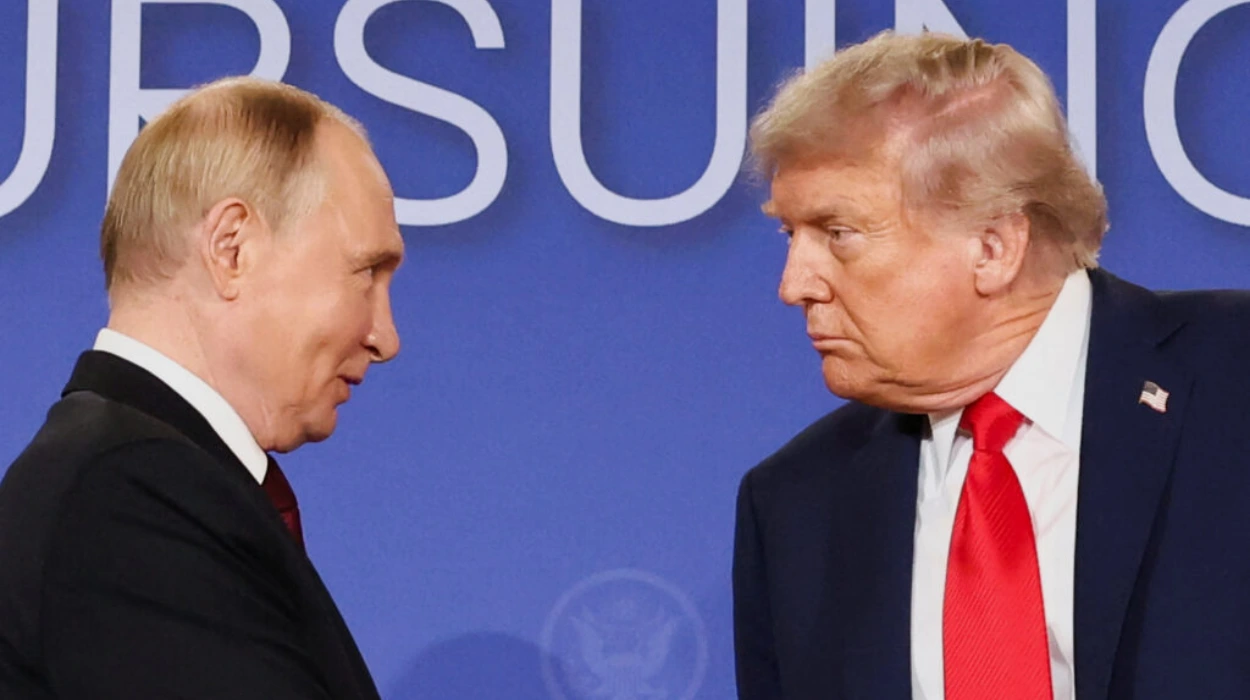
The leaked discussion between Donald Trump and Vladimir Putin brings an international aspect to the sanctions debate. An account of a very good conversation and allusions to possible ceasefire dynamics in Ukraine indicate that energy policy is being incorporated into more comprehensive geopolitical negotiations.
Ceasefire framing and economic signaling
The connection between sanctions relief and the idea of de-escalation creates a discourse where the economic changes are a component of a course towards stability. This framing enables the administration to frame policy changes as conducive to diplomatic advancement instead of unilateral concessions.
Simultaneously it casts doubt on the possibility that sanctions are being re-framed as a means of coercion into a means of bargaining. When relief is associated with dialogue, and not with compliance, the leverage structure changes to reflect this.
Kremlin interpretation and strategic advantage
The reaction of Moscow is that even partial alleviation of sanctions is seen as a good step. The acceptance of the adjustment by the Kremlin sends a message that gradual changes can produce concrete benefits, which supports the message that gradual pressure might not be unconditional.
Such a reading reinforces the strategic stance taken by Russia in that it is proposing that the economic constraints are bargaining. It also creates ambiguity into the regime of sanctions, which other actors can start expecting to be flexible in future crises.
The 2025 backdrop and continuity of partial concessions
Russian oil sanctions have not been able to develop without mentioning 2025, when mini-agreements and partial de-escalation started becoming a regular aspect of the U.S.-Russia interaction. An agreement in March 2025, in which a temporary ceasefire on attacks on energy infrastructure was established, set a precedent of limited concessions without overall settlement.
Incremental diplomacy without resolution
These previous episodes showed that both parties were ready to enter into partial contracts that minimized short-term risks but did not solve underlying tensions. This has been taken into the year 2026 where sanctions adjustments will act as a progressive reaction, but not an element of a conclusive strategy.
The outcome is a policy environment of ongoing bargaining as opposed to resolution. The adjustments are incorporated into a continuous process and not an endpoint.
Sanctions as adaptive rather than fixed instruments
The net result of these developments is the shift in the perception of sanctions. They are no longer the fixed system of pressure, but seem more and more malleable, open to revision by changing geopolitical and economic circumstances.
This flexibility gives a short term flexibility but makes it difficult to plan long term. Both allies and adversaries now have to consider the fact that sanctions regimes can change as the response to external shocks.
Strategic trade-offs between revenue pressure and market stability
The fundamentals of the dilemma of Russian oil sanctions are the necessity to balance the goal of reducing the income of Moscow and consider the necessity to stabilize the world energy markets. Sanctions have proven to decrease the earnings of Russian exports over the years, but their success is only when they are applied consistently and with collective action.
The evolving role of sanctions in geopolitical competition
Russian oil sanctions are increasingly functioning as dynamic tools within a fluid geopolitical environment. Their role has expanded beyond punishment to include market management and diplomatic signaling, reflecting the interconnected nature of modern economic and security systems.
The current trajectory suggests that sanctions will continue to be recalibrated in response to overlapping crises, from regional conflicts to global supply disruptions. This raises a fundamental question about their future role: whether they can remain effective as instruments of pressure while also serving as mechanisms for economic stabilization.
As energy markets and geopolitical tensions continue to intersect, the balance between flexibility and credibility will determine how sanctions shape international behavior. The outcome will depend not only on immediate policy choices but on whether a coherent framework emerges that can reconcile competing priorities without eroding the underlying logic of economic coercion.