In an unprecedented 94-page ruling that reaffirms Congress’s right to oversee America’s National Performing Arts Institution, US District Court Judge Christopher Cooper delivered his verdict this Friday, preventing President Donald Trump from adding his own name to the Kennedy Center and ordering the organization not to close down for renovation work over a two-year period. The landmark judgment delivered on May 29, 2026, marks one of the most defining acts of judicial interference into the exercise of presidential power over culture ever made by President Trump, who had just completed his second year of presidency.
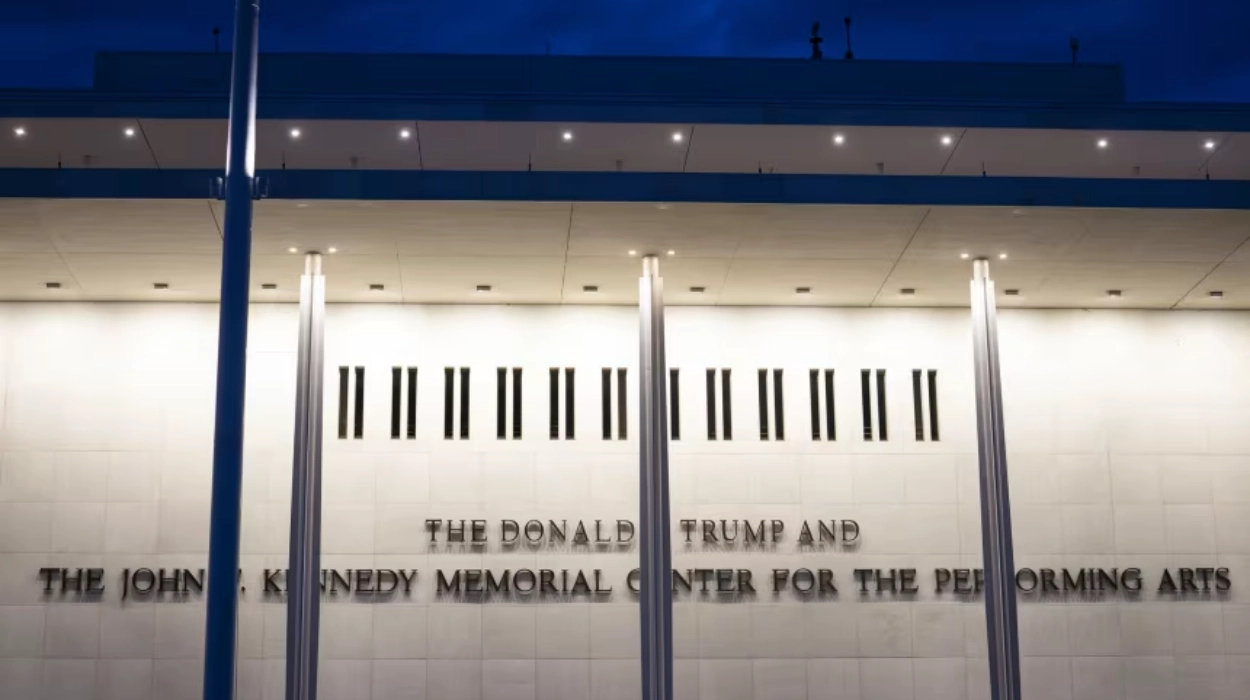
The ruling sends shockwaves through Washington’s political and cultural establishments, as Judge Cooper held that the Kennedy Center Board of Trustees acted illegally when they unilaterally renamed the facility the “Trump Kennedy Center” in late December 2025 without congressional approval.
“Congress bestowed the Kennedy Center its name, and only Congress has the authority to alter it,”
Judge Cooper wrote in his opinion, establishing a clear legal boundary that the Board had crossed.
BREAKING: we just won our Kennedy Center case!
— Norm Eisen (@NormEisen) May 29, 2026
Both the renaming & the closure of the Kennedy Center are enjoined
Kudos to our wonderful client @RepBeatty
& my colleagues @DDAction_ & Washington Litigation Group
This is a 1-2 punch against Trump's corruption pic.twitter.com/mFGKX5tum0
The Legal Foundation: Congress Alone Controls the Kennedy Center’s Identity
In the case of Judge Cooper, the statutory provision on which his judgment hinged was the 1964 organic law, whereby the Kennedy Center was constituted as a “living memorial to President John F. Kennedy.” It is unequivocal that “the center shall be known as the Kennedy Center for President Kennedy,” and the Center cannot have any other name imposed on it unilaterally by the Board. Such an assertion in the organic law precludes the Board from attempting to give any other name to the institution.
The lengthy judgment in the 94-page opinion detailed the legislative history of the Kennedy Center.
“The name of the Kennedy Center was conferred by Congress, and only Congress holds the authority to amend it,”
Cooper emphasized, rejecting the Board’s argument that it possessed inherent authority to rename the facility.
This line of argumentation holds great importance since it proves that the Kennedy Center is not another cultural organization under the Board’s authority but a memorial whose protection cannot be taken casually, like that of an organization. This judgment implies that for renaming the Center, legislation rather than Board deliberation will be necessary.
The Timeline of Controversy: From December Renaming to May Ruling
The controversy began in late December 2025, when the Kennedy Center Board of Trustees, with Trump serving as its chair during his second presidential term, voted to add his name to the facility’s official designation. The Board renamed it the “Trump Kennedy Center” in what appeared to be an unprecedented move for a national memorial established by Congress decades earlier.
The name change occurred shortly after the Board’s announcement of an impending two-year closure of the complex starting from July 2026, due to extensive renovations. Such a closure would effectively render America’s most prominent theater space unusable during its prime time when performances are at their highest numbers and revenue is maximized. This announcement was quickly challenged on both legal and logical grounds.
The process of litigation ensued swiftly and reached its apex when Judge Cooper provided his decision within one week. By Friday, May 29, 2026, he was able to issue his verdict detailing all the aspects of this case which clearly demonstrated a violation of the 1964 statute.
Immediate Consequences: 14-Day Deadline to Remove Trump’s Name
Judge Cooper’s order carries immediate and enforceable consequences. Within two weeks, Kennedy Center officials must remove all signage from the building’s façade that includes Trump’s name and update the Center’s website to revert to its original designation. The facility will officially return to being the John F. Kennedy Memorial Center for the Performing Arts, its congressionally mandated name.
The 14-day deadline reflects the judge’s urgency in correcting what he viewed as an ongoing legal violation.
“The Board botched its decision-making on the closure, so the two-year shutdown must be paused,”
Cooper wrote, indicating that the renovation timeline also faces legal scrutiny beyond just the naming issue.
The fast-paced nature of this compliance means that there is tremendous pressure on the administration of the Kennedy Center as far as coordinating efforts to remove any existing signs, updating digital content, and revising all official documents. The task will be quite difficult, considering that the “Trump Kennedy Center” brand had already been developed in the past five months following the renaming in December.
Political Reactions: From Trump’s Fury to Congressional Relief
The response of President Trump following the verdict was immediate and angry. Trump, through an angry posting on social media, threatened that the verdict may lead to his moving the center aside after being its head for over a year. This indicates that the president may be ready to take retaliatory action against the organization, which he had been heading as the chairman of the Board.
Representative Carolyn Beatty, a vocal critic of the renaming effort, issued a statement Monday calling the episode a “complete disgrace.”
“Only Congress has the authority to rename the Kennedy Center,”
Beatty reiterated, emphasizing the legislative branch’s exclusive role in modifying the facility’s official designation. Her statement reflects broader congressional sentiment that the Board had attempted to circumvent legislative authority through administrative action.
This decision has found approval among legal experts of all stripes, who recognize the need to affirm Congress’ role in managing the nation’s memorial structures. The reasoning behind Judge Cooper’s statutory interpretation has been commended by some constitutional lawyers as an important reminder that Congress cannot evade its responsibilities in relation to national monuments.
The Closure Question: Renovation Plans Now in Legal Limbo
Beyond the naming issue, Judge Cooper’s ruling also addresses the Board’s planned two-year closure, which was set to begin in July 2026. The judge found that the Board had
“botched its decision-making on the closure,”
though he did not permanently block renovations. Instead, the ruling temporarily halts the shutdown while the Board reconsider its approach to facility improvements.
The significance of this part of the judgment cannot be overstated, especially because the performing arts industry was worried about the shutting down of the country’s top venue for such activities. This center has 2,000 performances per year, and the number of people who visit the place amounts to 2 million annually.
This judgment makes it possible for the board to make repairs to the theater, but at the same time, it forces them to have a more detailed plan on how long the theater can stay closed. This is a compromise that recognizes the fact that the theater needs some renovation, but at the same time prevents the center from making an arbitrary closure.
Broader Implications: Congressional Authority Over National Memorials
There are several precedents set in this case that relate to how Congress can maintain its authority on memorials and institutions created by the body itself. As explained in the opinion by Judge Cooper, any congressionally ordered institution with naming guidelines cannot be altered without legislative action, even when the institution is under new management.
This precedent may also apply to other national institutions formed by Congress, which have specific memorials or names, since this ruling emphasizes the power of the legislature over all other branches of government, including the executive branch.
Legal scholars note that the decision may have implications for other federal cultural institutions, particularly those with memorial designations or congressionally mandated names. The clarity of Judge Cooper’s statutory interpretation provides a framework that other courts can apply in similar cases involving congressional authority over federal facilities.