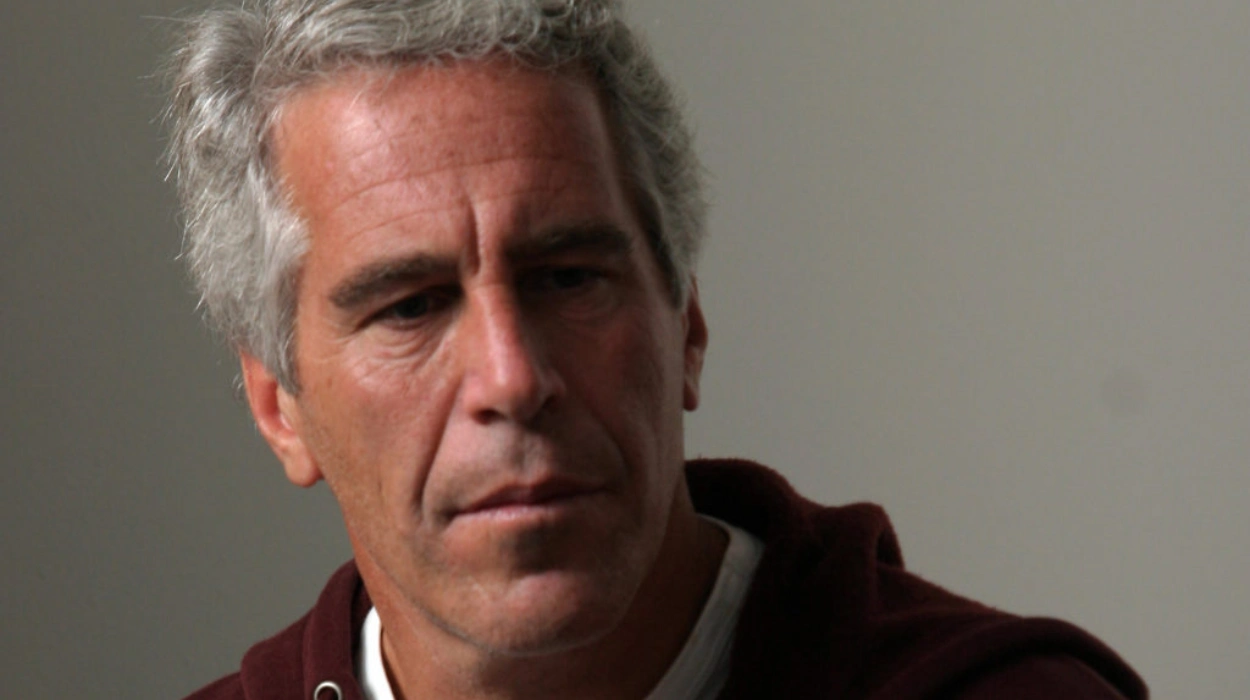
NBC News has recently conducted a highly shocking investigation that came into public domain on June 13, 2026, that has shown how billionaire financier Jeffrey Epstein was able to take full advantage of the highly indulgent infrastructure of Palm Beach County Jail, Florida, to perpetuate his habit of abusing and exploiting women, despite being imprisoned. The story has illustrated how Jeffery’s 13 month imprisonment from 2008 to 2009 was not an experience of punishment, but of continuing crimes under the cover of rehabilitation, all made possible through unique privileges he was accorded alone.
The findings indicate that Epstein had the freedom to spend up to 12 hours daily on a six-day work-release program that allowed him to live his luxurious life, mingle with the rich and influential, and most importantly, continue to traffic women for sexual exploitation. The extreme leniency of allowing Epstein such freedom “as though the rules do not apply to Jeffrey Epstein, even while he was incarcerated” is a disaster in terms of how the American criminal justice system handles crimes committed by affluent criminals.
The Work Release Privilege That Enabled Continued Crimes
The work-release program enjoyed by Epstein is undoubtedly one of the most controversial clauses in the agreement made in 2008. With the ankle bracelet on him, Epstein was allowed out of the jail facility for about 72 hours each week, which included 12 hours spent at what he described as his office, later to be discovered to have been used as a site to traffic women to provide commercial sex to Epstein. The scale of this privilege is overwhelming: 12 hours a day for six days a week over almost a year.
After his confession in 2008 of having sexually exploited and solicited children for prostitution, the administrators at the minimum security jail in Florida gave him many rights that no other inmate enjoyed. These rights included being allowed to move about freely within Palm Beach County, make use of the phone services and engage in commercial activities. It appeared that all these policies were meant only for anyone but Jeffrey Epstein despite being in jail, as revealed by the NBC News report.
This leniency allowed him to go ahead and continue abusing women, associating with rich people, and living a luxurious lifestyle, as per the findings of the investigation. The work release program, which was supposed to cater for offenders that wanted to rehabilitate themselves, became a means for Epstein to engage in more criminal behavior while serving a sentence. Two women have since accused him of engaging in sexual acts with women that had been trafficked to his office in Florida during his period of work release in jail.
The 2008 Plea Deal That Avoided Federal Charges
Epstein’s capacity to manipulate the system of jails in Florida rested on his dubious 2008 non-prosecution deal struck with the federal prosecutors. According to the agreement negotiated by U.S. Attorney Alexander Acosta (who is now Labor Secretary), Epstein managed to escape federal criminal charges of sex trafficking, which could have sentenced him to many years in prison. In the deal, he admitted to pleading guilty to two charges on the state level – namely, procurement of minors under age of 18 for prostitution and solicitation of prostitutes.
The Department of Justice’s 2020 review of the deal concluded that prosecutors including Acosta used “poor judgment” but did nothing illegal, a finding that many legal experts and victim advocates have criticized as insufficient.
No prosecutor, among whom is former U.S. attorney Alexander Acosta, acted illegally during their 2008 agreement when Epstein escaped prosecution for sexual offenses against underage girls, according to the DOJ statement as reported by NPR. The portrayal of the agreement as mere bad decision-making and not misconduct led to further discussions regarding prosecutorial accountability for failing to take legal actions that would put an end to Epstein’s freedom from charges.
According to grand jury testimonies made available to the public in June 2024, Florida prosecutors were aware of Epstein sexually abusing young girls long before the plea bargain was made with him. According to the testimony, the transcript spanning over nearly 150 pages showed the grand jury being told of the rape of teenage girls in Epstein’s Palm Beach mansion, meaning that prosecutors had plenty of evidence to convict Epstein but chose to let him off with minimal punishment instead.
Victims as Young as 14 Years Old
According to the official indictment document by the United States Department of Justice, the youngest victims were only 14 years old when Epstein subjected them to sexual exploitation. This highlights the vulnerability of Epstein’s victims and the seriousness of Epstein’s criminal activities as he was sexually exploiting minors who were too young to provide sexual consent under any circumstances. In addition to that, Epstein had first convinced the victims with money, gifts, and false promises of modeling jobs before sexually exploiting them.
In 2018, Epstein was arrested for federal sex trafficking crimes committed in New York, where he had another house that served as an environment for the abusiveness, because the previous case from Florida did not cover all the aspects of the defendant’s criminal activity. According to the new charges, Epstein continued to rape young women even while being detained in the Florida prison, which clearly shows that the 2008 agreement did not help to stop the criminal behavior of the man. Epstein’s newly released transcripts prove that Florida prosecutors were aware of the rapes committed by the billionaire to teenage girls years ago.
These two women made allegations in lawsuits stating that Epstein engaged in sexual intercourse with trafficked women who came to his Florida office when Epstein was out on work release from prison in 2009. Together with employees, Epstein made Plaintiff come to Florida to have commercial sexual relations with Epstein while out of prison on so-called work release status and wearing an ankle monitor, according to the lawsuit known as Priscilla Doe. This is a clear indication that despite being under ankle monitoring, which is supposed to be a deterrent, he could still engage in criminal behavior.
Official Responses and Program Termination
According to the reporting in the Miami Herald from 2019, the Palm Beach sheriff ridiculed for giving Jeffrey Epstein too many work-release benefits is now scrapping the program based on recommendations from an independent commission. The decision by Sheriff Ric Bradshaw to scrap the work release program shows that the sheriff finally acknowledges the program’s failure, and Epstein’s privileges were unjustified. It is very likely that the independent commission found out that the system was being used contrary to its intended purpose because of Jeffrey Epstein’s privileges.
In an effort to investigate the work release of the rich financier Jeffrey Epstein, who was arrested on charges of sexually abusing girls under the age of 18 years, Florida authorities initiated an internal investigation against sheriff’s deputies Friday. The investigation’s main objective was to find out if any sheriff’s deputy violated the work release policy by making it possible for Epstein to exploit it. The details of the findings are not known, hence there may be questions regarding individual responsibility for the matter.
The sheriff’s decision to end the program came after Epstein’s 2019 arrest on federal charges in New York, which brought national attention to the failures of the Florida case. The program’s termination suggests that authorities recognized the extraordinary nature of Epstein’s privileges and the need to prevent similar arrangements for future defendants. However, the delayed response—nearly 11 years after Epstein’s incarceration—raises questions about whether victims’ voices were adequately considered in the decision-making process.
Systemic Failures in Justice for Wealthy Defendants
The case of Epstein brings out the importance of economic status as a key component that can bring out remarkable exceptions in the law enforcement process whereby the defendant is able to enjoy certain privileges, something an ordinary citizen would not. The fact that the rules did not apply to Jeffrey Epstein even while he was in jail shows that there were specific guidelines that were set for him instead of following the usual ones.
It made him continue abusing and misbehaving towards women, interacting with rich people, and living an expensive lifestyle as revealed by NBC. This is what sums up the main idea as presented in the text about how Epstein’s economic status worked to allow him to carry out criminal activities from within prison. It is against the very essence of punishment, whereby there is supposed to be a loss of freedoms.
Prosecutors including then-U.S. Attorney Alexander Acosta did nothing illegal in a 2008 deal under which Epstein avoided federal charges related to sex with underage girls, the department says, according to NPR. This DOJ characterization fails to address the ethical and moral failures inherent in the deal, suggesting that legal correctness does not equate to appropriate prosecutorial conduct. The distinction between illegal and poor judgment allows prosecutors to avoid accountability while acknowledging that their decisions were flawed.
What This Investigation Reveals About Criminal Justice Reform
The results of the investigation by NBC prove that there is the necessity to initiate criminal justice reform that would remove special treatment for rich defendants and make sure that work release programs are implemented for the right purpose – rehabilitation of the criminals, rather than their ongoing crimes. The sheriff who offered Jeffrey Epstein extensive work release privileges put an end to the program because of the independent commission’s report proving his mistake, even though reform might come too late for victims who had been suffering before.
Future reforms must include strict controls on work release programs, mandatory checks and audits for privileges issued to criminal defendants, and the requirement of public availability of all documents preventing any secret deals such as Epstein’s non-prosecution agreement. According to the report transcript of about 150 pages long, the grand jury had learned about raping teenage girls by Jeffrey Epstein in his Palm Beach mansion. Therefore, there had been enough evidence to initiate criminal federal charges, but it was withheld by prosecutors.
The case of Jeffrey Epstein stands as a stark example of how wealth can corrupt the criminal justice system, enabling continued exploitation of vulnerable victims even while technically incarcerated. The investigation’s release today ensures that this history remains part of public discourse and that future reforms address the systemic failures that allowed Epstein to weaponize Florida’s lenient jail system against the women he exploited.