In a concerted move towards influencing American foreign policy towards China, the Taiwan Lobby has decided to mount a ‘full court press’ on President Donald Trump. Advocates for Taipei have made efforts to persuade members of the inner circle of President Trump in an attempt to influence his view of China. Such diplomatic maneuvering takes place against the backdrop of rising tensions in the East China Sea, and shows how Taiwan realizes it must rely on other methods because of its diplomatic isolation.
Not only is this an attempt at lobbying, but it is also a sophisticated political maneuver whose aim is to ensure that the interests of Taiwan are integrated into MAGA and, thus, influence the actions of the president. This can be achieved through the influence of Trump’s hawkish advisers, many of whom are pro-Taiwan and anti-China. The main idea behind the campaign, however, lies not only in its objective but also in its timing: it takes place during Trump’s current negotiations with China regarding trade.
The Inner Circle That Shapes Trump’s China Outlook
The advisory group of President Trump is composed of people who have traditionally advocated for a more hardline approach toward China and backing of Taiwan. Some of the prominent personalities within this category include Mike Waltz, Marco Rubio, Mike Pompeo, Robert O’Brien, and Elbridge Colby. While all these people are politically aligned with the president, ideologically speaking, they believe that the United States must retain its dominance in the international system regardless of the aspirations of Beijing.
Mike Waltz, who is a former soldier and congress representative, has been a staunch supporter of the security of Taiwan, while advocating for more military cooperation. Marco Rubio, who is a senator of Florida, has always criticized China over its human rights abuse and aggressive territorial claims. Mike Pompeo, former Secretary of State during the presidency of Trump’s first term, continues to be an influential figure in supporting Taiwan amongst Republicans. Robert O’Brien, former national security advisor, and Elbridge Colby, an expert on American defense policy, both have extensive knowledge about Asian security.
These advisors not only give suggestions regarding America’s Taiwan Policy but help to shape the narrative that China is an aggressor threatening the sovereignty of the United States as well as global stability. The effect of their influence can be seen in Trump’s actions recently, whereby he signed a bill in December 2025 compelling the State Department to revise its policies regarding Taiwan engagement.
“Trump signed a bill to deepen US-Taiwan ties amid China concerns,”
reported Bloomberg, highlighting the tangible impact of this advisory network. The Taiwan Lobby’s strategy is to amplif this influence by aligning Taiwan’s interests with the broader MAGA agenda of confronting China.
Taiwan’s Unconventional Outreach to the MAGA Movement
The diplomatic estrangement of Taiwan from any direct connection with the president has compelled Taiwan to engage in an innovative process – connecting with the MAGA universe. It is important to mention that such an initiative has been supported officially by the White House, which reflects realpolitik. Indeed, unable to call the president on the phone, Taiwan has started building relationships with people in the Trump universe who would help the Taiwanese get their voice heard in Washington D.C.
The MAGA phenomenon, known for its rhetoric of nationalism and anti-globalization, turns out to be fertile soil for Taiwanese lobbying. This is because many of those who embrace the philosophy of MAGA believe that China is an economic and military threat to the United States because it endangers jobs and national security. In this context, through presenting Taiwan as a democratic partner fighting against the dictatorship of China, the Taiwan Lobby has managed to exploit the sentiment of MAGA.
This approach has yielded measurable results. In May 2026, bipartisan U.S. senators sent a letter to Trump ahead of his summit with Xi Jinping, urging him to make clear that “America’s support for Taiwan is inviolable.” The letter, signed by 28 senators, underscores the growing political consensus on Taiwan within Congress. It also reflects the success of the Taiwan Lobby’s efforts to embed Taiwan’s priorities into the broader conservative agenda.
Trump’s Fluctuating Stance on Taiwan
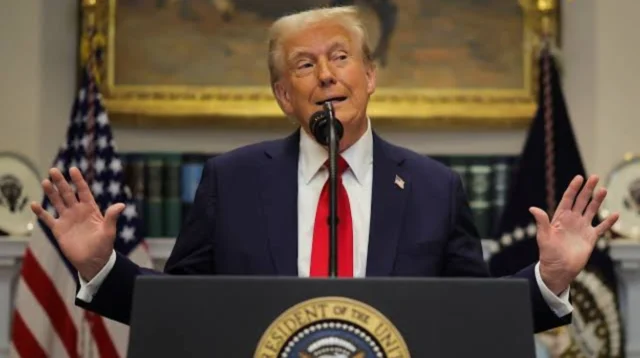
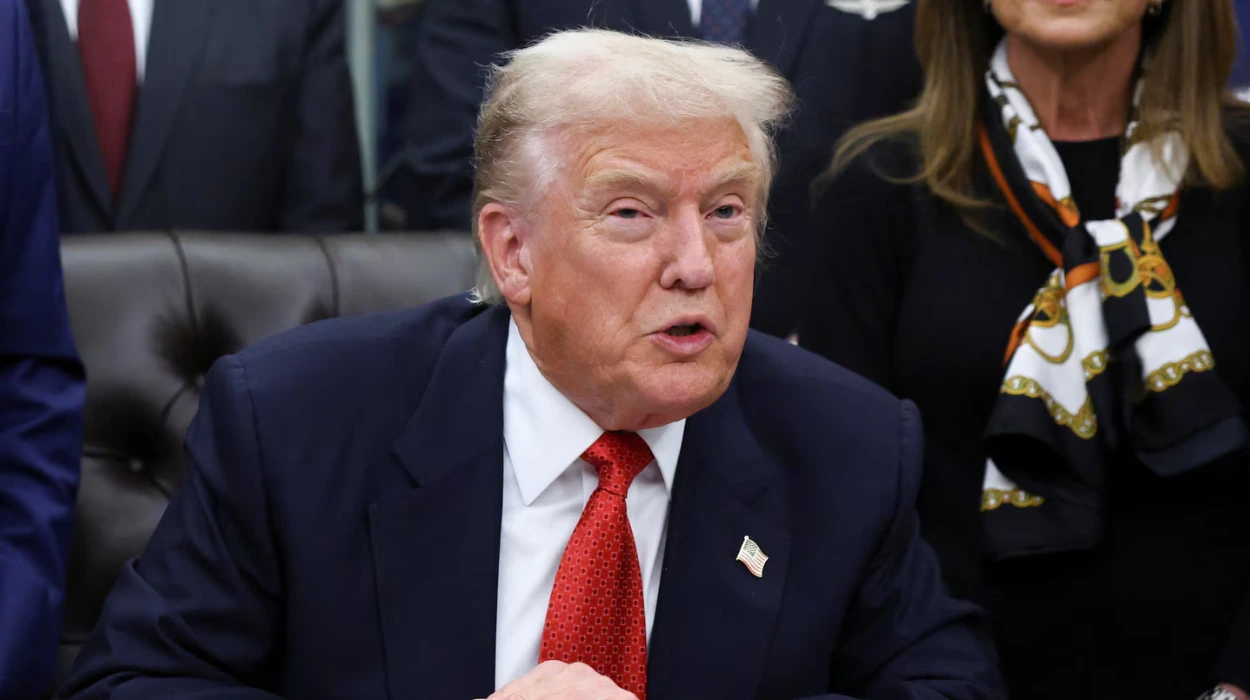
In spite of all these attempts at persuasion, however, President Trump continues to be indecisive and pragmatic in relation to Taiwan. Having taken the office of the president in 2025, he continued to change his opinion regarding Taiwan, trying at the same time to negotiate a deal with Beijing. In this respect, Taipei finds itself caught between a rock and a hard place since it needs continuous backing by the United States in order to balance the increasing Chinese military presence in the region.
As Trump stated in his recent statement,
“They both need to cool it down.”
Here Trump wants to reduce tensions between the two countries but without losing control over both parties. The communist government in China regards Taiwan as their country due to its democratic nature. However, Trump’s attitude towards communication with Lai is totally opposite to the “one China” policy adopted by the United States for many years now.
Trump’s reluctance to authorize new arms sales to Taiwan further complicates the picture. While his advisers push for increased militarization in the region, Trump has not taken concrete steps to bolster Taiwan’s defense capabilities. This hesitation stems from his broader goal of negotiating a trade deal with Beijing, which requires maintaining a degree of diplomatic caution.
“Xi promised no invasion while he remains in power,”
Trump reportedly said, but he has not followed this with tangible support for Taiwan’s security.
The 2016 Precedent: Bob Dole and the Taiwan Phone Call
The current lobbying campaign echoes a pivotal moment in 2016, when President-elect Donald Trump broke diplomatic protocol by speaking directly to Taiwan’s President Tsai Ing-wen. That call was facilitated by Bob Dole, a former Republican presidential candidate and seasoned lobbyist, who helped orchestrate the meeting through well-paid lobbyists. The incident marked a significant departure from the “one China” policy and set the stage for Trump’s more assertive stance on Taiwan in his first term.
It did not only serve as an interesting event in international politics but also as a strategy that showed the readiness of the American president to break all the rules and norms. Furthermore, it became evident that lobbying can play a crucial role in affecting decisions of presidents in matters of international affairs. Nowadays, the Taiwan lobby has taken advantage of this experience and uses almost identical strategies to try to affect Trump’s future foreign policy. However, now the lobbying process is more institutionalized since it has its budget and allies inside Trump’s team.
Back then, it cost about $170 thousand to influence Trump’s opinion about Taiwan by means of TECRO – Taiwan Economic and Cultural Representative Office. In such a way, Taiwan received such an unexpected call from Trump that shocked Beijing and set another tone of the discussion of the relations between America and Taiwan. The lobbying is getting more intensive today since everything has become even more serious.
Congressional Pressure and Bipartisan Support for Taiwan
The work of the Taiwan Lobby gets an added boost from strong bipartisanship in Congress. In May 2026, a total of 28 senators issued a letter to Trump, encouraging him to restate the commitment of America to Taiwan in light of his meeting with Xi Jinping. Notably, the letter stated,
“America’s commitment to Taiwan is inviolable.”
This statement has become a mantra for the Taiwanese supporters in Congress. The added pressure in Congress will complicate the decision-making process for Trump, who must now consider not only his advisors’ but also the lobby’s demands.
The bipartisan element of this backing is crucial. It encompasses Republicans as well as Democrats who consider Taiwan an important ally within the Indo-Pacific region. The importance of the bipartisan backing lies in the realization of the challenges presented by the rise of China as a systemic threat to U.S. interests, especially through the involvement of Taiwan. In addition, the letter from the senators highlights another crucial point related to the strategy of the Taiwan Lobby in promoting backing for Taiwan, as discussed in class.
Trump’s Summit with Xi and the Taiwan Question
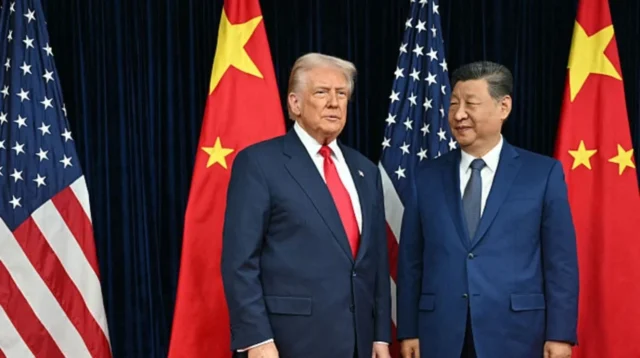
The upcoming meeting between Trump and China’s president, Xi Jinping, will be crucial in proving the effectiveness of the Taiwan Lobby group. During the recently held meeting, the role played by Taiwan in Xi’s conversation with Trump was very important; this is not seen when Xi speaks to Putin. It will be worth noting that during the meeting, Taiwan will come up as an important subject for discussion.
Xi has reportedly promised Trump that there will be no invasion of Taiwan while he remains in power. However, Trump has not followed this assurance with concrete actions to bolster Taiwan’s defense capabilities. This hesitation reflects his broader strategy of negotiating a trade deal with Beijing while maintaining a degree of diplomatic caution. The Taiwan Lobby’s goal is to push Trump beyond this cautious stance and into a more assertive stance on Taiwan’s security.
The Future of U.S.-Taiwan Relations Under Trump 2.0
With the return of Trump to the Oval Office along with his hardline policy advisors, there would certainly be an anticipation of a conflict from Beijing, which is bound to take actions based on their expectation. The purpose behind the “full-court press” by the Taiwan Lobby is precisely to make sure that President Trump continues with the policies that favor Taiwan’s safety and autonomy.
The future of U.S.-Taiwan relations under Trump 2.0 will depend on how well the Taiwan Lobby can maintain pressure on Trump and his advisers. If the lobby succeeds, Trump may take more concrete steps to bolster Taiwan’s defense capabilities, including authorizing new arms sales and increasing military cooperation. If the lobby fails, Trump may continue his transactional approach, prioritizing trade deals with Beijing over Taiwan’s security.