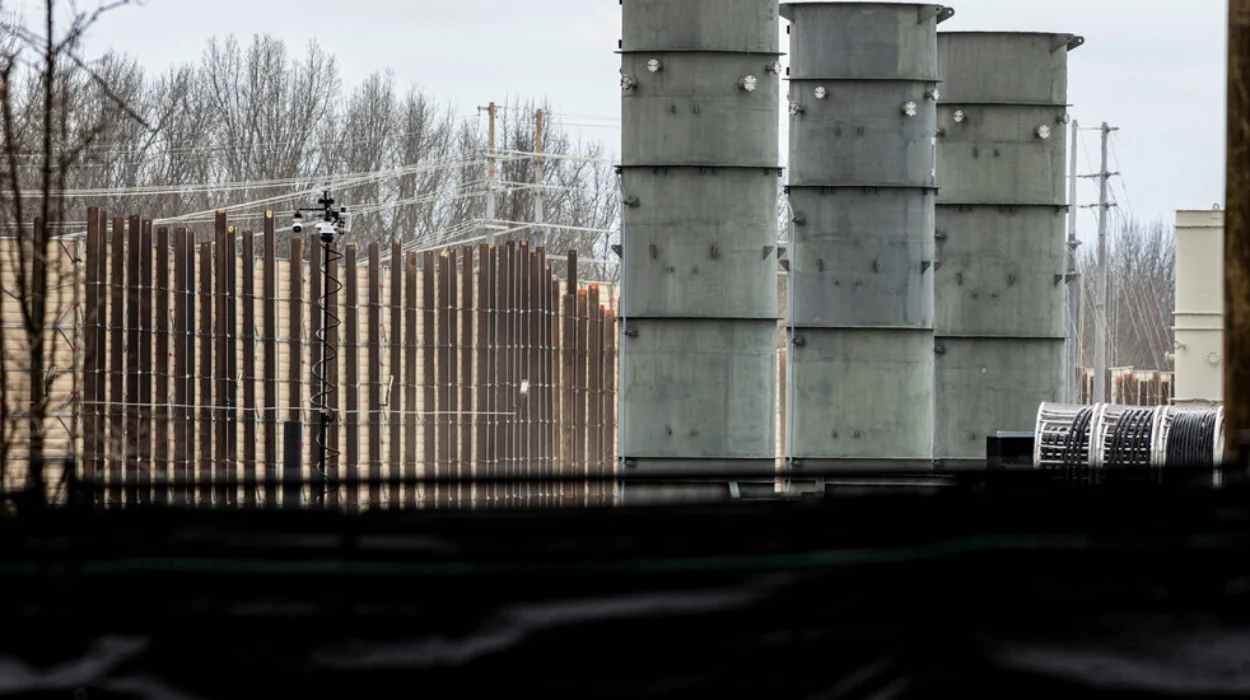
In a move that has ignited fierce debate across legal, environmental, and civil rights circles, the U.S. Department of Justice under President Donald Trump’s administration has formally intervened to seek dismissal of a NAACP-led air pollution lawsuit against Elon Musk’s xAI data center in Mississippi. The motion, filed late Monday, June 15, 2026, argues that the natural gas turbine facility powering the $20 billion AI data center is “critical to the economy” and vital to U.S. national security and military operations.
This legal move goes beyond being an exercise in procedure; it is an indication of a brewing conflict between the federal desire to expedite artificial intelligence development and the existing environmental protection laws embodied by the Clean Air Act. It has fast become the center of debate regarding environmental justice and corporate influence, particularly in the realm of federal environmental law litigation initiated by citizens.
The NAACP’s Lawsuit: Alleging Illegal Turbine Operations and Health Risks
In this case, the coalition led by the NAACP claims that the data center owned by xAI in Southaven, Mississippi is utilizing several turbines powered by natural gas and methane without proper air permitting licenses. The claimants further argue that these turbines release various pollutants such as nitrogen oxide (NOx), which are known to cause respiratory and heart diseases especially among individuals living near these areas.
The NAACP has framed the case as a civil rights and environmental justice issue, arguing that minority and low-income communities are disproportionately burdened by the facility’s emissions. The group contends that the turbines’ operation violates the Clean Air Act and undermines community health safeguards that have been decades in the building.
“This is not just about pollution; it’s about whether marginalized communities will be sacrificed for the sake of technological progress,”
said a NAACP representative involved in the case, speaking to reporters on Monday evening.
The plaintiffs have called for immediate shutdown of the unpermitted turbines, strict emission monitoring, and compensatory measures for affected residents. They also seek court orders requiring xAI to obtain all necessary permits before continuing operations.
DOJ’s Legal Argument: National Security and Economic Imperatives
These reasons are outlined in the motion to dismiss, in which the Justice Department under the Trump administration uses national security and economic need as main arguments for dismissal. According to the DOJ, the AI data center that operates with the help of turbines is crucial for maintaining US competition in the field of artificial intelligence.
According to the department, the Clean Air Act grants the agency the jurisdiction to interfere with citizen-filed cases against environmental agencies or organizations, especially when matters of national concern come into play. This point of view has been questioned by many environmental law scholars for its overly broad interpretation of the act.
“The government is asserting unprecedented authority to override local and community-based environmental enforcement in the name of national security,”
said a senior environmental lawyer at a leading civil rights organization, who reviewed the DOJ filing.
The DOJ also emphasized that permitting for the power plant falls under Mississippi state jurisdiction, not federal. According to the department, state authorities previously determined that no permit was required for the turbines, a claim that xAI has publicly supported.
State Permitting Dispute: Who Decides What’s Legal?
One of the issues in the controversy is whether the turbines had been approved by law. According to the DOJ and xAI, the regulators in the Mississippi state determined that there was no need for the facility to have an air permit due to the existence of exemptions in relation to the kind of turbines in use. On the other hand, NAACP contests this claim and claims that the turbines qualify under some categories for air permits.
This dispute also touches upon an issue that raises questions regarding the scope of regulation: Under what circumstances can an exemption be used, and what is the last word on what kind of permits are needed in cross-jurisdictional disputes where national security is involved in federal terms? No public statement has been made by environmental regulators in Mississippi concerning the stance they take, despite local authorities being supportive of tech infrastructure building in Mississippi.
Emission Estimates and Public Health Concerns
Although there have been no verified estimates of emissions coming from the xAI plant, the NAACP claims that there will be a lot of nitrogen oxides produced from the turbines. Studies reveal that NOx pollution has been found to lead to the development of health issues such as asthma and heart problems within industrial areas.
“We’re seeing data that suggests emissions could exceed safe thresholds for nearby residents, especially children and the elderly,”
said a public health expert consulted by the NAACP coalition.
The main criticism against the plant centers around the fact that there is no real-time monitoring of emissions nor any independent validation for this purpose. Critics also note that having the wind turbines located near residences and schools raises concerns about acute exposures when the facility is operating at full capacity. xAI has not disclosed any details about its emissions, although according to the company’s own public pronouncements, the company claims that it is dedicated to responsible energy use and environmental compliance. It is worth mentioning that the firm needs an on-site facility due to its technical requirements.
Political and Policy Implications: AI Infrastructure vs. Environmental Oversight
In this case, one can observe how federal authorities’ involvement represents another trend in policy-making that has become more apparent lately – that is, the readiness of the federal government to give priority to the fast deployment of AI facilities over regular environmental reviews. Clearly, this tendency reflects President Trump’s plans concerning the acceleration of technological investments.
However, the Move has raised alarms among environmental advocates and civil rights groups who warn that such priorities could undermine long-term public health protections and erode community trust in regulatory institutions.
“If national security becomes a blanket excuse to bypass environmental laws, we risk creating a system where community voices are silenced and pollution is normalized,”
said an environmental justice advocate who has worked on similar cases for over a decade.
This case further brings to light an ongoing controversy regarding the proper use of citizen suits provided under the Clean Air Act. The provision in question was intended to provide an avenue for holding accountable entities that contribute to pollution where the government fails to take action in this regard. By asserting that the DOJ has the right to supersede such cases, the implications could be very far-reaching.
Legal Path Forward: What Happens Next?
The most important thing that will happen next in this case is the judge’s decision regarding the motion to dismiss filed by the Department of Justice. If the judge rules in favor of dismissing the suit, then either the NAACP’s legal action will be stopped altogether or significantly curtailed, which would mean the issue would then be left to the states. If the judge denies the dismissal, then the case will move into the discovery process.
Legal analysts expect the court to weigh several factors:
- The validity of Mississippi’s permitting determination
- The scope of the DOJ’s authority under the Clean Air Act to intervene in citizen suits
- The strength of the NAACP’s evidence regarding unpermitted operations and health risks
- The government’s national security and economic arguments
The outcome could set a precedent for how future environmental challenges to AI-related infrastructure are handled, especially when federal national security claims are invoked.
Broader Impact on Environmental Justice and Tech Regulation
This case is bound to affect how environmental justice matters will be dealt with amid the fast-paced tech development. The increased energy consumption of and geographic clustering of AI data centers have sparked the concerns of nearby communities about the pollution, noise, and potential health risks.
The DOJ’s backing of xAI may set a precedent for other tech firms to cite security or economic reasons in opposition to environmental oversight, which can result in weakening the community-based enforcement framework. On the contrary, rejecting the motion by the court can help empower citizen lawsuits and protect the environment of vulnerable communities.
“This case will shape whether environmental justice remains a priority in the age of AI, or whether it becomes an afterplace in the rush for technological dominance,”
said a policy researcher specializing in tech regulation and environmental law.
A Defining Moment for Law, Tech, and Community Rights
The US DOJ filing by the Trump administration for an injunction to stop the NAACP from suing Elon Musk’s company, XAI, for its violation of Clean Air standards represents an important test case on how environmental law and civil rights intersect in light of national security concerns. It will become apparent from the legal proceedings whether the interests of the federal government have supremacy over community-driven enforcement of environmental laws.
For now, the turbines in Southaven continue to operate, the communities nearby remain concerned, and the legal battle sets the stage for a broader reckoning over who gets to decide what is acceptable in the name of progress.