House Judiciary Committee Chair Jim Jordan has escalated his fight with former special counsel Jack Smith by formally asking the Justice Department to investigate him for possible criminal charges over alleged false statements in congressional testimony. The move turns a political and legal dispute into a potential criminal referral, but it remains only a request at this stage, not a charge or indictment.
What Jordan Is Alleging
Jordan’s central claim is that Smith
“seemingly made willfully and intentionally false statements of material fact”
during his December 17, 2025 deposition before the House Judiciary Committee.
According to Jordan, the new documents obtained refute Smith’s previous statement on whether his office sought access to the communications between members of Congress in the investigation related to Donald Trump. In his statement, Jordan mentions that the committee discovered “strong evidence” of Smith’s deception of Congress, and he has requested the acting attorney general, Todd Blanche, to look into whether false statements of the type that would violate federal law have been made. This referral from Jordan is important in the sense that it is a referral from a very important oversight Republican in the House, and more importantly, Smith is the special counsel who investigated and prosecuted the former president Trump in two federal investigations.
What Smith’s Lawyers Say
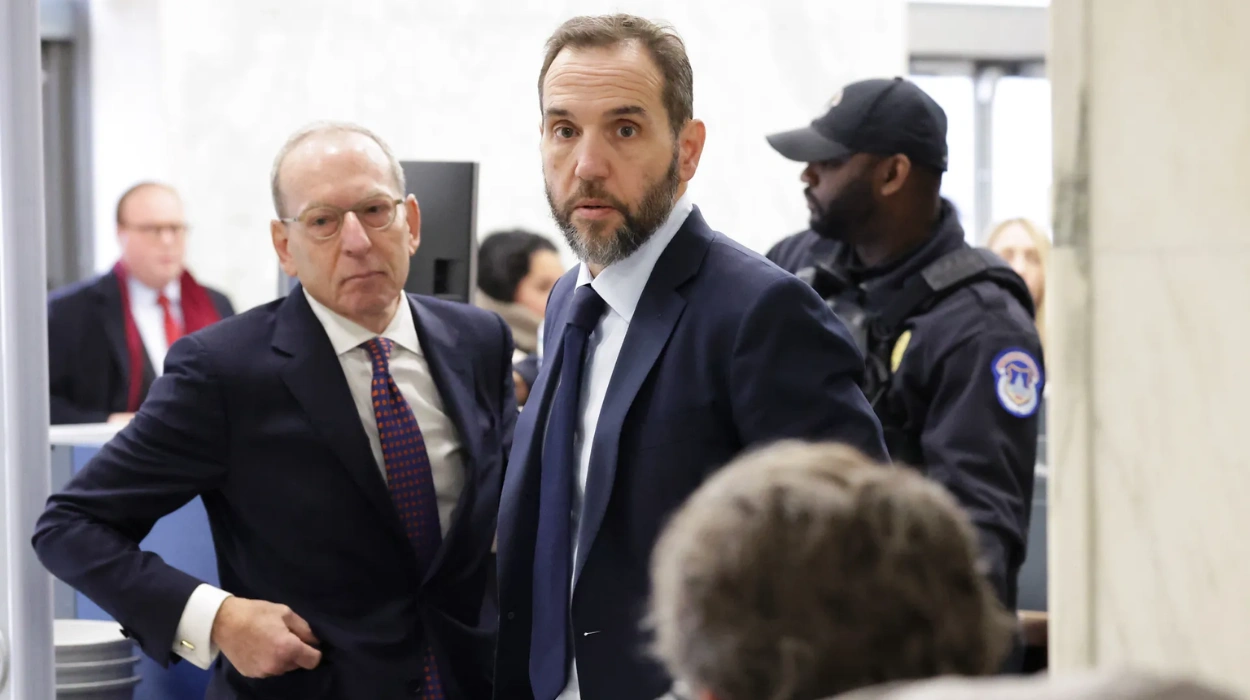
Smith’s lawyers have rejected the accusation outright. In their response, Peter Koski and Lanny Breuer said Smith
“provided truthful, responsive answers and candidly discussed his work as Special Counsel”.
The defense counsel also said that the referral by Jordan himself invalidates the charges against him since it shows that he recognizes that Smith did not make a false statement but simply did not provide voluntary information on matters that were not directly asked of him. It is a significant difference since in false statements cases, the burden on the prosecution is to prove that there were indeed false statements made, and not merely a political dispute as to the interpretation of statements that could be made before Congress.
How The Dispute Started
This particular issue dates back to Smith’s secret deposition on December 17, 2025, during which members of Congress interrogated the special prosecutor regarding his work and his investigations of the attempts made by Trump to change the results of the 2020 presidential elections and retain the classified information after his term of presidency expired. After Smith’s secret deposition had been published, it became clear that he had stood up for himself and stated that his investigations had not been politically motivated.
There have been numerous claims that the most controversial part of Smith’s testimony regarded the records and communications of the members of Congress and former associates of the Trump administration. It is also known that there have been numerous inquiries from Smith regarding the logs of phone calls and other documents, and this is exactly what triggered the controversy at the moment.
Why The Testimony Matters
The reason this episode has drawn such intense attention is that Smith is not just another former prosecutor; he is the lawyer who led the federal cases against Trump during the Biden administration. His work became central to the political struggle over whether the legal system was being used to hold Trump accountable or to target him unfairly. When Congress later compelled Smith to testify, the hearing became an opportunity for Republicans to challenge the legitimacy of his prosecutions and for Democrats to defend them.
That backdrop helps explain why Jordan’s referral has wider political significance than the narrow legal question it raises. For Trump allies, Smith’s testimony is another front in a long-running battle over accountability, election claims, and the conduct of federal law enforcement during and after Trump’s presidency. For Smith’s supporters, the referral looks like retaliation against a prosecutor whose cases against Trump were politically explosive but legally grounded in public evidence and grand jury proceedings.
Legal And Political Stakes
The congressional criminal referral does not in itself make an accusation; it merely requests the Justice Department to consider whether there is sufficient evidence to investigate or prosecute the case, and the Justice Department has indicated that it will review any evidence suggesting criminal activity. Thus, rather than considering immediately whether Smith has been indicted, the critical issue becomes whether the prosecution thinks that Jordan’s referral passes the legal test to bring a false statement case.
From a purely legal standpoint, this could be a significant issue because such cases often depend on wording, scope of questions asked, and whether the responder had a duty to disclose such information. Politically speaking, there are serious implications on both sides because the Justice Department’s decision on how to handle this case will certainly be viewed through the prism of Trump era revenge politics, and inaction would be seen as politically motivated.
Background Of The Broader Clash
This referral did not emerge in isolation. It follows months of Republican criticism of Smith’s investigations and repeated efforts to reopen questions about his conduct as special counsel. The House Judiciary Committee made Smith’s deposition public and turned it into a political document as much as a legal record, highlighting his comments about Trump, the 2020 election, and alleged obstruction in the classified-documents case.
Smith, for his part, used the deposition to defend his record and argue that his decisions were based on evidence. In the public transcript, he described Trump as the central figure in the election-subversion case and insisted that his office’s work was not designed to interfere with Trump politically. That testimony now sits at the heart of the fight, because Jordan’s referral claims the documents released afterward expose contradictions while Smith’s side says the committee is selectively interpreting them.
The next step depends on whether the Justice Department treats the referral as sufficient grounds for further review or quietly declines to pursue it. If DOJ opens a review, the department would likely examine the exact language of Smith’s testimony, the questions he was asked, the documents Jordan says contradict him, and whether any omission or statement was material and knowingly false.
Even if the department does nothing, the referral itself is politically useful to Republicans because it keeps Smith and his prosecutions tied to a narrative of alleged misconduct. If DOJ moves forward, the story could become one of the most significant post-prosecution investigations involving a former special counsel in recent memory. Either way, the dispute has already become part of the larger post-2024 struggle over Trump, his prosecutors, and the credibility of federal law enforcement.