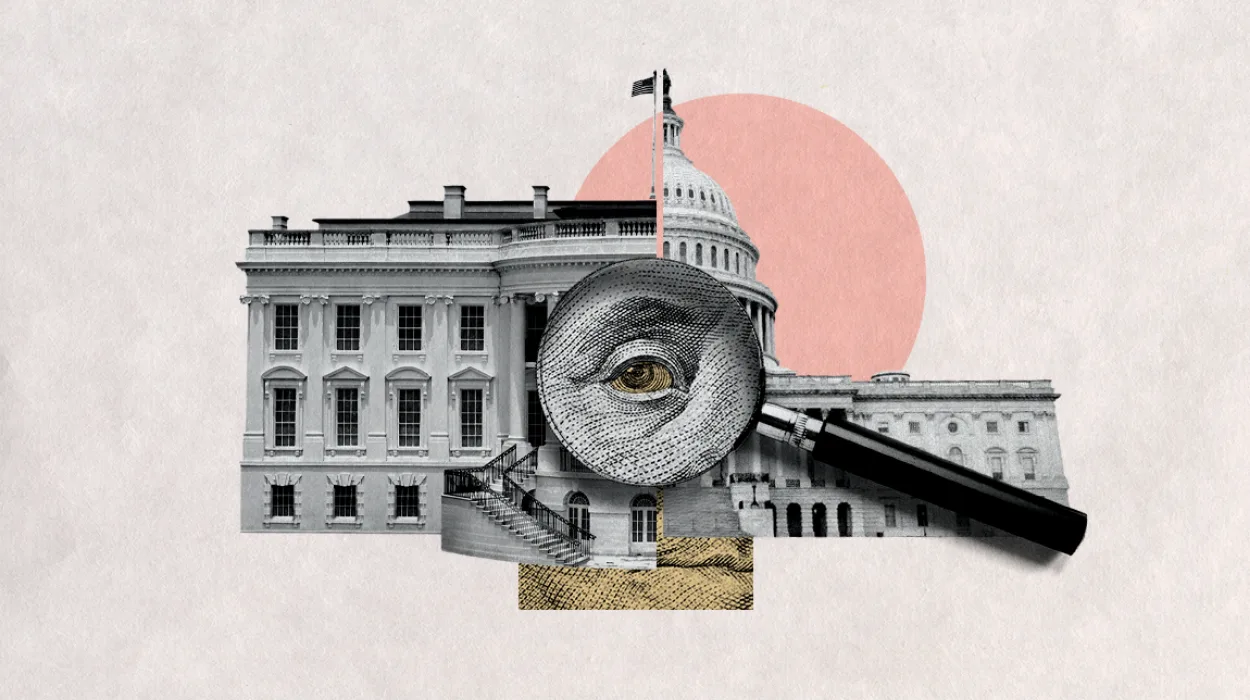
In 2025, trust in government institutions is at a historic low in a number of democratic countries. In the United States, only 22 to 33 percent of Americans say they trust the federal government to act in the public interest most of the time.
The decline is especially steep among younger citizens, with only 15 percent of Americans ages 18 to 34 saying they trust any federal institution to a great extent. A combination of political impasse, perceived corruption, misinformation, and administrative opacity has fed into this erosion. Transparency, that is, timely, accessible and verifiable disclosure of government actions and information, has become an essential tool for restoring this lost trust. It helps hold officials accountable by making it clear how citizens’ decisions are made and money spent.
Transparency as a trust-building foundation
According to data to be released by the Organisation for Economic Co-operation and Development (OECD) in mid-2025, in member states we find that only 39 percent of people have moderate to high trust in national governments. The average hides dramatic differences, with the highest levels of trust found in the Nordic countries, and the opposite in the Southern and Eastern European states. Trust is positively correlated with issues of public service transparency and integrity.
Although a number of countries have introduced transparency laws – including freedom of information laws and anti-corruption laws – implementation is mixed. For example, only 42 percent of OECD countries release public declarations of assets of senior officials and even fewer countries publish comprehensive salary information. These lapses between policy and practice undermine public faith in mechanisms of government accountability.
Transparency and social cohesion
Transparency among public institutions is likely to encourage greater civic participation and policy compliance. When you are able to explain the reasons and data behind policy decisions (such as tax reform or emergency health mandates), citizens are more likely to accept them in ways that would otherwise be hard to accept. Transparency thus not only leads to increased trust, but also social cohesion and democratic resilience.
Transparency’s role in accountability and governance quality
Transparency directly contributes to enhanced accountability; it makes citizens, civil society and oversight institutions able to exert oversight; An American public opinion poll conducted in 2025 by the Partnership for Public Service showed that 69 percent of the respondents thought their federal government was corrupt or wasteful. Whether or not this perception is accurate, whether or not it is overblown, has a debilitating impact on democratic legitimacy and civic morale.
High performing transparency systems: open budget data, procurement systems and real-time project monitoring dashboards. These tools, on the one hand, help to uncover inefficiencies and help to prevent fraud, and on the other hand, they contribute to the improvement of public service delivery, while simultaneously strengthening ethical standards in the public administration system.
Digital platforms enabling government openness
Digitization has revolutionized the capacity of governments to make available to citizens information that is timely and reliable. From pandemic relief spending to infrastructure expenditures, transparency portals, online contract libraries and interactive dashboards enable monitoring of them all. The U.S. Treasury Department’s latest Open Government Plan, released in April 2025, included new features of budget visualizations and live procurement databases. Similarly, the Cybersecurity and Infrastructure Security Agency (CISA) has expanded its initiative against disinformation in order to safeguard the integrity of information and prevent the eroding of trust by citizens towards the messages of the government.
These steps are only a component of a larger strategy for governments not just to be open, but transparent by default–in which disclosure is proactive and systematic, rather than reactive or selective.
Stakeholder perspectives on transparency and trust
Transparency International have asserted that transparency is not only a cultural norm in and of itself, which needs to be ingrained in governance systems and not merely compliance, but also it will take strong leadership, independent institutions, and forms of citizen participation. Similarly, Transparency International’s 2025 brief mentions the concept that simply making information available is not enough unless it is accurate, accessible and useful to citizens.
Open Government Partnership (OGP), an international lobby organization for transparency reform, is firm in the stance that computer access and legislation-guaranteed protection must be accompanied by training, civic education, and protection of investigative journalists and whistleblowers.
Local vs. federal transparency perceptions
Interestingly, federal institutions score lower in public trust than do local governments. In 2025, more than 50 percent of U.S. citizens express levels of confidence in their local city or county officials. This contrast may be explained by more visible and perceived responsive local actors, and perhaps more direct mechanisms for community engagement. This points to the need to ensure that national level institutions learn from localized transparency initiatives and internalize bottom-up approaches.
Statistical trends shaping transparency’s impact in 2025
The global transparency movement has made measurable headway in 2025. Transparency portals and digital government services have seen a 30 percent increase since 2023 as a result of rising demand for transparency and technological improvements in open data infrastructure.
In the judicial sector, OECD data indicates an average of 54 percent levels of trust, which implies that the transparency of courts and law enforcement is, on average, higher than political institutions. In addition, countries that publish court decisions and that maintain public legal archives derive higher rule-of-law ratings and have lower corruption indices.
Further, countries with higher transparency regimes also have higher citizen satisfaction ratings. For instance, countries that offer public access to procurement contracts, environmental impact data and real-time budgetary expenditures consistently show less perceived corruption.
This author has spoken to the topic, highlighting transparency’s significant role in enabling trust through clear, accessible, and honest governance processes, amid modern social and political complexities:
4/ That's on top of Trump's imposition of secondary sanctions on Russia's customers.
— Rod D. Martin (@RodDMartin) August 21, 2025
Russia can't fight without cash. Trump has made clear he'll dry that up. He's already started with India.
Putin needs to think very carefully. He can have peace. Or he can bleed. pic.twitter.com/0hx4nomxV4
Transparency’s future as a democratic imperative
The journey to govern in 2025 resonates with one basic lesson: trust cannot be legislated—it must be built on the foundations of openness, predictability, and accountability. As the world confronts complex challenges from climate resilience to artificial intelligence governance, public institutions must transform to be attuned to the needs of increasingly informed and digitally connected citizens.
Transparency is not a peripheral concern anymore, it is the structural core of public legitimacy. How governments organize and strengthen transparency will shape not only their domestic governance results, but also their credibility on the world stage. The more trust is shattered, the more transparency becomes not only attractive, but vital.