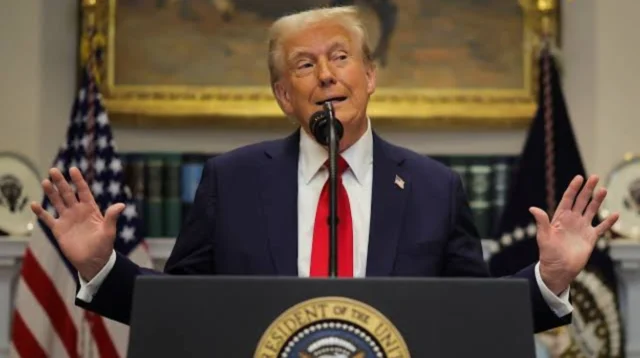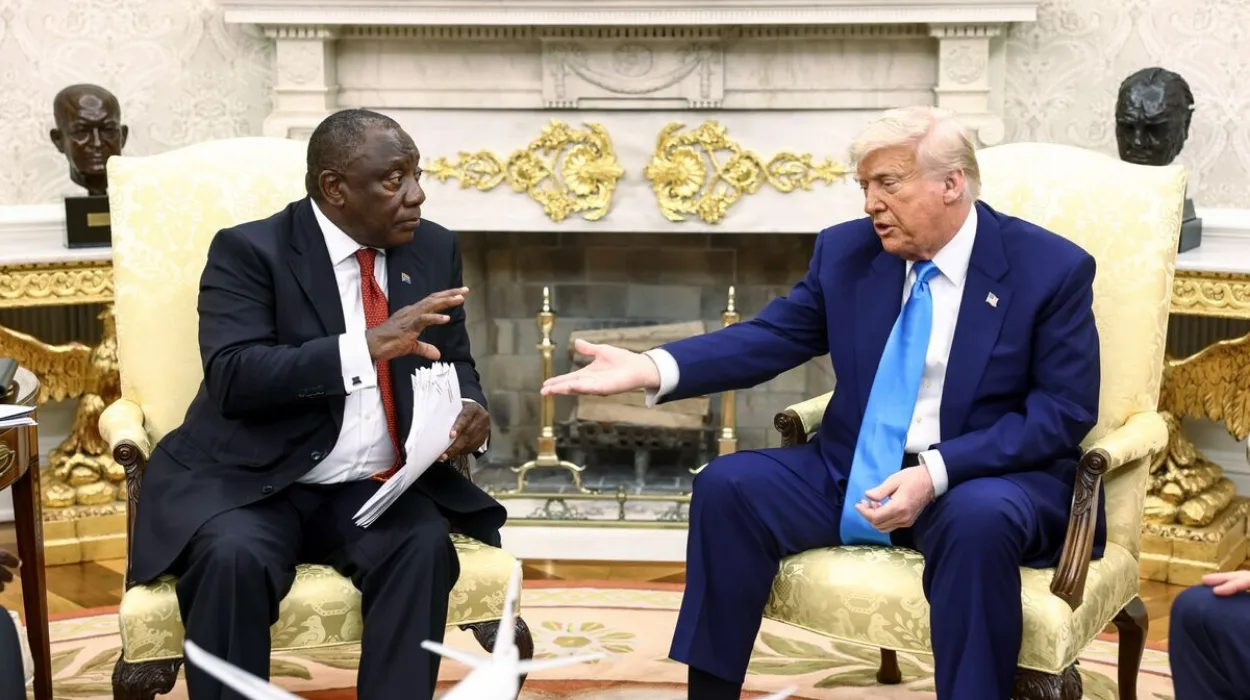
In 2025, an increase in diplomatic tension between the United States and South Africa occurred when the U.S. President Donald Trump recommended South Africa not to be included in the G20. His statements were made only a few weeks before the inaugural G20 summit to be hosted on African soil, in Johannesburg. Trump has alleged that South Africa discriminates against its white Afrikaans minority and is corrupt at the very top of government, making the allegations categorically denied by the South African government.
The scandal puts Pretoria in the epicentre of a political hurricane, which is much bigger than bilateral relations. The fact that Trump said that South Africa should not even be in the G anymore is not only an attempt to render it illegitimate in the forum but also reflects on the principles of inclusivity and global representation on which the recent development of the G20 has been based. The call comes at the time when the group is trying to further broaden its agenda to also cover the African economic development and reform of international financial institutions.
Dissecting Trump’s Criticisms And U.S. Policy Moves
The critiques by Trump are connected to the historical issues related to the policy of land redistribution in South Africa, which is meant to solve the inequalities that were created by apartheid in the past. He has reused these initiatives, on multiple occasions as a series of targeted expropriations on white farmers, following a series of narratives that had emerged in conservative political circles in the U.S. The matter was reopened in early 2025, with the advisory team of Trump associating the South African land reforms with state-made persecution, which has prompted another media debate on governance and human rights.
Meanwhile, U.S. immigration officials affirmed that it would maintain a refugee program started under Trump in the previous tenure, allocating 7,500 visa slots to white Afrikaans applicants in the 2026 financial year. South Africa has criticized this decision as a political intrusion, and part of the support it gives the idea that Trump is using the rhetoric in domestic politics to capitalize on the racial differences.
Impact On US-South Africa Relations
The position of Trump makes the diplomatic approach of Washington to Africa hard. Although the Biden administration has preserved collaborative interactions in the form of the U.S.Africa Leaders Summit and economic alliances like the Prosper Africa program, the rhetoric used by Trump indicates the possibility of a shift to the course of disengagement. His statement that he would not attend the Johannesburg summit is indicative of a larger cynicism of multilateralism and economic governance structures in the world.
The blowback would decrease the U.S. influence in Africa, where China, Russia and the European Union have been increasing their influence slowly but surely through trade, infrastructure and energy investments. With South Africa set to host the G20 summit in 2025, the leadership role is symbolically attributed to the desires of the continent to be included in the world. These remarks by Trump are not only viewed as an assault on Pretoria but also on an enlargement of the scope of African ascendancy in the world of international relationships.
South African Responses And Regional Significance
South African leaders have reacted in a reserved yet resolute manner, asserting the purity of their domestic policies as well as their world image. Presidential spokesperson Chrispin Phiri reiterated that South Africa is still dedicated to hosting a successful G20 summit, which would represent the voice of Africa in world decision-making. He had also said that claims of minority persecution are unfounded and politically inclined.
Diplomatic corps of Pretoria highlighted that the land reform is a constitutionally-directed process which seeks to right structural inequities without weakening personal property rights. Trump has been accused by the officials of falsifying facts to get himself political points in a sensitive pre-election atmosphere in the United States.
African Union And Continental Implications
The conflict is also echoed throughout Africa. Africa has never had an institutional presence in the G20 before, however, with the African Union becoming a formal member of the organization in 2023, it now has representation in the forum. The symbolic significance of South Africa becoming the chair of the 2025 summit denotes a wanton struggle to have better representation in global governance. African leaders may interpret the remarks of Trump to mean he does not value Africa and this might fuel unity among the African states as well as motivate the African states to mobilize against the international forces in a bid to achieve self-determination.
Some African critics interpret the episode to indicate an imbalance in global diplomacy that still exists where western political leaders can take away the legitimacy of developing countries by making unilateral remarks. The fact South Africa has a second time to defend its position in G20 therefore makes it a continental advocacy effort, not just a national interest.
Broader Geopolitical And Institutional Considerations
The informal, consensus-based structure of the G20 does not contain any instruments to resolve the issues of membership legitimacy. Expulsion has no lawful foundation and the involvement is based on political insight and not the treaty binding. The request made by Trump to be exclusionary, then, has no procedural value but a lot of symbolic power. It reveals the weakness of international conferences where political conflicts are more important than overall economic goals.
The incident highlights the reliance of informal structures of governance on goodwill in diplomacy. Once the major players sabotage this base, the forum fails to serve a purpose as a dialogue platform. Analysts give a warning that the continuation of political polarization amongst the member states may undermine the credibility of the G20 as a place to coordinate world action.
The Future Of U.S. Engagement In Global Forums
The issue of Trump refusing the Johannesburg summit is an indicator of a turning point of U.S. multilateral involvement. Under his predecessor, the U.S pulled out of a number of international bodies such as the Paris Climate Accord and the World Health Organization before returning to them under the Biden administration. His new drive in 2025 against some forums in the world indicates a shift back to the transactional approach of diplomacy, where membership and alliances are not based on long-term global stability but on immediate national gain.
In the case of Washington, the diplomatic expenses may be huge. Since the major economies of the world are diversifying alliances, long-term U.S. non-participation in the key summits might leave space to be filled by rivals such as China and India, both of which have endeavored to encourage Africa to be integrated into the financial and trade systems of the world. Such disengagement jeopardises the U.S. strategic interests, when the global economic governance faces a tremendous change.
Shifting Dynamics In Global Representation
The controversy of South Africa joining G20 is playing out at a pivotal point as the global South is concerned in world politics. The industrial giants in the West held the major economic forums for decades. The African Union should also be mentioned and the 2025 G20 summit in Johannesburg is another step in the right direction to correct that imbalance. Although politically charged, Trump inadvertently points out to the changing geopolitical situation, the situation whereby emerging economies can no longer be viewed as passive actors, but as agents of actually shaping the discourse of the global arena.
At the same time, the episode exposes the fragility of these gains. If major powers continue to challenge the legitimacy of developing nations within global institutions, it could stall progress toward a more inclusive international order. South Africa’s steadfast defense of its position will therefore serve as a test case for how resilient these new structures of representation truly are.
As the Johannesburg summit approaches, the world watches closely to see whether diplomacy can overcome rhetoric. The controversy surrounding Trump’s stance underscores the enduring question of who gets to define global legitimacy in an age of multipolar competition. Whether the G20 emerges strengthened by its diversity or weakened by discord may ultimately depend on how nations navigate this confrontation not just between the U.S. and South Africa, but between competing visions of global governance itself.