Lobbying giants have entered 2025 with unprecedented momentum, reflecting both structural growth and rising policy uncertainty across Washington. Federal lobbying expenditures rose beyond $4.5 billion in 2024 and continued climbing into the new year, demonstrating a steady institutional reliance on influence-driven policymaking. The ratio of roughly 13,000 lobbyists to 535 members of Congress illustrates the weight of professional advocacy in shaping federal actions.
The investment surge has been propelled by heightened regulatory shifts in health, technology, and international trade. As industries face new standards and compliance requirements, firms specializing in these domains have expanded their operations to meet client demand. The current administration’s active regulatory agenda has further intensified the need for strategic advisory and congressional navigation.
Leading Firms And Their Policy Spheres
Akin Gump Strauss Hauer & Feld LLP led the field in 2025 with $56.7 million in revenue, followed closely by Holland & Knight LLP and Cornerstone Government Affairs Inc., generating $49.9 million and $48.6 million, respectively. These firms operate across diversified yet interconnected domains, enabling them to remain competitive across multiple policymaking fronts. Akin Gump’s influence in international trade and defense places it at the center of debates surrounding export controls and security cooperation, while Holland & Knight’s footprint in infrastructure and transportation aligns with federal investment initiatives announced earlier in the year.
Cornerstone Government Affairs maintains deep connections in budgeting and agriculture policy, leveraging long-standing institutional relationships to support clients navigating shifts in federal spending priorities. These financial performances signal both concentrated influence and the critical role of multidisciplinary expertise.
Growing Priority On Technology Governance
A defining feature of 2025 has been the rapid expansion of lobbying activity targeted at technology regulation. Invariant LLC’s $42.3 million revenue reflects this trend, driven by emerging federal frameworks on artificial intelligence oversight, data privacy, and semiconductor competitiveness. Policymakers increasingly look to external expertise to interpret complex technological landscapes, giving firms specializing in innovation policy an influential advisory role.
Healthcare, Trade, And Regulatory Continuity
Healthcare persists as one of the most aggressively lobbied sectors. Forbes Tate Partners, with $26.4 million in revenue, typifies firms balancing work across healthcare, tax reform, and trade policy. Shifts in federal drug pricing approaches, combined with public health modernization efforts, have created sustained demand for professional advocacy.
Trade remains a contested battleground following renewed tariff adjustments and restructuring of bilateral agreements. Corporations navigating these changes rely heavily on firms capable of interpreting cross-border implications under stricter federal review.
Presidential Policies Reshaping Advocacy Dynamics
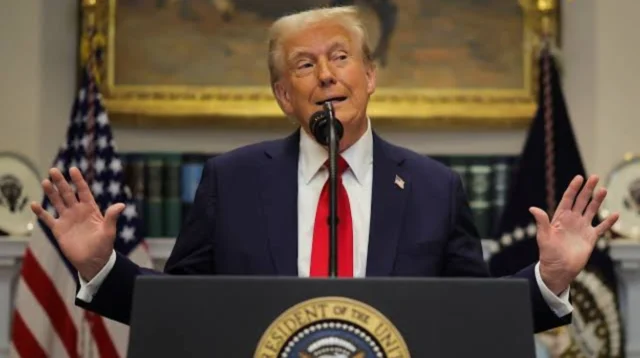
The administration’s second term has amplified lobbying activities across sectors newly affected by regulatory agendas. Trade policy, in particular, has driven intensified engagement. Akin Gump partner Brian Pomper noted that trade has reached its “highest strategic priority in decades,” capturing the urgency felt across industries impacted by shifting tariffs and supply chain governance.
This environment has encouraged multi-sector firms to expand their government relations divisions and deepen their coverage of regulatory agencies beyond Capitol Hill. As executive actions increasingly shape federal landscapes, lobbyists must adapt strategies to cover both congressional and administrative channels.
Revenue Surges In Early 2025
Ballard Partners exemplified dramatic industry growth, with a 225 percent increase in first-quarter revenues compared to the previous year. This surge reflects intensified demand across legal, corporate, and municipal clients seeking clarity amid evolving federal stances on economic competitiveness, cybersecurity, and national resilience.
Firms that scaled their operations early in 2024 are now positioned to capitalize on the acceleration of legislative negotiations and appropriations work in 2025.
Sectoral Influence And Stakeholder Power
Large commercial associations remain the top spenders, with the US Chamber of Commerce surpassing $20 million in lobbying expenditures this year. Sectors vulnerable to regulatory risk including energy, telecommunications, real estate, and pharmaceuticals continue to deploy substantial funding to shape debates that directly affect long-term profitability.
These groups are increasingly responsive to federal signals involving climate policy, broadband expansion, and antitrust enforcement, areas where Congress and federal agencies have revived longstanding discussions.
Lobbying Activities Of Controversial Industries
Long-term research shows that industries associated with adverse public health impacts—tobacco, gambling, alcohol, and ultra-processed food companies—remain persistent participants in the lobbying ecosystem. Collectively spending billions over the past two decades, these industries maintain significant influence in debates over consumer regulation, marketing restrictions, and taxation.
Their continued presence underscores persistent tensions between public health priorities and private enterprise interests, which remain central to policymaking debates in 2025.
Shifting Landscapes And Emerging Challenges
The expanding regulatory footprint across federal agencies has created a landscape where policy domains overlap more frequently than before. Issues such as climate resilience intersect with energy, housing, and transportation policy, while debates over artificial intelligence involve national security, workforce development, and intellectual property. Lobbying firms must now integrate expertise across multiple sectors to remain effective.
Transparency And Governance Concerns
The size of the lobbying ecosystem raises ongoing questions regarding democratic accountability. While lobbying is a protected form of participation, critics point to disproportionate access and the possibility of policies shaped more by financial clout than public interest. Calls for stronger disclosure rules continue into 2025, though legislative progress remains slow.
Positioning For Future Policy Cycles
Lobbying giants recognize that the pace of technological and geopolitical change will continue reshaping Washington’s policymaking priorities. Firms are investing in new analytical divisions, hiring specialists with technical backgrounds, and broadening their networks within executive agencies to maintain strategic advantage. The trajectory of the industry suggests not only continued growth but increasing sophistication in how influence is organized and delivered.
As federal priorities continue shifting and industries face accelerating regulatory transformation, the interplay between lobbying giants and policymakers will remain a defining feature of American governance. Whether the expanding influence of these firms ultimately enhances policy responsiveness or deepens longstanding concerns about access remains a question likely to shape debates as the year progresses, particularly as new economic challenges and political pressures reshape Washington’s evolving landscape.