US strategies for resolving Ukraine and Middle East conflicts in 2025 reflect a policy environment shaped by overlapping crises, shifting alliances, and the recalibration of power balances. Washington faces the dual challenge of supporting Ukraine against Russia’s continued military pressure while managing escalating regional tensions across the Middle East. These conflict zones intersect with global geopolitical competition, compelling the United States to deploy economic, military, and diplomatic tools with greater precision.
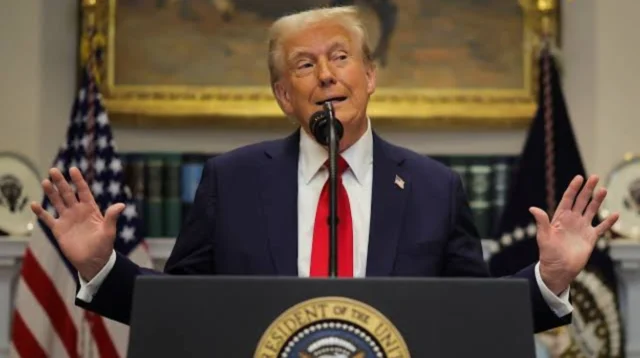
The second Trump administration’s emphasis on transactional diplomacy, strong defense backing, and the use of sanctions and tariffs as negotiating instruments has influenced policymaking in both regions. While the approach signals assertive intent, US officials navigate constraints created by domestic priorities, resource limits, and fractured relations with some traditional allies. These dynamics accompany growing expectations for renewed clarity in American leadership as fragile cease-fires and contested borders generate renewed volatility.
Strategic dimensions in Ukraine
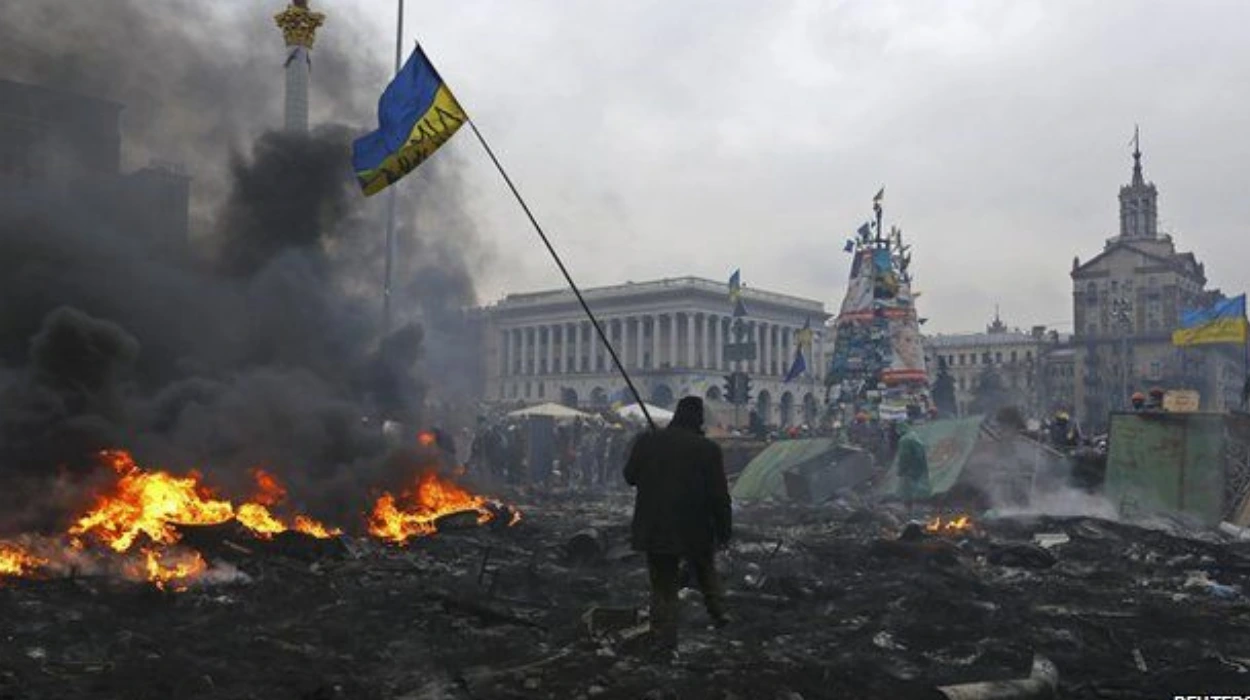
US strategies for resolving Ukraine and Middle East conflicts in 2025 are anchored in Washington’s commitment to reinforce Kyiv’s defense capabilities. New weapons transfers authorized under the 2025 National Defense Authorization Act provided Ukraine with additional artillery systems, air-defense support, and training programs aimed at strengthening operational readiness. Defense officials argued that sustained assistance remains necessary to counter Russian offensives that persisted throughout early 2025.
Sanctions continue to serve as the primary economic tool. Expanded measures targeted Russia’s energy exports, financial institutions, and high-technology sectors. The intention is to limit Moscow’s war-sustaining infrastructure while avoiding escalation into direct confrontation. US policymakers repeatedly emphasized the need for a “responsible deterrence posture,” seeking a balance that sustains Ukraine without widening the conflict.
Diplomatic coordination with European partners
Diplomacy forms the second pillar of the US approach. High-level meetings held in Brussels in March 2025 reinforced commitments to NATO’s eastern flank, including additional rotational deployments in Poland and the Baltic states. These moves aimed to reassure allies concerned about Russia’s evolving battlefield tactics and cyber capabilities.
However, some European partners expressed concerns about burden-sharing and the pace of Ukraine’s integration into Euro-Atlantic structures. Diverging priorities on sanctions calibration and reconstruction funding emerged during spring negotiations. Despite these frictions, the US continued to lead efforts to preserve coalition unity, relying on multi-layered coordination spanning NATO, the G7, and bilateral defense partnerships.
Reconstruction prospects and political constraints
Debates over Ukraine’s long-term reconstruction intensified in early 2025 as international financial institutions pressed for clear governance frameworks. US policymakers supported integrating reconstruction plans with anti-corruption benchmarks and infrastructure security strategies, arguing such conditions were necessary for sustainable recovery. Domestic political considerations, including congressional oversight disputes, shaped Washington’s capacity to commit long-term funding, contributing to an environment of cautious but persistent support.
Strategic complexity in the Middle East
The Middle East presents a distinct set of challenges, where US strategies for resolving Ukraine and Middle East conflicts in 2025 must account for overlapping disputes involving Israel, Palestinian territories, Iran-aligned groups, and Gulf states. Renewed Israeli-Palestinian tensions following the controversial early-2025 proposals for Gaza administrative restructuring intensified regional criticism. Several US allies in the region warned that any perceived forced displacement plan would inflame unrest and undermine diplomatic channels.
In Yemen, US officials continued to press for enforcement of earlier cease-fire understandings, working with Saudi Arabia and the UN to push back against disruptions caused by armed factions. Washington also monitored rising hostilities along the Lebanon-Israel border, where the risk of escalation demanded continued engagement with European and Gulf partners.
Addressing Iran’s regional influence
Iran remains central to US strategy calculations. Concerns over nuclear program advancements and the strengthening of Iran-aligned militias in Iraq, Syria, and Lebanon prompted renewed sanctions and heightened intelligence cooperation with regional partners. The administration argued that economic pressure remains the most effective tool to limit Iranian regional activities while avoiding direct conflict.
At the same time, regional diplomatic shifts reshaped the environment. Some Gulf states pursued parallel engagement tracks with Beijing and Moscow, prompting Washington to reaffirm defense commitments through updated security assistance agreements and multi-state counter-drone initiatives launched in mid-2025.
Balancing alliances and emerging partnerships
Traditional alliances required recalibration as domestic political changes in Israel, Saudi Arabia, and Turkey influenced their foreign policy behavior. The US maintained its strategic cooperation with Israel while privately urging restraint following several high-casualty operations in Gaza and the West Bank. Meanwhile, Ankara’s renewed mediation efforts in 2025 opened channels the US cautiously backed to reduce friction in northern Syria and the eastern Mediterranean.
These shifts underscore the evolving complexity of regional partnerships. Washington balances historical commitments with new realities, especially as non-Western actors gain influence and regional states diversify their security relationships.
Broader geopolitical and domestic context
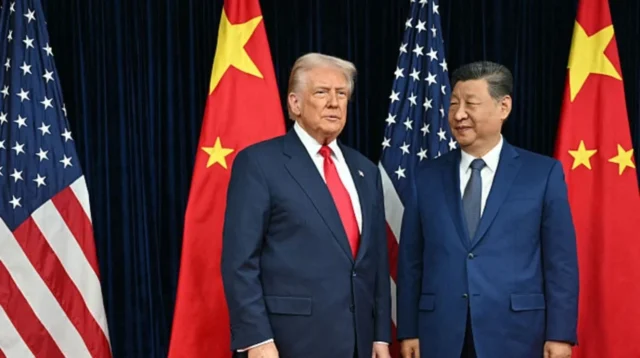
US strategies for resolving Ukraine and Middle East conflicts in 2025 exist within a broader competition with China and Russia. Measures such as targeted tariffs against Chinese technology sectors and increased sanctions enforcement reinforce a security-economics nexus that defines US engagement across multiple regions. Conflict zones in Europe and the Middle East intersect with this competition, shaping Washington’s approach to resource allocation, alliance management, and diplomatic posture.
Great power rivalry also influences regional actors’ calculations. Governments in the Middle East increasingly navigate a multi-polar environment by diversifying arms purchases and diplomatic engagements. In Ukraine, China’s cautious neutrality and limited economic engagement add another layer of complexity to cease-fire negotiations.
Domestic pressures and shifting public opinion
Domestic factors continue to influence foreign policy implementation. US public opinion in 2025 reflects fatigue with prolonged international commitments, prompting growing calls for financial accountability and outcome-driven aid programs. Congressional debates over foreign assistance packages for Ukraine, Israel, and regional stabilization mirror broader national concerns about economic challenges and budgetary constraints.
These internal dynamics shape the administration’s choices, producing a foreign policy that blends strong rhetoric with measured operational commitments. Balancing public expectations while sustaining international credibility remains a key challenge for officials navigating tightly contested political ground.
Evolving strategies and future considerations
The trajectory of US strategies for resolving Ukraine and Middle East conflicts in 2025 hinges on both regional developments and global power shifts. As fighting persists in Ukraine and tensions deepen across the Middle East, Washington must maintain a delicate balance between hard security commitments and diplomatic initiatives capable of stabilizing contested regions. Emerging peace proposals, phased de-escalation frameworks, and reconstruction pathways require careful alignment with evolving domestic and geopolitical pressures.
The next phase of conflict management could hinge on factors still unfolding: the durability of European alliances, the pace of regional realignment in the Middle East, and the capacity of US policymakers to adapt strategies to emerging security concerns. These uncertainties continue to shape the search for resolution as strategic interests intersect with fast-changing diplomatic landscapes.