The evolution of U.S. migration policy in recent years reflects growing recognition that conflicts abroad are shaping regional and global mobility patterns. By 2025, debates in Washington increasingly tied border pressures to instability in regions such as the Middle East, Africa, and Latin America. Federal agencies expanded the use of early-warning models to predict displacement trends, aiming to mitigate humanitarian surges before they reached U.S. borders. These adjustments signal how foreign conflict analysis has become an essential element in domestic migration management.
Expanding Diplomacy As A Tool For Migration Management
The U.S. approach in 2025 places greater emphasis on diplomatic engagement as a preventive mechanism.
Why Diplomacy Has Become Central
American officials argue that addressing migration at its source requires stabilizing conflict zones or supporting recovery in post-conflict regions. This has elevated talks with regional blocs, especially the African Union and Latin American partners, where conflict-driven displacement has heightened political volatility.
The Role Of Strategic Partnerships
U.S. diplomats now pursue agreements that integrate conflict monitoring, humanitarian access, and development financing. These partnerships are designed to slow the momentum of displacement rather than react once migration flows become unmanageable.
How Conflict Zones Shape Cross-Border Pressures
As violence in Sudan, Haiti, and parts of the Sahel intensified through early 2025, U.S. policymakers increasingly framed each conflict as a potential migration catalyst. This linkage has redefined how Washington measures the downstream effects of external instability.
Humanitarian Pathways As Instruments Of Crisis Response
Policy reforms in 2025 introduced a broader range of humanitarian entry programs.
The Expansion Of Parole Mechanisms
Humanitarian parole became a prominent tool for rapid response to foreign conflicts, allowing individuals from active war zones expedited entry for temporary protection. Officials frequently cited the need for flexible mechanisms when traditional refugee pipelines moved too slowly.
Balancing Protection With Domestic Pressures
Although humanitarian policies aim to ease suffering, they have generated domestic criticism from political actors concerned about capacity, vetting, and long-term integration. This tension continues to shape debates over how far to expand protection pathways tied to international crises.
Border Security Reassessments Driven By Global Instability
The rise in conflict-linked migration has shifted border management strategy.
Integrating Intelligence With Border Management
U.S. agencies have intensified information-sharing arrangements to detect migration flows originating from destabilized states. These processes rely heavily on foreign intelligence and conflict-mapping reports.
Advanced Screening And Vetting
A combination of biometric systems, conflict-related risk indicators, and new cross-border coordination agreements form the backbone of updated security protocols. While intended to reduce risks, these tools also reflect a broader trend in which border policy is inseparable from foreign policy.
Legal Framework Adjustments In Response To Conflict-Driven Mobility
Policy analysts in 2025 observed several regulatory shifts designed to address the legal complexities of conflict-related displacement.
Revisiting Asylum Standards
Debates emerged over how to interpret asylum claims linked to failures of state authority, militia violence, or civil collapse. Legal scholars noted that the definition of persecution is increasingly being tested by applicants fleeing generalized conflict environments that do not fit neatly into traditional categories.
Temporary Protected Status As A Stabilizing Tool
The U.S. expanded Temporary Protected Status (TPS) designations for nations experiencing renewed conflict. This policy offers a temporary shield from deportation for nationals already present in the United States. While effective for humanitarian relief, periodic extensions of TPS have sparked debate over long-term population management.
Administrative And Judicial Pressures
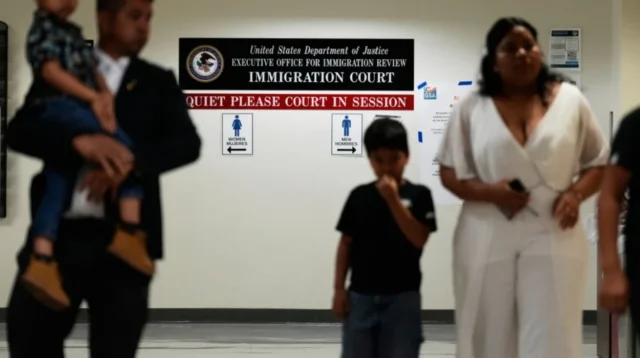
As conflict-related claims rose, immigration courts faced steeper backlogs, prompting discussions about procedural reforms to stabilize the adjudication system.
Regional Cooperation And Shared Responsibility
The U.S. has increased its collaboration with states that experience the first waves of conflict-induced migration.
The Growing Role Of Transit Countries
Nations in Central America and the Caribbean continue to serve as key transit zones. Washington’s agreements with these states increasingly include provisions for conflict-sensitive migration assistance, ranging from reception capacity to the deployment of joint security teams.
Multilateral Institutions As Stabilizers
Organizations such as the International Organization for Migration and the UN Refugee Agency have expanded initiatives in 2025 to support U.S. efforts. Their programs coordinate humanitarian relief in regions where conflict generates rapid displacement, reducing the likelihood of large-scale onward movement toward North America.
Economic And Security Considerations In U.S. Migration Decisions
Economic data and national-security concerns are gaining more prominence in the debate over how to manage conflict-linked migration.
Labor Market Pressures
Studies released in 2025 highlighted that sectors facing acute labor shortages viewed conflict-driven migrants as potential contributors. These findings influenced certain policy shifts, although economic benefits remain only one factor in a broader strategic calculation.
Security Assessments
Law-enforcement agencies emphasize that conflict zones can pose heightened vetting challenges. This has necessitated cooperation with foreign intelligence services and additional safeguards in screening systems.
Emerging Policy Experiments And Long-Term Implications
The U.S. is testing new strategies intended to align migration management with foreign-conflict monitoring.
Early-Intervention Frameworks
Pilot programs launched in 2025 integrate conflict-prediction models with humanitarian deployment teams, enabling earlier engagement in potential displacement hotspots. Such frameworks reflect an effort to transition from reactive to anticipatory policy design.
A More Integrated Foreign-Domestic Policy
Analysts note that the U.S. is moving toward a blended policy structure in which migration, national security, and foreign affairs operate within a single strategic landscape. This shift suggests that future administrations may rely even more heavily on conflict analysis to shape migration decisions.
Anticipating The Next Phase Of U.S. Migration Strategy
The evolving link between foreign conflicts and migration pushes policymakers to refine predictive tools, enhance diplomatic channels, and balance humanitarian responsibility with domestic expectations. As global instability continues to influence mobility patterns, the effectiveness of U.S. policy will depend on how well Washington can anticipate emerging crises rather than respond once displacement pressures have already reached critical levels. The coming years may reveal whether these adjustments represent a temporary response to current conflicts or the foundation of a more permanent transformation in the nation’s approach to migration.