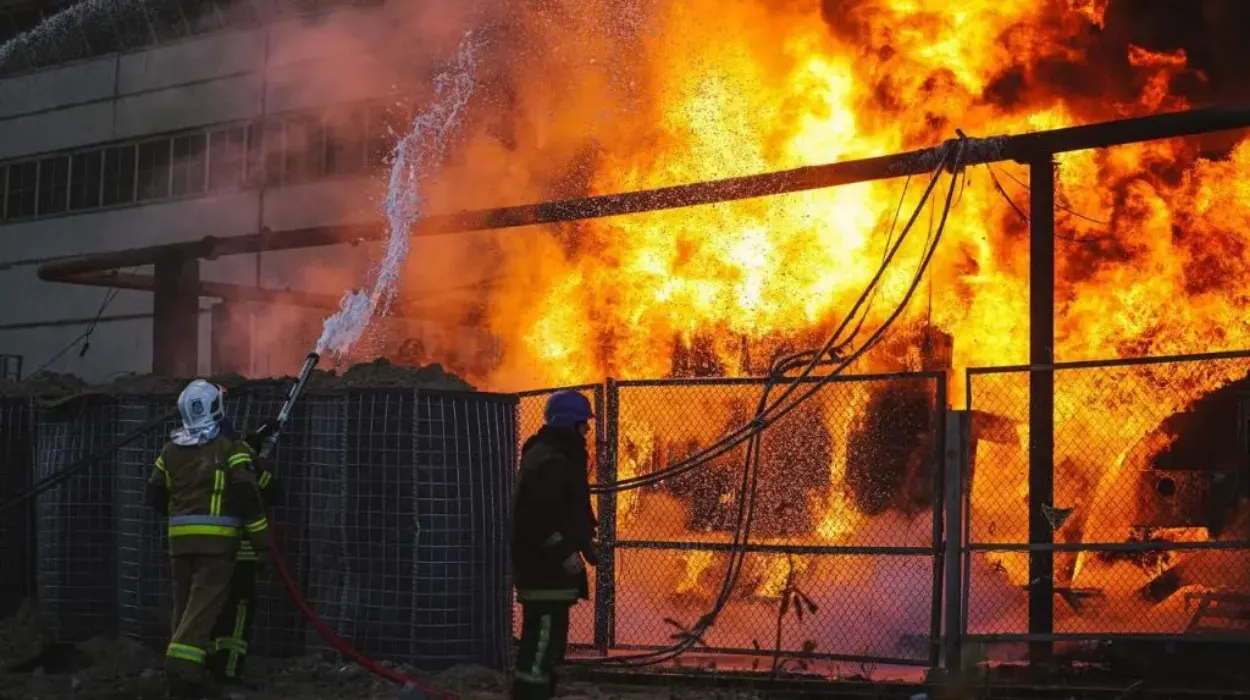
Russian energy attacks were stepped up, when a series of drone attacks and missiles hit Ukrainian power infrastructure hours before the top officials of the US and Ukraine had a meeting in Berlin.
The offensive at the right moment enhanced the tactical impact of the attack as it disconnected power in over a million homes in various areas and recast the diplomatic landscape on which negotiations were to be held. Although energy facilities have been common targets during the course of the war, the closeness of this attack to a high-ranking negotiating meeting highlighted how infrastructure warfare has become the affair of diplomacy.
Scale and pattern of the December attacks
The operation of December was a combination of long-range drones and cruise missiles that were aimed at substations, transmission nodes, and supporting facilities. Ukrainian authorities claimed that damage occurred in southern and central parts, such as Odessa, Mykolaiv, Kherson and Dnipropetrovsk, which initiated rolling power cuts and emergency load-shedding steps. According to energy firms, the damage was widespread but uneven, with a pattern seen in all of 2025 of concentrated attacks on the air defenses to paralyze an entire grid instead of disabling it.
Regional impact on civilian life
Outages in Odessa have broken the residential areas and infrastructure in ports and water pumping stations were running on limited timetables. The compounded stress that Kherson experienced was because electricity disruptions caused restricted water supply during winter seasons. Although hospitals and critical services were considered as more important, local authorities noted that household heating and small businesses were affected by the disruption the most. The civilian aspect of the war on energy was strengthened by these effects, as the indirect effects of energy warfare go beyond the immediate physical harm.
Pressure on grid resilience in 2025
The power infrastructure in Ukraine went into winter 2025 already compromised by the previous attacks and the inability to repair them in time. The grid operators have turned to more and more imports of emergency in neighboring European countries as well as mobile generation units. The December strikes underscored the fact that partial repair exposes the system to fresh attacks, and leads to the cycle of repair and destruction that places an overload on the technical capacity and popular patience.
Strategic timing ahead of Berlin negotiations
The fact that the strikes were close to the Berlin talks was largely construed to be intentional. The Ukrainian officials involved in the Ukrainian Interior Ministry described the attack as one designed to be as uncomfortable as possible and as a message of determination, with President Volodymyr Zelenskiy observing that the size of the attack meant that it was designed to affect political decision-making, but not necessarily to gain immediate battlefield advantages. The blackout background changed the vision of the negotiations and shifted the focus to the most pressing stabilization requirements.
Signaling toward Washington
According to the second-term government of President Trump in 2025, Washington has focused on cutting open-ended commitments as well as seeking negotiated ways of de-escalation. This strategy received pressure through Russian energy attacks which demonstrated the prices of stalemate. The Washington message seemed to be two-fold, Moscow does have escalation possibilities without territorial attacks, and the resilience of civilians in Ukraine can be the bargaining chip in any negotiation system.
Constraints on Kyiv’s bargaining position
In the case of Kyiv, the entry of negotiations in the situation of massive outages made the diplomatic message difficult. Ukrainian negotiators were interested in guarantees of air defense restocking and grid security, however, the apparent burden on civilians threatened to strengthen war-weary narratives. Although authorities emphasized on the need to continue fighting, the energy crisis left fewer manoeuvring space by bringing humanitarian interests to the forefront in addition to strategic requirements.
Russian objectives behind energy warfare
Russian energy attacks have taken the attrition strategy, but not the knockout strategy throughout 2025. Moscow wants to force repetitive economic expenditures and psychological strain by weakening infrastructure gradually since it would not prompt direct escalation points. The timing of the month of December implied an extra diplomatic dimension application, where infrastructure damage would be used to structure negotiations on a sense of urgency.
Economic and industrial effects
The interruption of power caused the temporary operations to be closed in manufacturing centers, which dealt with metallurgy and agricultural processing. The costly estimates by the economists pegged that every significant cycle of blackout in 2025 deprived monthly industrial output of quantifiable points. These losses are not devastating on a case-to-case basis but accumulate over time leading to a weak fiscal ability and making budgeting during wartime difficult.
Psychological pressure and civilian morale
Other than the field of economics, energy strikes have a psychological effect. Constant downtimes become standard, and no one is sure of when recovery can be achieved. Ukrainian officials have also admitted that keeping the population morale is now a priority as important as the territory itself and especially as the winter deepens and makes life more uncomfortable. This challenge was solidified with the December attacks as it coincided with moments of diplomacy which could have otherwise lent some reassurance.
Implications for US-Ukraine coordination
The Berlin negotiations were to cover military aid, energy security and general strategic alignment. Russian energy attacks reprioritized grid stabilization and air defense. US officials needed to balance domestic demands of moderation with allied demands of visible involvement which would prevent further attacks on infrastructure.
Aid recalibration and conditionality
Arguments in Ukraine grew stronger due to energy damage on the need to deliver more transformers, generators, and missile defense interceptors. Meanwhile, the Trump administration’s focus on accountability and burden-sharing brought out debate on the conditional aid based on the benchmarks of reform and diplomatic involvement. The strikes therefore also affected the urgency as well as the pattern of assistance proposed.
The threats of energy attacks make ceasefire more difficult, as they destroy trust. The limited truces made in 2025 before failed in the face of allegations of further targeting of infrastructure. The December attack added to a doubt of the mechanism of enforcement, and negotiators were now wary of promises that are not verifiable or guaranteed.
European mediation dynamics
The position of Germany as host put it on the bridging positions. European allies, who already have the issue of energy security to handle in 2025, considered the attacks to be a wake-up call to the reality that any instability in Ukraine has regional impact. This background promoted cooperation in grid repair funding and cross-border electricity assistance, although more long-term political issues were not addressed.
Negotiations under the shadow of infrastructure warfare
Energy strikes complicate ceasefire prospects by undermining trust. Previous attempts at limited truces in 2025 faltered amid accusations of continued infrastructure targeting. The December barrage reinforced skepticism about enforcement mechanisms, making negotiators cautious about commitments that lack verification or guarantees.
Risks to de-escalation pathways
Infrastructure attacks bring together the military and civilian realms and heighten the risk of reactive and not strategic negotiations. Every blackout brings a sense of urgency which could distort the decision-making process which might lean towards simple alleviation instead of long-term settlements. This pressure troubles the negotiators who want to base the negotiation on a sustainable future.
Long-term strategic calculations
In the case of Russia, maintaining the pressure using energy strikes can be regarded as an affordable form of leverage. To the partners, as well as Ukraine, the only means to counter such a strategy is to invest in more than just short-term reparation, such as decentralized generation and reinforced defenses. The Berlin negotiations were thus given a context of technical fortitude and diplomacy colliding with each other.
With diplomats haggling over conditions in Berlin and engineers struggling to get electricity flowing back home, the December strikes showed that control of electricity has turned into a parallel conflict. The question regarding whether this type of tactics ultimately end up enhancing the bargaining stances or intensifying the determination is yet to be clarified, but due to the time-based nature they will surely keep on the negotiation processes to be influenced by flickering lights killed off and on in Ukrainian towns.