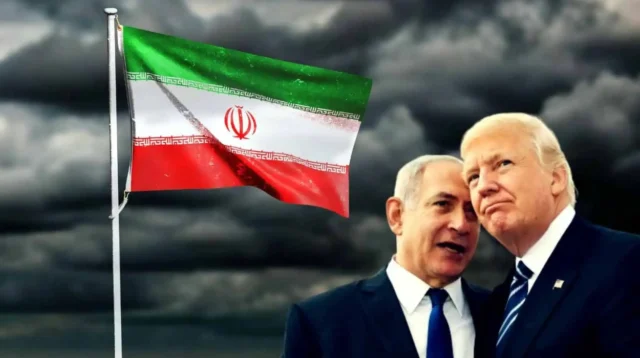
President Donald Trump’s recent declaration that he might block ExxonMobil from investing in Venezuela marks a striking escalation in both US energy policy and foreign intervention strategy. The comment came after Exxon’s chief executive bluntly described Venezuela as “uninvestable” during a high-profile White House meeting with oil executives, undermining the administration’s broader push to lock in American control of Venezuela’s vast hydrocarbon resources.
As he addressed a gathering of major companies including ExxonMobil, Chevron, and Conoco Phillips, Trump asked that they invest at least $100billion to restore drastically damaged Venezuelan oil infrastructure as a result of a US-led breathtaking military incursion that led to former Venezuelan President Nicolás Maduro being taken down. However, what he got were reservations about investing by major players due to environmental concerns.
This creates clear political tension and questions the degree to which the foreign policy of the US is also being spurred by the need for resource extraction.
Venezuela’s oil wealth: prize and predicament
Venezuela holds the largest proven oil reserves in the world, with estimates exceeding 300 billion barrels—more than Saudi Arabia or Canada. Yet decades of
mismanagement, corruption, sanctions, and declining production have left the sector in ruins. Current crude output hovers around 1 million barrels per day, down sharply from nearly 4 million barrels per day in the early 2000s.
Because of repeated nationalisations under Hugo Chávez (2004–2007), multi-billion-dollar assets once held by Exxon and ConocoPhillips were seized, resulting in arbitration awards totaling more than $13 billion owed to these companies.
Exxon’s CEO Darren Woods pointed to this history in blunt terms:
“We’ve had our assets seized there twice, and so you can imagine to re-enter a third time would require significant changes … today it’s uninvestable.”
Unless Venezuela fundamentally reforms its legal framework, overhaul its hydrocarbons laws, and offers durable investment protections, a return by global oil majors is far from assured.
Trump’s response: punishment or pressure?
Rather than acknowledge these structural challenges, Trump publicly rebuked Exxon’s CEO. Aboard Air Force One, he told reporters:
“I didn’t like Exxon’s response … I’d probably be inclined to keep Exxon out.”
This threat carries real economic and market consequences. After Trump’s comment was widely reported, ExxonMobil’s shares dipped in early trading—an immediate reminder that presidential rhetoric can move markets even without formal policy changes.
Blocking Exxon from the Venezuelan opportunity could significantly reshape the competitive landscape within the US oil industry. Chevron, the only major US producer currently operating in Venezuela under special licensing, has signaled readiness to expand output, with executives suggesting a 50% production increase within 18–24 months. Chevron’s existing foothold positions it to benefit disproportionately if Washington effectively sidelines Exxon.
Critics see Trump’s comments not just as leverage but as coercive economic manoeuvring, reminiscent of state-directed industrial policy rather than free-market engagement. This raises concerns about the politicisation of corporate decisions and the erosion of regulatory independence.
The climate cost of chasing oil riches
Amid these economic and geopolitical debates, one critical dimension is largely absent from official discourse: environmental impact.
Analysis indicates that increasing Venezuelan production, even with the most optimistic projections, poses an extremely high threat to meeting global climatic goals. With Venezuela producing 1.5Mbpd by 2035–2050, alone this scenario could absorb approximately 13% of the world’s total carbon budget, capable of meeting the 1.5°C target.
The Orinoco Belt oil, in particular, in Venezuela, has a higher carbon intensity because it is a sour, heavy oil, which requires more energy to extract and refine than the light oil found, for instance, in the Johan Sverdrup area in Norway.
Climate scientists argue that locks on new fossil fuel extraction are essential if the world is to avert catastrophic climate disruption. A renewed push into Venezuelan oil, encouraged by Washington’s intervention, would deeply contradict the climate commitments of the United States and its allies.
US control over Venezuelan energy: practical or imperial?
Trump has repeatedly asserted that US companies will deal “directly” with his administration and not with Venezuela’s government—a comment that implies a directorial role for Washington over Venezuelan energy resources.
Additionally, he signed an executive order blocking courts or creditors from seizing Venezuelan oil revenue held in US Treasury accounts, an extraordinary intervention that shields crude income from external claims or arbitration.
This level of control raises broader issues: is the United States aiming to restore Venezuelan production to benefit global energy markets, the US economy, or its own geopolitical leverage? And what does it mean for Venezuelan sovereignty when foreign investors and Washington set the terms of engagement?
Russian state-owned oil interests also remain entrenched in Venezuela, and Moscow has publicly rejected claims that US forces now control Venezuelan oil assets—insisting that Russian-held stakes, now operated by government-owned entities, remain lawful and intact.
Industry caution versus political haste
Even among oil industry leaders who expressed enthusiasm about Venezuelan opportunities, caution was evident. ConocoPhillips CEO Ryan Lance noted his company is the largest non-sovereign creditor in Venezuela and called for comprehensive restructuring of the debt and energy sector, including PDVSA, the state oil company.
European firms with existing ties—Italy’s Eni and Spain’s Repsol—have expressed interest in scaling up operations but have also emphasised the need for clear legal protections and stable policy frameworks. Smaller US producers have hinted at willingness to explore Venezuelan investment, but only under secure, predictable conditions.
These prudent positions reflect decades of caution in global energy investment—decisions based on assessments of political risk, contract enforcement, and sovereign reliability, not presidential ultimatums.
The broader geopolitical stakes
Trump’s push for Venezuelan oil investment cannot be separated from broader geopolitical aims. The US has framed its intervention as both a crackdown on alleged criminal networks under Maduro and a way to undercut rivals like China and Russia in Latin America.
China’s oil companies and state-owned entities have historically been major buyers and partners of Venezuelan crude, often shielding Caracas from the full force of sanctions. Trump’s efforts to redirect that relationship toward US companies are part of a wider strategy to reassert American influence in the Western Hemisphere.
Yet this pivot highlights a contradiction: foreign policy couched in liberatory rhetoric on human rights and democracy is simultaneously used to facilitate re-engagement with authoritarian petro-states for economic gain. That contradiction could undermine US credibility on both democracy promotion and climate leadership.
President Trump’s remarks about potentially blocking ExxonMobil from Venezuela are more than a diplomatic squabble—they underscore the complex entanglement of energy interests, geopolitical power plays, and governance risks.
Exxon’s characterization of Venezuela as “uninvestable” is rooted in decades of legal disputes, nationalisations, and regulatory instability—real-world obstacles that cannot be waved away by political will alone.
Meanwhile, framing investment in Venezuelan oil as a patriotic imperative obscures the environmental and ethical questions at stake. As oil executives balance risk, climate costs, and corporate responsibility, Washington’s heavy-handed approach may well deter prudent investment rather than attract it.
Real energy security—and equitable development—will require more than political pressure. It will demand transparent legal frameworks, respect for local governance and environmental limits, and a foreign policy that decouples resource ambition from domination.