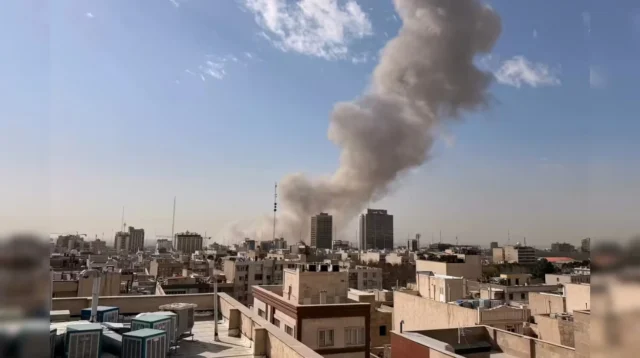
In the year 2025, United States President Donald Trump has conducted military strikes in at least seven different countries. This represents one of the most geographically broad exercises of US military power on record within the last year. Although the motivations behind the action may relate to terrorism prevention, drug interdiction, and/or the prevention of adversaries from developing weapons of mass destruction, there appears to be no public reason for the continued expansion of militarized power.
This latest confirmation came this week as Trump admitted to a US attack on a docking site within Venezuelan territory, marking the first attack on Venezuelan soil since the US started striking ships tied to the country earlier this year.
Why has Venezuela become a new front for US military action?
The strike on Venezuelan soil marks a significant escalation in Washington’s confrontation with President Nicolás Maduro’s government. US officials have claimed that the operation hit infrastructure allegedly used by drug-smuggling networks operating out of Venezuela, but no independent evidence to support these claims has been made public.
The strike comes after the seize of two oil tankers off the Venezuelan coast last December as part of a US operation against a so-called “shadow fleet” of oil exports. Since last August, the US has deployed the largest maritime force to the Caribbean in the past four decades.
Washington declares drug trafficking a national security threat, making military intervention necessary. But several studies show that drug trafficking in the United States is not a major passage from Venezuela. There have been human rights violations in the use of force by US military intervention against small boats, which have resulted in the deaths of 95 people, most of whom are civilians, since September.
Why did the US launch air strikes in Nigeria?
The US waged its first reported air strikes on Christmas Day in the Nigerian state of Sokoto in the northwest region of the country. The air strikes targeted the armed groups the US says are connected to the ISIL. The US president called these air strikes ‘powerful and deadly.’
"Tonight, at my direction as Commander in Chief, the United States launched a powerful and deadly strike against ISIS Terrorist Scum in Northwest Nigeria, who have been targeting and viciously killing, primarily, innocent Christians…" – President Donald J. Trump pic.twitter.com/AUUmTMABSs
— The White House (@WhiteHouse) December 26, 2025
The strikes came as a result of weeks of diplomatic pressure directed at Nigeria over perceived failure by the government to protect Christians. The Nigerian government has strongly disputed claims of “Christian genocide” with reports confirming violence being directed at Muslim and Christian populations.
Nigeria authorized the operation as a result of American pressure, although it has been pointed out that the strikes have effectively merged crises that existed in different parts of the country. There is still very little information available, although the US Africa Command reported the deaths of multiple fighters during the operation, which Nigeria’s foreign ministry has hailed as successful.
How deep is US military involvement in Somalia?
Somalia is one of the longest-running US military interventions in Africa. In 2025, the US government has stepped up air strikes in Somalia against al-Shabab and the smaller ISIS in Somalia faction, requested by the Somali government.
This morning I ordered precision Military air strikes on the Senior ISIS Attack Planner and other terrorists he recruited and led in Somalia. These killers, who we found hiding in caves, threatened the United States and our Allies. The strikes destroyed the caves they live in,…
— Donald J. Trump (@realDonaldTrump) February 1, 2025
Al-Shabab, estimated to have a force of about 7,000 fighters, now occupies huge chunks of the south central region of Somalia, whereas ISIS-Somalia mainly operates in the region of Puntland. According to the Africa Center for Strategic Studies, the rate of fatalities due to the violence perpetrated by the armed groups in the current year alone exceeds 7,200.
Trump began the term by withdrawing the majority of the United States’ military forces, only to continue air strikes in the second Trump administration, maintaining a level of consistency in their strategy despite past agreements to reduce military presence around the world.
What prompted the latest US strikes in Syria?
In December, the US carried out an operation against more than 70 ISIL-related targets in Syria in response to an attack that killed two US soldiers and a civilian interpreter. While no group took responsibility, President Trump to blame ISIL and order an operation called “Operation Hawkeye.”
CENTCOM forces launched fighter jets, attack helicopters and other assets to conduct the large-scale strike. pic.twitter.com/3szSo2u5rm
— U.S. Central Command (@CENTCOM) December 19, 2025
The airstrikes struck weapon depots and logistical installations, according to United States officials. The attack was a “warning” against future attacks against United States personnel, as explained by Trump. Defence Secretary Pete Hegseth called it a “declaration of vengeance.”
American forces have been present in Syria for several years as a member of the ISIL-squading coalition, despite there being unresolved questions concerning this operation’s legal foundation and future goals.
Why did the US strike Iranian nuclear sites?
In June, during a brief but intense clash between Iran and Israel, the US conducted a carefully coordinated attack mission against three of the most important nuclear facilities inside Iran: Natanz, Isfahan, and Fordow. The attack had been justified by Trump as a means of controlling the imminent nuclear threat.
"We have completed our very successful attack on the three Nuclear sites in Iran, including Fordow, Natanz, and Esfahan. All planes are now outside of Iran air space. A full payload of BOMBS was dropped on the primary site, Fordow. All planes are safely on their way home.… pic.twitter.com/AqCLmaLYJb
— The White House (@WhiteHouse) June 21, 2025
Pentagon officials reported that this operation delayed Iran’s nuclear programme by about two years. Iran has confirmed there has been major damage but only carried out a small-scale retaliatory attack upon a US base situated in Qatar with no one harmed.
The conflict led to the deaths of over 1,100 Iranians and 28 Israelis before the ceasefire declaration by Trump. However, he has since then threatened that the US will attack Iran again should it return to nuclear production.
Why has Yemen remained a constant target?
US strikes on Yemen’s Houthi movement have continued into 2025, sharply ramping up in Trump’s second term. Initially launched in response to Houthi attacks on Red Sea shipping linked to Israel, the campaign expanded into near-daily strikes by March under Operation Rough Rider.
The Iran-backed Houthi Terrorists have been decimated by the relentless strikes over the past two weeks. Many of their Fighters and Leaders are no longer with us. We hit them every day and night — Harder and harder. Their capabilities that threaten Shipping and the Region are…
— Donald J. Trump (@realDonaldTrump) March 31, 2025
Already considered to have one of the worst humanitarian crises in the world, Yemen has seen several years of conflict that has claimed hundreds of thousands of lives and left millions dependent upon aid. The continuous US strikes may only serve to deepen civilian suffering and further destabilize the region, warn rights groups.
What happened during the US operation in Iraq?
In March, air strikes carried out by US forces targeted the al-Anbar province of Iraq, resulting in the death of “Abdallah Abu Khadijah”—also known as Abdallah “Abu Khadijah” al-Rifai, the supposed second-in-command of the group ISIL.
Trump called the attack a “massive success” of counterterrorism, while critics see such missions as a way of keeping Iraq under constant military action despite the public’s opposition to the ongoing US military presence there after many years.
Has Trump abandoned his “America First” promise?
Trump’s rise in politics was built partly on attacks against long wars of the United States and on promises to avoid new foreign entanglements. He continuously labelled the Iraq war as a disastrous mistake and vowed to put the interests of America first.
This is a vow he made during his second inauguration in January 2025: that his legacy would not only be measured by the wars he has won but also by the ones he has averted. However, the range of the US military action that took place this year makes one doubt if that promise still holds true.
While the administration says these are limited, defensive, and necessary strikes, the mounting list of countries suggests a presidency increasingly defined by force-often without explanation to the American people or to Congress.