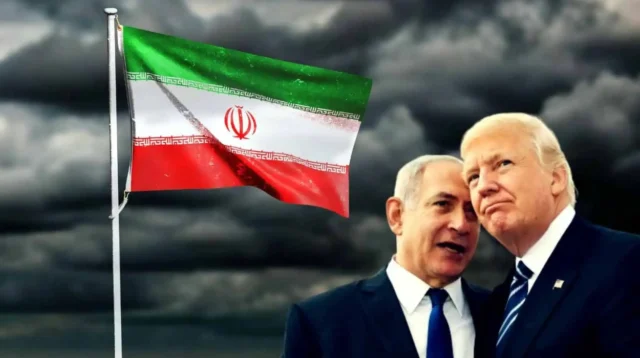
Nearly a decade ago, the Gulf’s richest U.S. allies were locked in a bitter feud shaped by ideology, rivalry, and personal vendettas. Then-President Donald Trump did not hesitate to intervene—publicly and forcefully siding with Saudi Arabia and the United Arab Emirates during their blockade of Qatar in 2017.
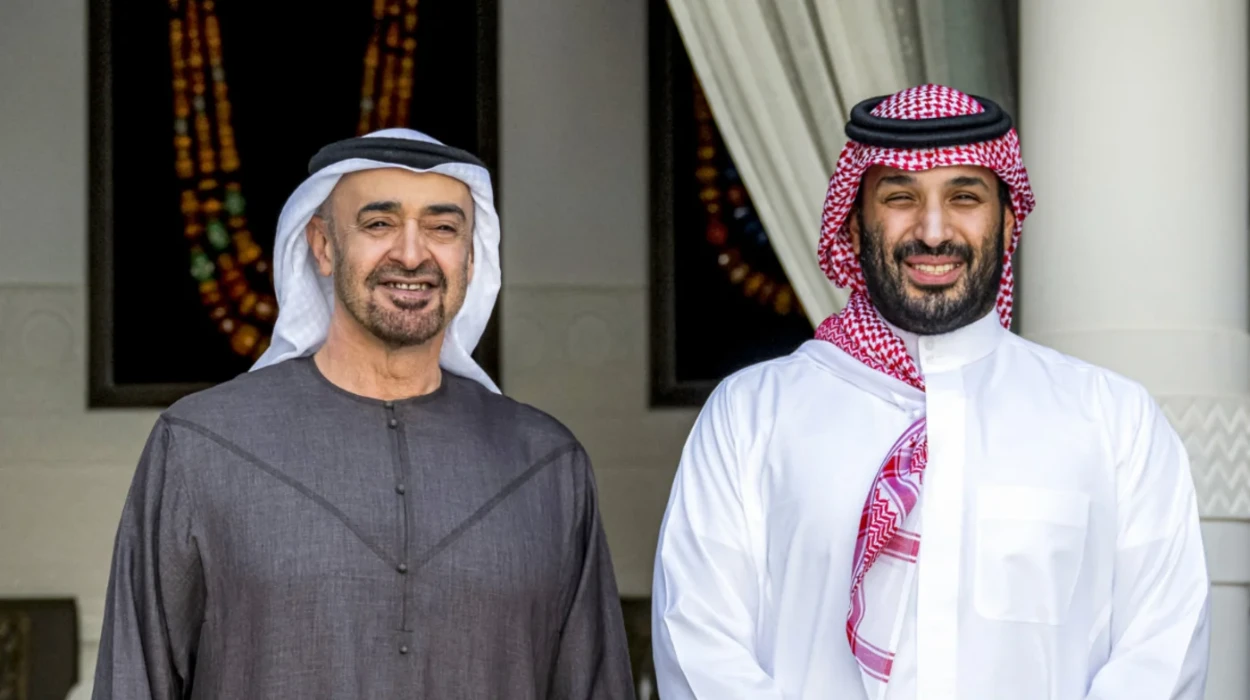
Today, history is repeating itself—but with a twist. Saudi Arabia and the UAE, once inseparable partners, are now drifting into open confrontation across multiple theatres. This time, however, Trump has remained conspicuously silent.
Lessons Learned From the Qatar Blockade
Veteran diplomats say Trump’s restraint reflects lessons learned from his first term.
“Trump should never have picked a side during the blockade of Qatar. That is one lesson he did learn,”
a former U.S. ambassador to a Gulf state told Middle East Eye.
“The first Trump administration didn’t even know the U.S. had al-Udeid air base in Qatar. They were just listening to the UAE.”
In 2017, Trump’s impulsive alignment with Riyadh and Abu Dhabi complicated U.S. military operations and forced damage control by the Pentagon and State Department. That experience appears to have reshaped his instincts.
From Partnership to Proxy Conflict
The Saudi–UAE fallout has unfolded rapidly and publicly. In early January, Saudi Arabia launched airstrikes against Yemeni secessionist forces backed by the UAE and expelled the Southern Transitional Council from parts of southern and eastern Yemen—an extraordinary escalation between two nominal allies.
The rivalry extends well beyond Yemen.
- Sudan: Riyadh is reportedly coordinating with Pakistan to supply arms to Sudan’s military, which is fighting the Rapid Support Forces (RSF), a paramilitary group backed by Abu Dhabi.
- Libya: Saudi Arabia and Egypt are lobbying Khalifa Haftar’s family to sever ties with the UAE and halt alleged arms and fuel flows to the RSF.
- Information warfare: Military and intelligence competition is now matched by a vicious social media and media campaign, amplifying nationalist and ideological attacks on both sides.
The War of Narratives—and Trump as the Prize
As during the Qatar blockade, both Riyadh and Abu Dhabi are racing to shape Washington’s perception—and Trump’s opinion in particular.
Last week, a Saudi newspaper accused the UAE of acting as “Israel’s Trojan horse in the Arab world,” branding its foreign policy a “betrayal of God.” Emirati and Israeli commentators fired back, accusing Saudi Arabia of antisemitism and of undermining Trump’s Abraham Accords, which normalized relations between Israel and several Arab states.
Behind the scenes, analysts say both camps are lobbying aggressively to win Trump’s favor.
“There is furious behind-the-scenes effort by both sides,”
one regional analyst said.
“Everyone wants to be the one whispering in Trump’s ear last.”
So far, there is little indication Trump is choosing sides. Strategically, many believe he won’t.
‘Follow the Money’: Trump’s Gulf Entanglements
Unlike 2017, Trump and his family now have deep financial exposure across the Gulf, making neutrality more attractive—and more necessary.
In January, the Trump Organization unveiled $10 billion in luxury development projects in Saudi Arabia. At the same time:
- A Trump-branded high-rise is under construction in Dubai
- Golf resorts are planned in Qatar and Oman
- Most of these ventures are linked to Dar al-Arkan, a Saudi development firm with close government ties
Trump’s inner Middle East circle further complicates the picture:
- Jared Kushner received funding from Saudi Arabia, the UAE, and Qatar for his firm Affinity Partners
- Steve Witkoff, a longtime Trump associate, has business ties to Qatar and personal links to Emirati national security advisor Sheikh Tahnoon bin Zayed
- The UAE invested $2 billion in a crypto firm launched by Witkoff’s son alongside Trump’s sons, Eric and Donald Jr.
- Tom Barrack, a veteran power broker, remains a key informal advisor
With money flowing from all directions, picking a favorite risks financial and political blowback.
Why Saudi Arabia Still Looms Larger
Despite the UAE’s influence in Washington, Saudi Arabia remains the heavier strategic weight.
- Saudi Arabia is the Arab world’s only G20 economy
- Its GDP is roughly double that of the UAE
- Riyadh has pledged around $1 trillion in U.S. investments, compared to the UAE’s $1.4 trillion AI-focused commitment
- Saudi Arabia’s defence partnerships with Pakistan (the Muslim world’s only nuclear power) and Turkey (NATO’s second-largest army) extend its reach far beyond the Gulf
For a president focused on headline-making deals and geopolitical leverage, Saudi Arabia offers scale the UAE cannot match.
Competing Regional Visions
Experts say this is not merely a family dispute—it reflects a deeper strategic divergence.
Saudi Arabia seeks leadership of the Arab and Islamic world, positioning itself as a religious, economic, and diplomatic hub. The UAE, with a smaller population and economy, has pursued a different path: aggressive opposition to political Islam, close alignment with Israel, and a global network of strategic outposts.
Abu Dhabi plays a central role in projects favored by Washington hawks, including the India–Middle East–Europe Economic Corridor, and has expanded its influence through ports, gold trading, and support for secessionist movements across Africa.
At Davos, Trump’s son Eric met the leader of Somaliland, a breakaway region backed by the UAE and recognized by Israel—underscoring Abu Dhabi’s global ambitions.
Washington’s Unease With Abu Dhabi
Despite its lobbying power, the UAE has unsettled U.S. security officials.
Former intelligence officers often bristle at the “Little Sparta” nickname given to the UAE by former Defense Secretary James Mattis.
“The UAE is a hotbed of intrigue,”
one former official said.
In November, Middle East Eye reported U.S. intelligence concerns that Chinese military personnel were operating from a UAE base. Washington remains wary of Beijing’s footprint at Khalifa Port, where China’s state-owned Cosco runs a terminal and U.S. intelligence believes PLA-linked activity may be occurring.
These concerns appear to have consequences. When Trump returned to office, his first foreign trip included lavish state visits to Saudi Arabia and Qatar, while his stop in the UAE was noticeably shorter. Several U.S. officials cited tensions over Abu Dhabi’s tech and China ties as a key factor.
A President Sitting on the Fence—for Now
Trump’s silence does not signal indifference. Rather, it reflects a careful recalibration shaped by past mistakes, financial entanglements, and competing strategic interests.
For now, Washington appears determined to avoid choosing between two powerful Gulf “brothers.” But as Saudi–UAE competition intensifies from Yemen to Africa to Washington itself, Trump may eventually be forced off the fence—whether he wants to be or not.