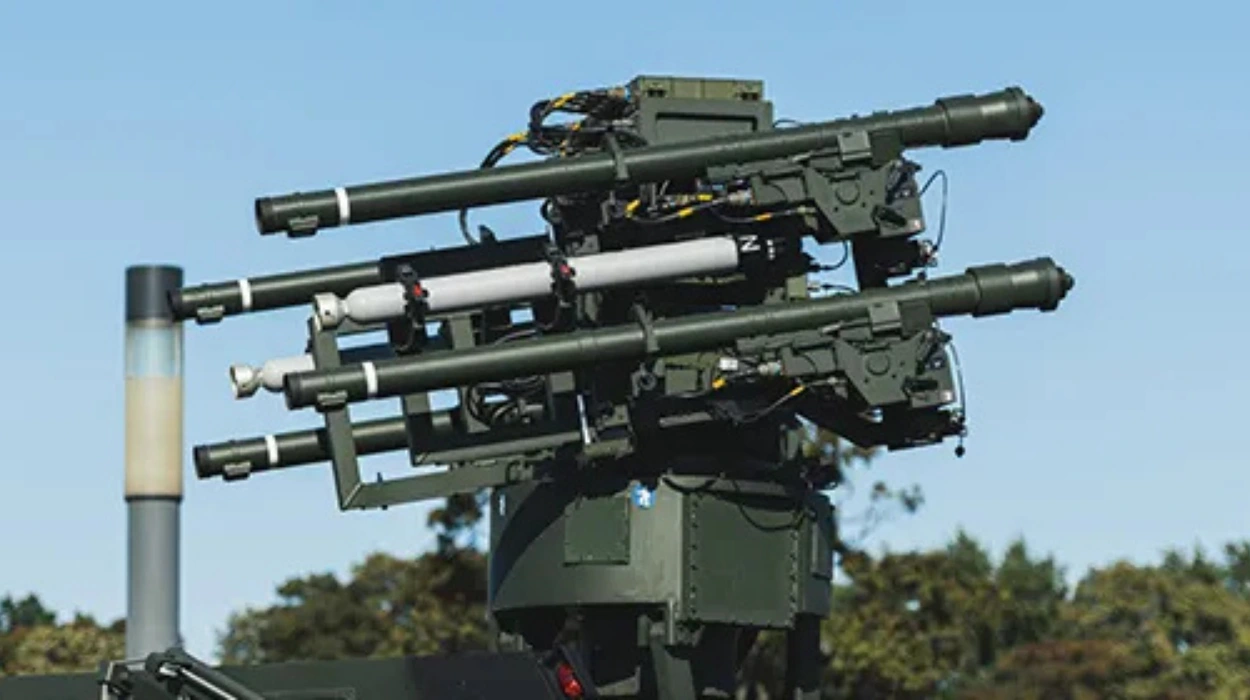
US missile defense priorities in 2025 are defined by the rise of coordinated security challenges posed by China, Russia, and their aligned partners. The strategic environment is no longer dominated by isolated threats but by the emergence of an axis capable of fielding advanced missile systems, conducting joint drills, and expanding geographical reach. This shift pushes US defense policymakers to redesign a system originally built to counter predictable ballistic trajectories into one capable of intercepting maneuverable, high-speed, multidomain threats.
The intensified geopolitical competition is reflected in national defense spending and modernization plans released throughout 2025. Senior Pentagon officials have repeatedly emphasized that layered defense remains central to the United States’ ability to deter and neutralize attacks against forward bases, maritime assets, and the homeland. As one defense official stated during a March briefing,
“We are dealing with adversaries that are integrating missiles with cyber tools, drones, and hypersonic weapons. Our architecture must evolve faster than their threat timelines.”
A multi-tiered system integrating ground, sea, air, and space assets allows flexibility across regions where threat trajectories differ significantly. With Russian launches in Eastern Europe, Chinese tests across the South China Sea, and Iranian-linked drone-missile integration in the Middle East, US planners confront a complex web of simultaneous risks requiring continuous adaptation.
Evolving Technologies Driving Missile Defense Priorities 2025
The rapid expansion of hypersonic glide vehicles by China and Russia stands at the forefront of US concerns. These systems travel at speeds exceeding Mach 5 and follow unpredictable flight paths, making early warning and midcourse interception substantially more difficult. The US response throughout 2025 has centered on expanding space-based infrared sensors capable of continuous tracking across hemispheres.
The Hypersonic and Ballistic Tracking Space Sensor constellation has undergone accelerated deployment phases, with new satellites entering orbit early in the year. These platforms provide persistent visibility into launch patterns and offer faster data relay to regional command centers. Combined with advanced radar systems in Alaska, Guam, and allied territories, the US aims to close long-standing tracking gaps exploited by adversaries.
Directed Energy As A Future Layer
Directed energy systems transitioned from experimental prototypes to limited operational roles across several forward bases in 2025. These systems using high-energy lasers to disable incoming drones, cruise missiles, and potentially future hypersonic threats offer a lower-cost per intercept alternative to kinetic missile launches.
Defense analysts note that directed energy complements existing interceptors by adding a layer designed for saturation attacks, a tactic increasingly used by Russian and Iranian forces. While power storage and atmospheric interference remain challenges, the Pentagon continues field testing after successful demonstrations aboard naval vessels in the Pacific.
Interceptor Modernization And Aegis Integration
US missile defense modernization includes upgrades to Ground-Based Midcourse Defense interceptors, featuring improved kill vehicles designed for higher accuracy. Deployment expansions in Alaska and California reinforce homeland defenses against long-range threats. The Aegis Ballistic Missile Defense system continues serving as a core component of regional protection, with upgraded SM-6 and SM-3 interceptors extending reach across maritime theaters.
US Navy vessels equipped with Aegis systems play an essential role in Europe and the Indo-Pacific, functioning as adaptable shields that can reposition rapidly during rising tensions. These naval platforms have participated in trilateral drills with Japan and South Korea, simulating responses to Chinese and North Korean missile launches in 2025, thereby strengthening coordinated regional deterrence.
Geopolitical Pressures Shaping US Missile Defense Decisions
China and Russia have increased military coordination since early 2024, expanding joint missile exercises and sharing defensive technologies. By mid-2025, intelligence assessments suggested deeper integration between their early warning networks, prompting Washington to revise its threat assessments. This coordination raises concerns that adversaries may synchronize missile launches across different regions to overload US and allied defenses.
Iran and North Korea contribute to this developing axis by sharing missile designs and testing data. Iran’s work on precision short-range ballistic missiles and North Korea’s solid-fuel ICBM tests provide additional complexity that US planners must absorb into missile defense modeling.
Regional Flashpoints And Forward Deployment Needs
Russia’s deployment of updated Iskander-M and Kalibr variants in Belarus and occupied parts of Ukraine increases the threat radius over NATO’s eastern members. These developments intensified calls from Poland, Romania, and the Baltic states for greater US forward missile defense presence. NATO’s 2025 summit reinforced collective investment in integrated missile tracking, enabling quicker sharing of early warning data.
Indo-Pacific Challenges And Carrier Vulnerability
China’s expansion of DF-21D and DF-26 anti-ship missile systems continues to challenge US naval movements in the Western Pacific. The DF-17 hypersonic missile’s demonstrated maneuverability during 2025 tests has particularly sharpened concerns over the vulnerability of US carrier strike groups. The US response includes expanded deployment of Aegis-equipped ships, enhanced drills with Japan’s Self-Defense Forces, and renewed cooperation with Australia on over-the-horizon radar capabilities.
Middle East Drone-Missile Convergence
Iran’s integration of drones with ballistic and cruise missiles—demonstrated in recent 2025 exercises—creates a hybrid threat environment requiring distinct layers of defense. US bases in Iraq, Syria, and the Gulf have increased reliance on laser systems and short-range interceptors to counter multi-vector attacks that combine speed, sequencing, and electronic interference.
Strategic Constraints And Long-Term Planning Considerations
Sustaining missile defense innovation requires a resilient industrial base, yet supply chain vulnerabilities especially rare earth dependencies linked to China continue to create delays. The US has accelerated domestic mining initiatives, though experts warn that meaningful independence may take several years. Congressional hearings in mid-2025 emphasized the need for redundant suppliers to prevent bottlenecks in missile component production.
Alliance Integration And Interoperability Goals
Allied cooperation remains central to sustaining a credible deterrence posture. Japan’s growing investment in next-generation interceptors, South Korea’s missile defense modernization under its 2025 strategic plan, and Australia’s integration into regional tracking networks all contribute to broader stability. However, differences in procurement cycles, radar capabilities, and command structures occasionally complicate unified responses.
Cyber And Space Vulnerabilities
Missile defense networks rely heavily on data fusion across satellites, ground stations, and naval sensors. As adversaries intensify cyber operations, defending command-and-control nodes becomes a priority equal to upgrading interceptors. US Space Command has highlighted the need for resilient satellite constellations capable of operating even under partial degradation caused by jamming or kinetic attacks.
Future Trajectories And Strategic Questions
Missile defense priorities in 2025 reflect a world where threats intersect across land, sea, air, and space, requiring agile systems capable of operating under uncertainty. As China and Russia enhance cooperation and field increasingly sophisticated missile platforms, the United States must refine both technological advancements and alliance strategies. The evolving nature of these threats leaves open pivotal questions about resilience, adaptability, and the degree to which future technologies may alter the strategic balance in ways still unfolding.