The war between Ukraine and Russia entered a very perilous new stage when the former American President Donald Trump announced that the United States would restart the nuclear weapons testing on the same terms with Russia and China. This declaration signified a sharp reversal of decades of the U.S. compliance with the Comprehensive Nuclear-Test-Ban Treaty (CTBT) moratorium which has since the 1990s largely discouraged explosive testing.
In a matter of days, after Trump made the announcement, Russian President Vladimir Putin ordered the foreign and defense ministries to draw contingency plans concerning the resumption of Russian nuclear tests. Putin stressed that Russia would not take the first steps but offered a retaliatory blow in case Washington took a test. This stand of the Kremlin bolstered its strategic readiness to forego the current nuclear constraints, in case the U.S. also foregoes them.
Such interaction between two nuclear giants is a recreation of the threat of brinkmanship that has not been felt since the cold war era. It is not only to Ukraine, but to the world as a whole the risk of destabilization of decades of arms control and fragile deterrence status quo that has kept nuclear warfare at bay over generations.
Technological Advancements Fueling Escalation
The latest nuclear posturing by Putin was preceded by a series of much publicized tests of high-tier nuclear capable systems. These were the Burevestnik nuclear-powered cruise missile that was intended to travel over an unlimited range and the Poseidon underwater nuclear drone that was said to be invincible to the missile defense systems of the West. These weapons are simply a symbol of the desire by Moscow to show the capability of strategic equality and credibility in deterrence against the United States and NATO.
Trump, in his turn, gave a retort by stating that the U.S. is the best in the nuclear deterrence. He emphasized the use of the largest nuclear submarine off Russian coasts and presented it as a clear indication of the readiness on the part of Americans. However his vague comments on nuclear testing later on, explained by the Secretary of Energy Chris Wright, as being tests of non-explosive components, tipped the edge between policy change and political bravado.
Symbolism Of Technological Signaling
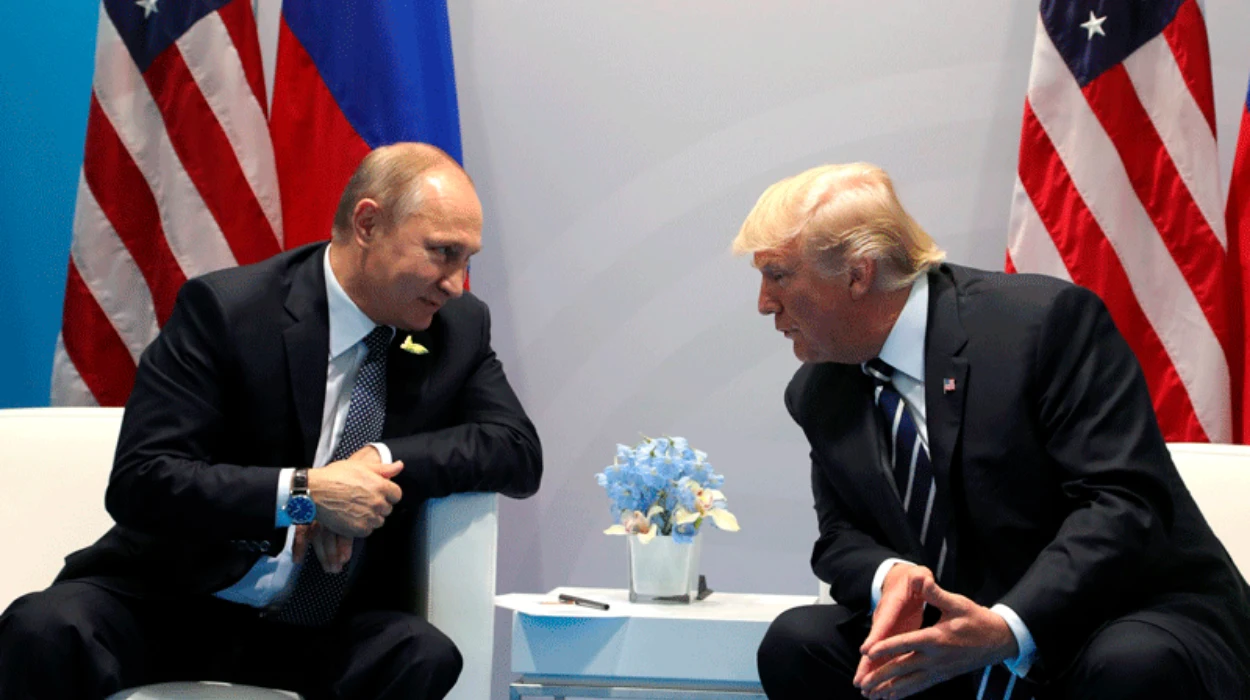
This climate makes nuclear technology more a political tool than a military tool. The two leaders exercise power by means of strategic display and rhetoric to strengthen their power domestically and their ability to deter their adversaries internationally. This relationship is one that has been combining both technological progress and theatre politics, increasing the possibility that any wrong understanding or wrong calculation may spur on more action.
Strategic And Geopolitical Implications
The renewal of nuclear brinkmanship during the conflict in Ukraine changes the strategic situation in the world. The new nuclear doctrine of Russia, which has been going through its course in recent years, explicitly provides the option of the nuclear response to the event of the large-scale conventional threat to it during the events of the nuclear-supported states. This loose definition clouds the classic distinction between nuclear and non-nuclear wars.
In the eyes of the U.S., the rhetoric of Trump puts the commitment of Washington to the arms control norms in question. As much as it is still under the reign of President Biden, the words of Trump have geopolitical significance. They propagate accounts of American vagaries and strengthen arguments made by Moscow that commitments by the West are conditional.
The Collapse Of Arms Control Confidence
Renewed testing is a menace that undermines the international non-proliferation regime that has been established over decades. The CTBT, which is not applicable to every State, is a symbolic pillar of restraint. Any action leading to the active testing will provoke the response actions by other nuclear states to the active actions, undermining the international trust in verification processes and in arms reduction.
In the case of Ukraine, these intensifications increase the existential insecurity. The fact that the country is oriented towards the NATO and western defense mechanisms has already caused the Russian warnings. New nuclear communication by Moscow and Washington adds confusion and diminishes bargaining and de-escalation in Eastern Europe.
Domestic And International Responses
The global response to the nuclear test threats has been prompt and panic-stricken. NATO allies, especially those in Western Europe, called on restraint and reinstated their support of the CTBT framework. The newly inaugurated Biden administration made it clear that there are no plans or policy intentions of resuming explosive nuclear testing as it remains committed to abide by international arms control commitments.
Russian officials, though, took the statements by Trump to mean that he was purposefully provoking them. Dmitry Peskov, the spokesman of the Kremlin, added that Russia would consider the need to take corresponding measures and keep itself ready to retaliate accordingly. This is a highly balanced language that shows the attempt of Moscow to look responsible and decisive both internally and externally.
Expert And Policy Community Reactions
In the United States, the policy analysts of nuclear policy have cautioned that politicization of testing debates can lead to the loss of deterrence stability. The former officials of the National Nuclear Security Administration have suggested that even rhetorical threats undermine the global non-proliferation norms and motivate other powers to do so.
The officials of the European External Action Service wrote in Europe that Trump talk was highly destabilizing which implies that it makes the process of diplomacy difficult to maintain the unity between the transatlantic in dealing with Ukraine and the world nuclear menace.
Broader Impact On Global Security Architecture
The new nuclear discourse between Trump and Putin highlights the instability of the existing world order in terms of security. Imposing a degree of predictability, the INF Treaty, Open Skies and most recently the CTBT moratorium- have been undermined or placed in abeyance.
Even symbolic gestures are dangerous because there is no trust between the major powers. One miscalculation or misunderstood test might spark a new arms race which will not only involve the U.S., Russia but also China, India and the new nuclear players who want deterrence equality.
Nuclear Testing As Political Leverage
The two leaders also seem to employ nuclear signaling as a tool to enhance larger political interests. To Putin, it is an expression of rebellion against the pressure of the West and it highlights the fact that Russia is a superpower regardless of sanctions and the loss of lives on the battlefield. To Trump, it appeals to his domestic message of recovering American strength, especially during the 2025 presidential run.
But these political calculations are dangerous since they bring the rhetoric of nuclear coercion to a point of normalization, they take the level of its use in future crises down.
The Emerging Reality Of Twenty-First Century Nuclear Competition
This is a disturbing change in the rules of the international security system reflected in the nuclear test brinkmanship of 2025. The restraint credibility is gradually washing out as the two Trump and Putin invoke the nuclear threats both as a strategic and political issue.
Further instability is brought in by the technological competition in the field of advanced warheads, hypersonic delivery systems, and AI-assisted targeting. The logic of traditional deterrence founded on predictability and rationality is put under pressure in an age when information warfare, miscommunication and domestic politics collide with strategic decision-making.
Whether diplomacy and institutional restraints will be sufficient to reestablish balance or this new nuclear competition will be a permanent break in the aftermath of the Cold War order will be established over the next couple of months. Provided the politics of theater remains a determiner of nuclear signaling, the world will enter into an era when the use of doctrine will not define deterrence, but character, a very disturbing precedent in the history of world security.