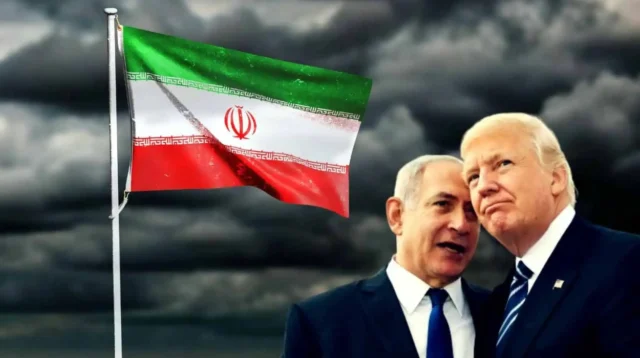
The 27-point evasion by Putin is the centre of the new tensions following a 5-hour meeting in Moscow on December 2, 2025, between the Russian President Vladimir Putin and the American envoys Steve Witkoff and Jared Kushner. The peace structure, designed in a four-interdependent package, concerns the issue of territorial withdrawal, the guarantees of Ukrainian sovereignty, the conditions of reconstruction, and the political parameters aimed at establishing a step-by-step course of the ceasefire and negotiation. The structure was ratified by Putin in an interview by India Today on December 4 in which he admitted that discussions were useful and necessary but essentially restricted by outstanding differences on matters concerned with territory.
Kremlin official Yuri Ushakov described the exchange as fruitful though it had not adopted important elements in Moscow. The meeting was preceded by the previous informal meetings in Geneva and Florida where US and Ukrainian representatives tried to sketch parameters that would be agreed by both parties. Ukrainian delegates, as cited by the US authorities in Bloomberg, were also preparing another Florida session right after the Moscow talks.
Early signals of prolonged negotiations
Kremlin spokesman Dmitry Peskov has referred to it as a hard work saying that Russia did not reject the proposal so much. The fact that Putin insists that disagreements could be discussed later in the session proved that he was willing to extend the discussions without changing the battlefield goals. When Washington anticipated a systematic approach this could generate some momentum, rather, the differences in strategy objectives resulted in much of the proposal remaining unfinished.
The negotiations are reasonably good according to US President Donald Trump and are in line with the views of advisers that Putin was prepared to make a deal despite turning down the core requests. This point of difference in perceptions underscores initial divisions between popular hope and international truth.
Territorial control as the decisive obstacle
The most decisive aspect of the 27-point dodge of Putin is his uncompromising refusal to take into account any demand according to which Russia should leave occupied areas. He again stated in Moscow that Russia would guarantee Donbas and the larger southern and eastern territories by whatever means, citing that Kyiv opposition gave Moscow no choice. This stance is in line with Russian military operations up to the end of 2025 when trench consolidation and more violent attacks in the territories of Avdiivka and Kupiansk were evidence of further territorial ambition.
The wording used by Putin indicated the lack of intention to step back but the positioning of the strategy whereby the Donbas territory became unnegotiable. This, observed analysts in Brussels, is the same pose Russia has taken since mid-2023, when the stalemates on the battlefield were replaced by gradual gains made on the eastern front.
Package disagreements and the limits of phased negotiation
The negotiation packages were made sequential so that both parties would get political victories without necessarily making maximal concessions. However, when Putin vetoed the territorial points, this made the structure less functional. Whereas in economic and security and political clauses, it was said that they were negotiated in broad strokes, both Moscow and Washington did not reveal which of the tentative areas of alignment.
Putin refused to indicate what aspects he would accept which made the offer appear to be acceptable in principle but poor in practice. This ambiguity enables Moscow to retain diplomatic contact and have the liberty of operation on the ground.
European and Ukrainian interpretations of Moscow’s intent
European leaders were skeptical about the 27 points dodged by Putin. Top EU officials said that Moscow could be expected to act in this way, and the attitude of the Kremlin was seen as a move to buy time without any changes in military ambitions. According to the Guardian, European policymakers consider that Russia has the trump card, provided that the momentum in a battlefield is not entirely shifted to the side of Moscow.
In early December, European Commission President Ursula von der Leyen again stated that it was necessary to increase the economic cost of war in Russia as a means of countering what she described as an illusion of positive engagement. Her stinging words were in line with new EU discourse on use of frozen Russian assets to help Kyiv. Russian President Dmitry Medvedev warned that such actions would cause a new war with Europe, which was generally perceived as rhetorical overheating in the face of the growing economic pressure of Europe.
Kyiv’s emphasis on sovereignty and credible settlement
Ukrainian President Volodymyr Zelenskyy maintained Ukrainian sovereignty and territorial integrity in any settlement, making the statement publicly that Ukrainian was heard in previous consultations with Washington. Claims that Kyiv had already accepted the terms of the Trump initiative were refuted by senior Ukrainian officials, who made it clear that no such agreement would be deemed under any circumstances unless solid guarantees were provided on territory and security.
Zelenskyy advocated a two-level strategy that involved aggressive diplomacy and a prolonged military and economic pressure on Moscow, which he called the two-track policy. This is in line with the broader Ukrainian 2025 strategy that integrates the international outreach, domestic mobilization reforms and dependence on European defense commitments as the US policy adapts under the Trump administration.
Diplomatic movement against a volatile late-2025 backdrop
The Moscow summit preceded by several days the visit of Putin to India, which was a state visit during which energy relations and military-technologic deliveries were discussed. Analysts claimed that the international agenda of Putin helped him to strengthen his feeling that Russia had a role to play in the world, which diminished the need to further compromise by entering into negotiations under what is viewed as a disadvantaged condition.
In the meantime, US shuttle diplomacy became more aggressive as Trump wanted foreign-policy gains in the early stages. However, Kyiv and Warsaw were reporting that Washington had not been as optimistic as European allies were, who feared that any compromise would involve Ukrainian concessions and no Russian withdrawals.
Frozen assets and the economic pressure equation
EU finance ministers made progress in December 2025 to tap profits on frozen Russian assets to finance Ukrainian defense expenditure. Moscow condemned the act as theft and Medvedev claimed that the retaliation would not stop on diplomatic measures. His statements did not mean that he was trying to threaten them directly but rather was part of the wider campaign by Russia to discourage European economic policies that accumulate fiscal burden on Moscow in the long-term.
The Russia-EU financial confrontation, which is overlaid with the existing battlefield relationships, makes the work of diplomacy more difficult by connecting the possibilities of peace with the problematic issues in the economical sphere.
Strategic implications for 2026 and beyond
The 27-point dodge offered by Putin is a continuation of a negotiation cycle where victories on the battlefield and political positioning sets the rhythm of diplomacy. Although the US structure provides an opportunity to have an organized interaction, Russia’s territorial position makes the compromise difficult. The denial of sovereignty by Ukraine still stands, and the European leadership still presents economic actions as leverage meant to change the cost-benefit calculation of Moscow.
The disequilibrium between the demands by the territories of Russia and the US-EU-Ukraine insistence on sovereignty render any further agreement a possibility, but holistic settlement unachievable without any major changes on the ground.
Ukraine, Europe, and the uncertain trajectory
As winter 2025 gives way to early 2026, the conflict’s direction hinges on whether battlefield developments pressure Moscow toward greater flexibility or reinforce Putin’s long-term strategy. US discussions on tightening asset-based pressure, coupled with European debates on defense autonomy, indicate shifting power centers around the negotiation table.
Whether these evolving pressures reshape Putin’s calculus or entrench the Donbas standoff deeper into 2026 remains the central uncertainty shaping the next phase of the conflict, raising the question of how diplomatic leverage, economic pressure, and military trajectories will intersect to break the current deadlock.