Six federal prosecutors in Minnesota resigned on Tuesday, citing the Justice Department’s push to investigate the widow of Renee Nicole Good, a woman killed by an ICE agent, and the department’s refusal to pursue a criminal probe into the agent who fired the fatal shot. The resignations signal deep fractures within the Justice Department and underscore growing tension between career prosecutors and political appointees under the Trump administration.
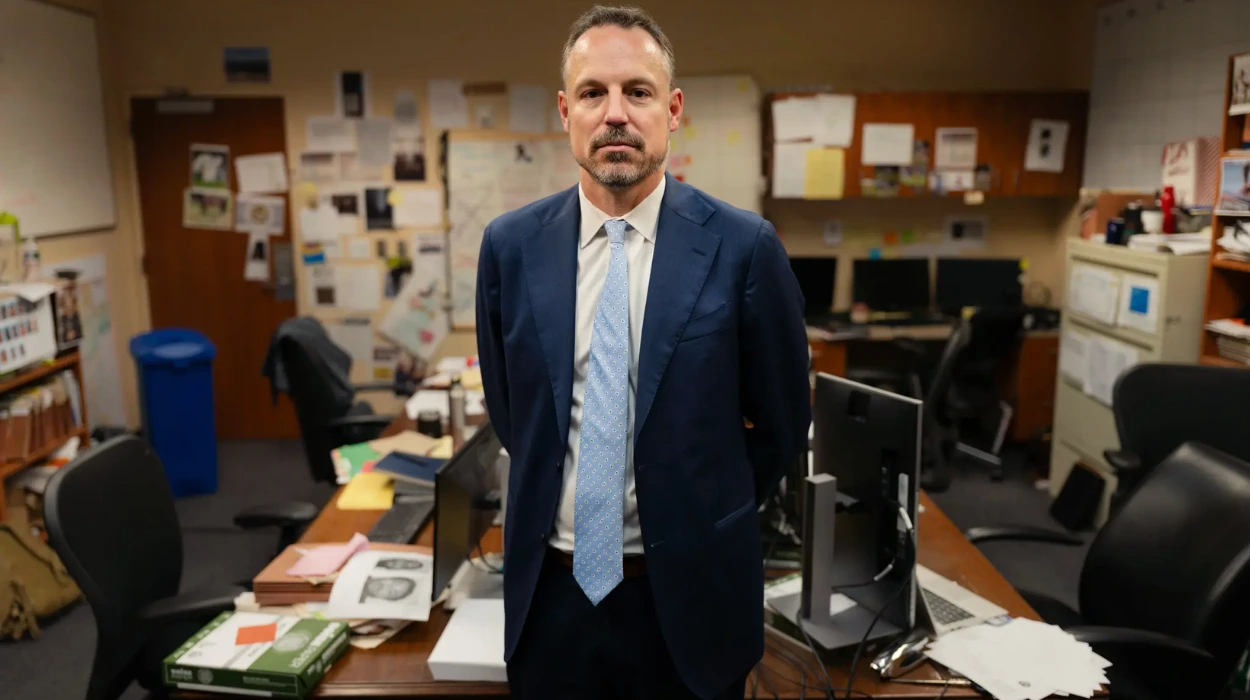
Among those who quit was Joseph H. Thompson, second in command at the U.S. attorney’s office and leader of a sprawling fraud investigation that has shaken Minnesota politics. Thompson, 47, a career prosecutor, objected both to the DOJ’s focus on Becca Good and its refusal to collaborate with state authorities on whether the shooting itself was lawful.
Minneapolis Police Chief Brian O’Hara called Thompson’s resignation “a major blow” to efforts to root out rampant fraud in state agencies.
“When you lose the leader responsible for making the fraud cases, it tells you this isn’t really about prosecuting fraud,”
O’Hara said, noting that most defendants in these cases are American citizens of Somali origin.
Other senior prosecutors who resigned included Harry Jacobs, Melinda Williams, and Thomas Calhoun-Lopez, each holding leadership roles in major investigations. All declined to comment publicly on the reasons for their resignations, while the DOJ did not respond immediately to requests for comment.
Justice Department’s controversial approach sparks resignations
The resignations followed days of turmoil as prosecutors struggled with public outrage over Ms. Good’s killing. Harmeet Dhillon, head of the DOJ’s Civil Rights Division, reportedly refused to consider opening an investigation into whether the ICE agent violated federal law, prompting several prosecutors to accelerate their departures.
Deputy Attorney General Todd Blanche stated that “there is currently no basis for a criminal civil rights investigation” into the agent. Instead, the DOJ shifted focus to examine ties between Ms. Good, her widow Becca, and activist groups monitoring immigration enforcement, even as Secretary of Homeland Security Kristi Noem labeled Ms. Good a “domestic terrorist”.
Becca Good emphasized that she and her wife had “stopped to support our neighbors” when confronted by ICE agents, who were armed while the couple only carried whistles. Thompson reportedly strenuously objected to the criminal investigation against Becca Good and the DOJ’s decision to bypass the Minnesota Bureau of Criminal Apprehension (BCA), which reviews police shootings.
Drew Evans, superintendent of the BCA, called Thompson’s resignation a “major setback” for fraud investigations and public safety, warning that the lack of a credible investigation into Ms. Good’s death could erode trust in law enforcement agencies.
Escalating immigration crackdown and racialized targeting
Thompson’s departure occurred amid an aggressive immigration enforcement surge in Minnesota, which began in December with roughly 100 out-of-state federal agents and has now expanded to approximately 2,000 agents, compared with the Minneapolis Police Department’s 600 officers.
Local leaders and immigrant rights groups reported profiling based on appearance and accents, with violent arrests affecting both immigrants and U.S. citizens. In response, Minnesota’s attorney general and the mayors of Minneapolis and St. Paul filed a federal lawsuit demanding an end to the crackdown, citing civil rights violations.
The Trump administration has defended the surge as part of a broader fraud investigation led by Thompson, designed to combat schemes defrauding safety net programs. Most defendants charged in the fraud cases are Somali-American citizens, fueling criticism that the crackdown has been racialized. President Trump has reportedly referred to Somalis as “garbage” and suggested potential denaturalization, framing the population as hostile to the U.S.
Thompson expressed frustration as the immigration operation increasingly distracted from fraud investigations, which have already cost taxpayers billions of dollars. His team had successfully prosecuted over 90 individuals since 2022, with at least 60 convicted for defrauding programs meant for children, the homeless, and individuals with autism.
Implications for governance and public trust
Governor Tim Walz, facing scrutiny over the fraud scandal, suspended his re-election campaign to focus on rooting out corruption. He lamented Thompson’s resignation, calling him “a principled public servant” and criticizing Trump for pushing career professionals out of the DOJ in favor of political appointees.
Thompson, a Stanford-trained lawyer with nearly 17 years in the DOJ, previously prosecuted street gangs, drug cartels, public corruption, and domestic terrorism in Chicago before leading Minnesota’s office. He also served on the team investigating former President Joe Biden for alleged mishandling of classified documents, concluding no criminal charges were warranted.
Thompson’s encyclopedic knowledge of Minnesota fraud and corruption cases has been described as irreplaceable, and his departure leaves a critical gap in both public safety and anti-fraud efforts. Local officials warn that the absence of experienced prosecutors risks undermining trust in the justice system, especially amid a politically charged immigration crackdown and heightened public scrutiny.