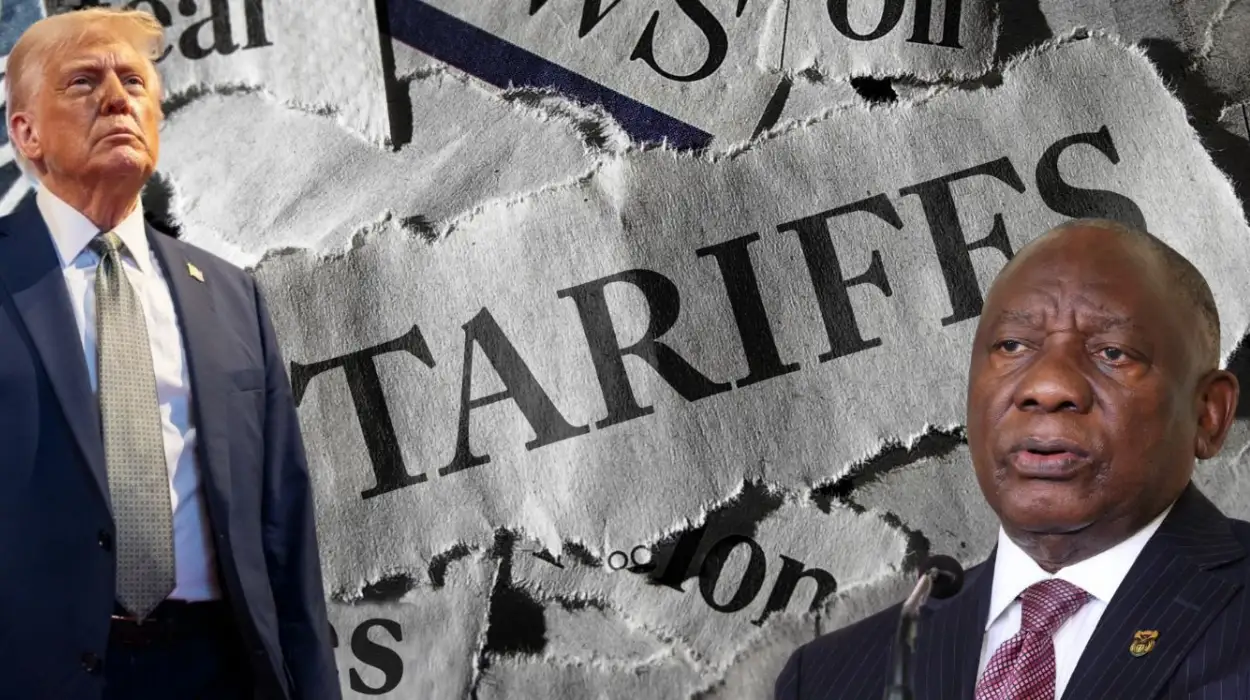
U.S. Trade Representative Jamieson Greer placed South Africa at the center of a growing policy rift when he told a House committee on 9 December 2025 that Pretoria may need “different treatment” under any revamped African trade initiative. His testimony noted that South Africa’s industrial scale distinguishes it from other sub-Saharan economies, invoking its automotive, metals, and agricultural output as sectors that “should be purchasing goods from the United States” rather than applying restrictive measures. Greer has made her statements at a time when there is uncertainty about the future of the African Growth and Opportunity Act that since 2000 had given thousands of African exports duty-free access.
His remarks also indicated he was open to a carve-out which indicated that Washington was becoming frustrated with the trade position taken by Pretoria. The refocused strategy would match broader changes in the Trump administration, which sees a more customized trade system closely tied to reciprocity instead of expansive and eligibility-based models.
Trade Barriers Fueling The Shift
Washington asserts that South Africa maintains high tariffs and non tariff barriers to the US imports, yet the proposal to reduce them has been made severally. Greer emphasized that there are better bets that were made by preceding negotiations. Although the U.S. imports in South Africa increased by thirty seven percent in 2025, the American lawmakers point at imbalance: the South African export increases with the United States outbound restriction that they see as limiting producers in the United States.
These tensions shape South Africa as an outlier in the current AGOA renewal debates, in which the majority of the African states want to have the program renewed smoothly. The relatively developed economy of Pretoria, which was a strategic tool in U.S-Africa trade, is now mentioned as a reason to think of a differentiated course that restrains preferential treatment with request of policy changes.
Diplomatic Snubs And Growing Political Pressure
A move by Pretoria to miss a summit of major economies hosted by the United States at the end of 2025, further escalated the tension in diplomatic relations. The next step of the Washington plan to leave South Africa out of the 2026 G20 summit in Miami was a sort of acute warning of deteriorating bilateral relations. The trend is reminiscent of a broader change in American foreign interaction in the second term of President Trump, in which the importance of strategic alignment and policy conformity is gaining significant importance.
The chilly relationship between the two countries also introduces the political element of the economic argument, and the congress demanded to re-evaluate the worthiness of South Africa to receive preferential treatment. The lack of Pretoria in major forums according to the critics in Washington is seen to be a sign of non-engagement which further supports the claim by Greer that trade incentives must also consider political reliability in addition to economic need.
Escalating Tariffs And Economic Fallout
The situation on tariffs changed radically in August 2025, when the United States levied thirty percent of duties on various South African products. The relocation came after the standstill on tariff cuts, which caused immediate upheavals to exporters who relied on the cost advantages of AGOA. South Africa’s trade ministry responded by affirming its commitment to securing AGOA renewal, pledging sustained advocacy for full reinstatement of benefits.
Trump’s reaffirmed “America First” trade agenda, intensified since his January 2025 inauguration, frames tariffs as a tool for correcting perceived asymmetries. Within this context, Greer’s 10 December 2025 testimony on a proposed three-year AGOA extension highlighted the possibility of a stopgap measure that excludes South Africa while preserving access for smaller, more compliant partners. Such a partial renewal would represent the sharpest recalibration in AGOA’s twenty-five-year history.
Impact On South African Exports
South Africa’s automotive components industry, historically a major AGOA beneficiary, faces immediate risk from new tariff burdens. Higher export costs threaten established value chains that integrate South African manufacturing with U.S. assembly plants.
Agricultural Competitiveness Under Tariff Stress
Agriculture, particularly citrus and high-value fruits, confronts similar challenges. While 2025’s export surge underscored international demand, rising U.S. duties chip away at competitiveness in a market where margins are already tight.
Political Alignments As Economic Variables
Washington’s concerns extend beyond economics to Pretoria’s diplomatic posture. Its closer BRICS coordination and continued engagement with Russia strain an already fragile trade relationship, pushing economic considerations into the broader realm of geopolitical positioning.
Broader AGOA Renewal Dynamics
Most sub-Saharan countries appear positioned to benefit from a more seamless AGOA update, contrasting sharply with South Africa’s increasingly isolated status. Greer’s testimony echoed the administration’s preference for differentiated engagement rather than blanket eligibility.
Fragmentation Risks In African Trade Unity
A selective renewal risks fragmenting Africa’s trade cohesion, potentially separating compliant states from those viewed as politically or economically misaligned. South Africa’s disproportionate share of U.S.-bound exports exacerbates this risk.
Signals From Washington In 2025
Parallel tariff actions in other regions suggest that renewed AGOA access will hinge on alignment with U.S. trade norms. South Africa’s divergence on multiple fronts places it at a disadvantage as negotiations evolve.
Geopolitical Tensions Driving The Trade Rift
South Africa’s foreign policy decisions throughout 2025 accelerated Washington’s disenchantment. Pretoria’s actions at the International Court of Justice, its position on Israel, and its abstentions concerning expanded sanctions on Russia run counter to U.S. strategic priorities. As defense spending rises and geopolitical blocs harden, Greer’s comments frame AGOA not merely as economic policy but as leverage within a shifting global balance.
Simultaneously, bilateral economic interdependence complicates decisive action. Record-high trade volumes in 2025 illustrate that commercial interests remain deeply intertwined. How policymakers reconcile strategic friction with economic necessity remains central to the unfolding dynamic.
U.S. Domestic Politics In Play
Congressional debate throughout 2025 reflected growing sentiment that AGOA must be reshaped to address reciprocity concerns. Greer’s earlier November testimony on tariff structures highlighted bipartisan interest in tightening eligibility requirements. Lawmakers representing industries affected by foreign competition frequently reference South Africa as a case study in the need for reform.
To the Trump administration, AGOA is progressively being framed as a way of rewarding like-minded partners instead of a means of wide-ranging developmental dispensation. This rebranding rings well with political blocs which advocate tariff restrictions and supply chain security.
South African Counterarguments
Pretoria demands that its economy is too big to treat it as a punishment object. The authorities pay attention to mutual advantages, as the U.S. industries have shown their need in South African minerals that are fundamental to technology and defense use. Their argument aims at re-framing the debate around compliance to partnership by stating that there is a need to take a balanced approach to structural realities and not to exclude them abruptly.
Stakeholder Reactions And Market Signals
The industry groups on the Atlantic both sides are fearing negative impacts of the rising tensions. U.S. corporations point to supply chain vulnerability due to the South African increase in export levels, South African business executives warn that diminished access jeopardizes jobs in all areas related to AGOA preferential treatment. The media reporting in late 2025 shows an increased tendency to frame the argument as a turning point in the U.S.Africa trade relations.
Investor Responses In 2025
The policy uncertainty was quickly absorbed by financial markets. The rand was weakened by the comments of Greer, as it showed the increased concerns of the investors. Risk premiums rose according to the risk that the tariff pressure will be prolonged, and analysts indicated future drops in foreign investment should the stand-off continue to the beginning of 2026.
Long-Term Implications For African Trade
South Africa with approximately a quarter of the sub-Saharan exports to the United States, will lose a lot to its new rivals in case of limited access to AGOA. The bifurcated strategy of the Trump administration can change the structure of trade in the future and become a pattern in which compliance and political alignment determine patterns of benefits.
Meanwhile, the ongoing deepening of Pretoria relations with the African Continental Free Trade Area and non-Western partners provide alternative solutions. But analysts warn that loss of AGOA preferences will cut down the anticipated growth by billions in 2026, worsening domestic economic strains.
With the year 2025 approaching its end, the AGOA Peril of South Africa is an indication of greater refocusing of world trade and geopolitical priorities. How Pretoria will react to maintain market access by adjusting its tariff posture or continuing to insist on strategic autonomy will determine not just its relationship with the US, but also the integration Africa is about to go through as the international order starts to change.