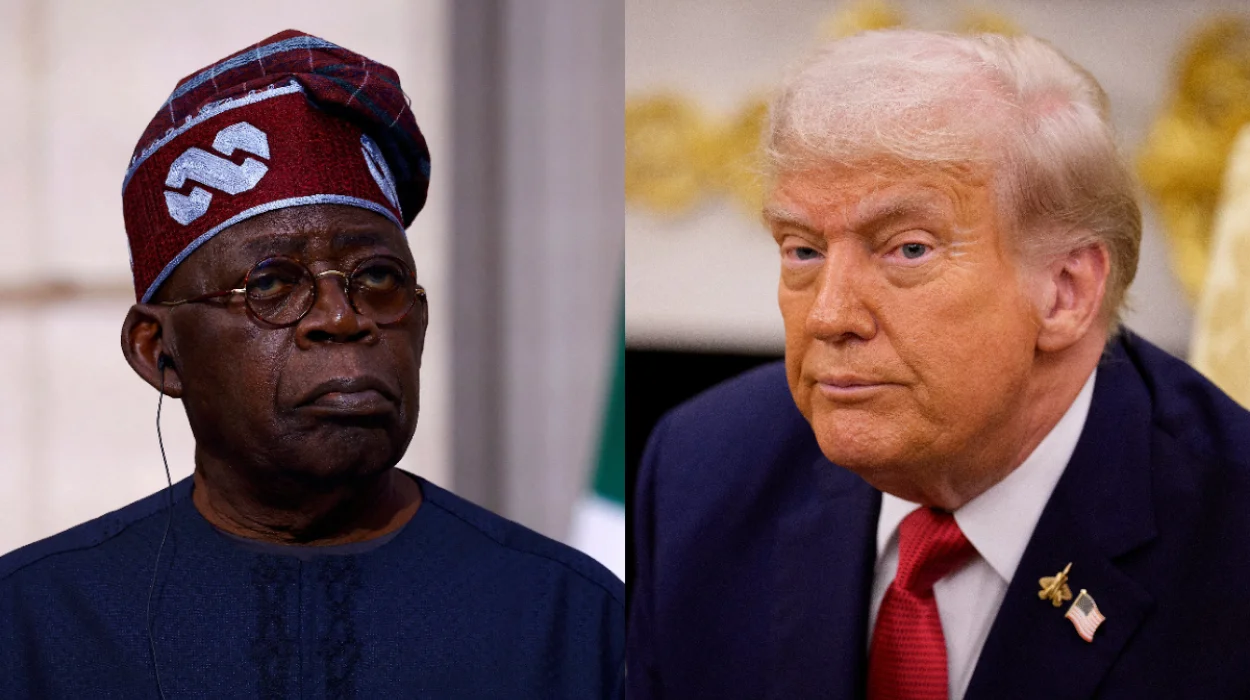
Nigeria’s US CPC designation beyond religious narratives gained renewed attention when the United States re-designated Nigeria as a Country of Particular Concern under the International Religious Freedom Act. The CPC category is reserved for states responsible for or tolerating severe violations of religious freedom, and it authorizes Washington to apply diplomatic pressure or targeted sanctions. The reinstatement of Nigeria’s CPC status reversed the 2021 decision to delist the country, a move previously criticized by the US Commission on International Religious Freedom for overlooking worsening insecurity.
The 2025 decision followed sustained lobbying from advocacy organizations such as ADF International and Nigerian Christian associations that presented documentation alleging systematic persecution. A number of US politicians such as Rep. Chris Smith maintained that the government of Nigeria had not done enough to defend the vulnerable groups. The Trump administration justified its decision by previous and pronounced violations referring to unresolved attacks on churches and rural communities in the Middle Belt region.
Although these assertions had an impact on the decision of Washington, according to Nigerian analysts and researchers on international conflicts, the security crisis cannot be explained only in the religious framework. The Nigeria conflicts that abound with banditry, ethnic conflicts, political conflicts and economic decay make it hard to interpret the CPC designation and its possible implications.
Broader Realities Behind Violent Conflict In Nigeria
The US CPC designation of Nigeria outside the religious account is more evident where the multi-layered nature of insecurity can be considered. In the central and the northern regions, ethnic rifts, land disputes and struggle over depleting resources tend to intertwine with religion but seldom have religion as their source. The Middle Belt is plagued by retaliation cycles between pastoralist and agricultural societies that are associated with climate stress, land shortages and poor governance.
Rising Socioeconomic Pressures And Governance Strains
The population of Nigeria, which has already reached 230 million people, is experiencing increasing poverty rates, inflationary situations, and unemployment. These circumstances make non-state armed groups, criminal gangs, and separate movements, which assault both Christian and Muslim communities, more powerful. The crisis is amplified by governance dysfunction, sluggish judicial procedures as well as inadequate policing. It is observed by the analysts that state incapacity and not state complicity is a more defining factor in many regions.
Divergent Narratives And The Risk Of Oversimplification
Nigerian security observers warn that framing the crisis solely as religious persecution risks escalating tensions. Dr. Awwal Abdullahi Aliyu of the Northern Consensus Movement for Peace argued in late 2025 that “simplifying a complex insecurity landscape into a single religious narrative threatens national cohesion and invites foreign interference.” His concerns mirror those of regional peacebuilding experts who highlight how misinterpretation may deepen mistrust across communities.
Nigerian Peace Advocates Emphasizing Unity Over Polarization
Cross-religious leaders emphasize that violence is an issue afflicting Nigerians. Pastor Buru, a prominent Christian peace activist, repeated in Kano that narratives of a one-sided genocide are not an actual state of living of communities who live through adversity in common despite the faith. Muslim leaders, such as the Secretary Hassan Abdul Rahman of Supreme Council of Sharia in Nigeria, echoed the opinion and said that simplistic representations risk destroying long-established grassroots collaborations.
Calls For Governance Reform And Economic Inclusion
Peace activists claim that counterterrorism response is not enough to enhance security. They focus on reform in governance, fair political representation, the employment of youths, and anti-corruption as critical elements of long-term stability. Their message focuses on domestic solutions rather than an international military intervention, and it is based on the fear of previous international interventions in Africa and their disruption effects.
Protecting Communal Harmony Amid External Pressure
Religions also emphasise that the CPC label has fuelled fear in people. In order to offset polarizing discourses, they have advocated community-level dialogue, conventional mediation structures, and collaboration with civil society groups. What is common about all of them is that the crisis in Nigeria is not sectarian, but national, and should be solved by camaraderie and not through political division.
Diplomatic Impact On Nigeria-US Relations
The US CPC designation in Nigeria as applied to the country outside the religious truths has its consequences as far as bilateral relationships are concerned. Although Washington talks of the measure as offering protection over religious rights, Abuja views it as an issue of a complicated diplomatic struggle. The Nigerian government is also concerned that an increased level of scrutiny might make military cooperation harder, especially with regards to dealing with boko haram, ISWAP, and growing bandit networks in the northwest.
Security analysts observe that the name can also determine the schedule of delivery of the military equipment or training programs. In December 2025, one of the Nigerian officials, speaking anonymously said that they would cooperate, but on more conditioned terms, as it was mentioned with worries regarding the possibility of political leverage.
Economic Repercussions And International Perception
The economic environment in Nigeria, which is already risky due to inflation and currency fluctuations, may be subjected to more unpredictability assuming the designation has an impact on the investor confidence. There are also international companies who view CPC countries as very risky places to conduct business because of lack of stability or political imbalance. Misunderstanding of the CPC category may affect the energy, agriculture, and technology, according to the caution of the economists in Nigeria.
Wider Geopolitical Considerations
CPC brand name comes about at a time when there is increased competition between the US and China in Africa. The current infrastructure and energy relationships between Nigeria and China can become closer as long as Abuja perceives the move by Washington as an intrusion. This also impacts regional diplomacy in West Africa, with other neighboring governments monitoring closely the reactions of Nigeria to determine the possible changes in regional affiliations.
Rethinking The Framing Of Conflict In International Diplomacy
The US CPC designation of Nigeria outside of religious narratives highlights a common problem with international policy, which is the inability to respond to multidimensional conflicts using single-issue designation. Although religious freedom is crucial, it may not be diagnosed and interfered with due to its separation with socioeconomic, political, and ethnic variables.
Balancing Sovereignty, Advocacy, And Constructive Engagement
The diplomats and pundits insist that successful international relations should focus on the understanding that there are political sensitivities in the federation of Nigeria. The strategies that seem to be punitive or simplistic can enhance nationalist opposition, whereas cooperative frameworks that emphasize institutional change, forensic investigations, and community stabilization can develop trust.
Prospects For 2025 And Emerging Diplomatic Directions
Future policy decisions will be made in line with the changing attitude towards the designation of CPC in Nigeria, and the current deliberation with Washington. The future months will prove whether the two countries will be able to overcome narrative polarization and implement solutions that enhance accountability and security governance and inter-communal harmony. The interests are not limited to bilateral relations, particularly, the stability of the West African region and the expectations of the world how human rights should be considered under international law in the context of complex cases.
With the country at a crossroad in its security and diplomatic path, the emerging discussion offers a decisive point of departure to reconsider the way international processes engage with realities of one of the most powerful countries of Africa.