Through a very executed military operation, Operation Midnight Hammer, the United States imposed its bomb on Iran over its most important nuclear installations, the Fordow Uranium Enrichment Plant, Natanz Nuclear Facility and the Isfahan Nuclear Technology Center. This attack marked the biggest U.S. attack on Iranian targets since the beginning of the 2020s and indicated the intentional increase in the conflict between Iran and Israel.
The attack was a strike by a group of 14 GBU-57A/B Massive Ordnance Penetrator (bunker buster) bombs carried by a fleet of B-2 Spirit stealth bombers, augmented by the launching of Tomahawk missiles by U.S. submarines in the Arabian Sea. These weapons were chosen because they were needed to breach the highly fortified facilities of the underground complexes in Iran which were constructed in the last ten years to withstand the conventional bombardment.
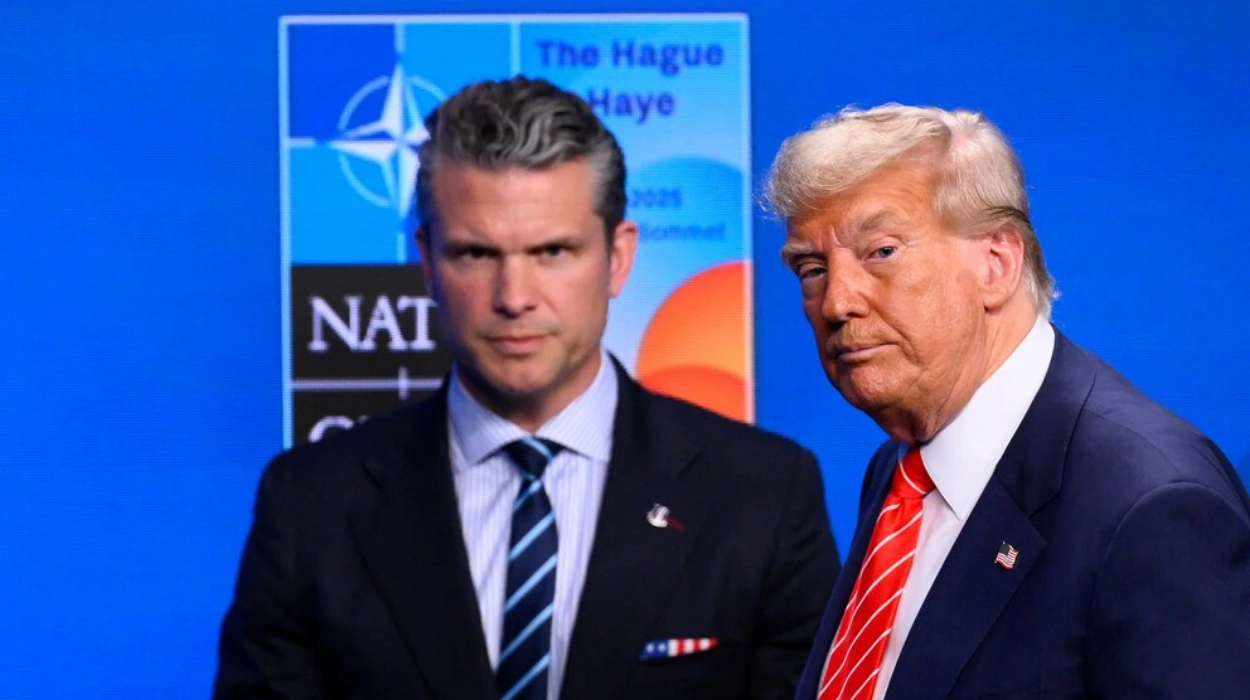
Currently, the President Donald Trump, who claims to have been directly involved in the operation, publicly said that he was very much in charge of authorizing the mission. The fact that his statement was out of the ordinary of a former head of state brought up discussions regarding the levels of his influence on defense planning in transitional advisory capacities of his administration. The Defense Secretary of the United States, Pete Hegseth, praised the operation saying it was a decisive strike to the nuclear ambitions of Iran and that it destroyed the ability of Iran to enrich their nuclear arsenal and forced Iran into a cease fire after 12 days of escalation.
Dissecting The Contrasts Between Claims And Intelligence Assessments
Although U.S. political messaging was triumphant, according to intelligence assessments carried out in Washington and other allied agencies, the picture was less rosy. The Defense Intelligence Agency (DIA) of the U.S. estimated that the attacks, tactically successful, only added several months to the nuclear program of Iran, not several years as Trump and Hegseth had announced. Such a discrepancy signifies the hardiness of the Iranian nuclear network, which has a vast distribution and can be restored quickly.
According to the Defence analysts of the International Institute of Strategic Studies (IISS), the engineers of Iran had created redundancy in several provinces, which could readily recover in the event that such attacks occurred. In August 2025, satellite photos showed some work was already underway at the Natanz site, indicating that Iranian installations were still quite functional even given the scale of the strikes.
The retaliatory move by Iran also weakened the assertions of the U.S. strategic dominance. Iranian Revolutionary Guard Corps (IRGC) forces carried out a synchronized missile attack on the Al Udeid Air Base in Qatar, the location of U.S. Central Command, within 48 hours of the operation. There was a minimum of 24 short range and medium range ballistic missiles which were fired and successfully intercepted by Patriot and THAAD defense systems with minimal damages reported. The retaliation it gave was described as a proportionate and measured response by Tehran, which indicates both defiance and restraint. The episode demonstrated that even though the U.S. continued to have an overwhelming military power, the retaliation power of Iran and its readiness to exercise it could not be reduced.
Trump’s Populist Framing And Rhetorical Strategy
Former President Trump’s post-operation statements employed language designed to resonate with his political base, branding the strike as a “spectacular success” and promoting slogans such as “FAFO” (Find Out), a phrase symbolizing retributive justice. His messaging sought to reinforce his image as a leader unafraid to use decisive force, contrasting his approach with what he described as “years of hesitation and weakness” under previous administrations.
This rhetorical framing not only aimed to project strength to domestic supporters but also served to redefine the U.S. approach to deterrence. By emphasizing direct presidential involvement, Trump blurred the traditional boundary between political leadership and operational command raising questions about civilian-military relations and strategic transparency.
Hegseth’s Strategic Narrative And Military Framing
In post-operation statements, Former President Trump used terms that were aimed at the hearts of his political base, calling the strike a spectacular success and selling such slogans as FAFO (Find out), a term that represented vengeance justice. His messaging attempted to strengthen his message as a leader who was not afraid to apply decisive force, which was in contrast to his style that he stated as years of indecisiveness and weakness by other previous administrations.
This rhetorical packaging was not only meant to display power to the domestic supporters, but was also used to re-establish the U.S. policy of deterrence. Trump erased the traditional distinction between the functions of the political leadership and operational command by highlighting the direct presidential intervention casting doubt on the relations between the civilian and military and the transparency of the strategic plans.
Strategic And Geopolitical Context
Defense Secretary Pete Hegseth made the operation a show of American accuracy and technological dominance. By noting that the operation was the most complicated in U.S. military history, he was seeking a way to give institutional competence a boost and support the administration version of renewed deterrence. The argument that the program in Iran was destroyed, that was made by Hegseth however, came under questioning since later intelligence showed that there was some partial survivability of the enrichment capabilities.
This discrepancy between military evaluation and political statements showed to what degree strategic communication was applied to control the perception of the population and create world discourses concerning the success of the operation.
Regional Ramifications And Diplomatic Fallout
The strikes in 2025 were a distinct departure of the American policies of deterrence and diplomatic containment to active disruption in the past. This move would be in line with the recalibrated doctrine of the Middle East by the administration, which was more focused on the visible show of power to prevent Iranian influence in Iraq, Syria, and Yemen. The strikes were also in line with the heightened security action taken by Israel in the region indicating a tacit agreement between Washington and Tel Aviv to attack the military infrastructure of Tehran.
Technological Evolution Of Modern Warfare
The operation was also a representation of a turning point in contemporary aerial warfare. The integration of stealth bombers, cyber-warfare teams, and munitions that were guided by satellites brought out the collocation of sophisticated technologies in the implementation of complicated missions. Analysts characterized the operation Midnight Hammer as a sort of prototype of other future U.S. involvements in which accuracy, data combination and small number of troops is synonymous with strategic supremacy.
Navigating Contradictions And Consequences
The U.S. leaders were applauded because the tactic was a success, but the overall consequences were unclear. The Iranian situation proved that deterrence was not absolute in that Iran could retaliate without being crippled. In addition, the disparity between the official rhetoric and the validated intelligence tests undermined the credibility of the U.S. among its allies and the international community. The story of complete success, told by both Trump and Hegseth, was in stark contrast to the fact that Iran is in a fast healing process and continues to enrich.
The operation also came back to the old-time discussions on the effectiveness of military solutions to nuclear proliferation. Scholars at the Carnegie Endowment to International Peace argued that every strike solidifies Iranian determination to achieve nuclear self-reliance and therefore coercive strategies may only facilitate, but not nip down, Iranian technological desires.
Domestically, the strikes bolstered Trump’s political capital among his supporters, presenting him as a decisive actor capable of restoring U.S. dominance. Yet, within policy circles, concerns grew over the erosion of diplomatic mechanisms and the sidelining of multilateral frameworks such as the Joint Comprehensive Plan of Action (JCPOA), which had once anchored regional stability efforts.
The Continuing Complexity Of US-Iran Dynamics
The events of 2025 reaffirm that military might, however precise, cannot substitute for comprehensive diplomacy. The persistence of Iran’s retaliatory posture, coupled with its expanding network of regional proxies, underscores the enduring challenge of translating military superiority into political leverage.
Hegseth and Trump’s claims of decisive victory illuminate the tension between political messaging and strategic realities. While the strikes demonstrated American capability, they also exposed the limits of unilateral military action in reshaping entrenched geopolitical conflicts. The short-term gains of tactical success risk being overshadowed by the long-term consequences of escalation, regional distrust, and diminished diplomatic credibility.
As the dust settles, the legacy of Operation Midnight Hammer remains uncertain. It stands as both a testament to U.S. technological prowess and a cautionary tale about the constraints of power in a multipolar world where narratives can be as potent as the weapons deployed. The unfolding trajectory of U.S.-Iran relations will reveal whether this operation marks a strategic turning point or another cycle in the enduring struggle between confrontation and containment that continues to define Middle Eastern geopolitics.