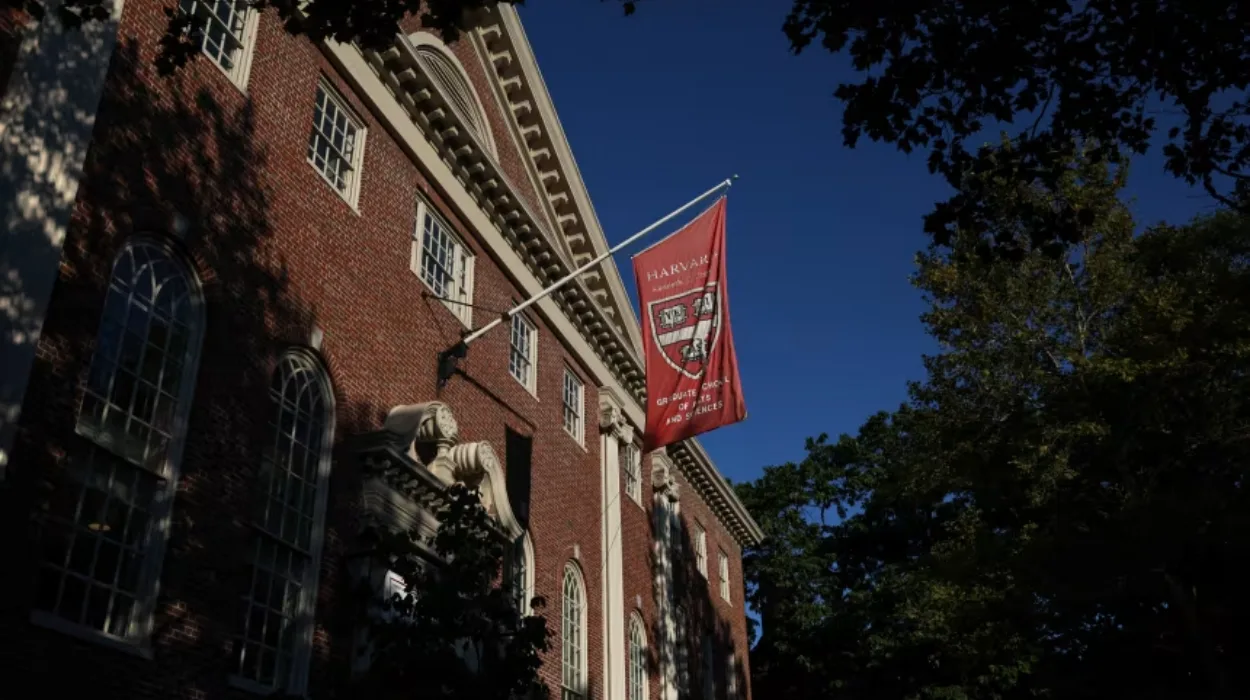
The Trump administration has escalated its near-year-long battle with Harvard University over federal funding, filing a new lawsuit against the prestigious Ivy League school on Friday. This is the latest in a series of escalations in a wider effort to pressure the university on its admissions policies and defiance of federal demands.
The Department of Justice claims that Harvard University has not turned over the documents requested in an investigation into whether the university’s admissions policies discriminated against students, potentially violating the terms of federal funding.
Attorney General Pam Bondi described the lawsuit as part of an ideological battle, saying that Harvard had failed to provide the necessary information to prove that its admissions were free from discrimination and that the administration would continue to press for the idea that merit should be placed above diversity. However, Harvard University claims that it has been cooperating with the government in good faith.
A Dispute Rooted in Allegations and Funding Retaliation
The larger conflict began in February of 2025, when the Department of Justice notified Harvard that it was aware of claims that the university had failed to protect Jewish students and faculty from illegal discrimination. Shortly thereafter, the Trump administration placed billions of dollars of federal funds to the university in escrow, a move that was overturned in two separate lawsuits brought by Harvard, and is now under appeal.
Harvard has accused the administration of using federal power to punish the university for its defiance of what it termed as unlawful government interference. The university stated that it would continue to fight for its independence and constitutional rights.
Government Demands Sweeping Admissions Data
The Justice Department is now seeking seven years of admissions data for applicants to undergraduate, law, and medical school. The data sought includes race, gender, citizenship status, academic achievement, and how diversity, equity, and inclusion initiatives were used in the admissions process.
Despite the Justice Department receiving about 2,300 pages of documents, the government contends that Harvard has not provided individual-level data and has impeded the production of documents.The lawsuit alleges that Harvard has intentionally been slow to respond and has failed to turn over documents that are essential to evaluating admissions decisions made at the applicant level.
The lawsuit also alludes to the historic 2023 Supreme Court decision in the Harvard and University of North Carolina case, which prohibited the use of race in college admissions.
Discrimination Concerns and Federal Skepticism
Recently, Harvard has admitted to the existence of discrimination-related issues on campus, publishing lengthy reports about antisemitism and anti-Muslim discrimination. Nevertheless, the Justice Department contends that it requires further evidence of the university’s fair treatment of applicants.
Assistant Attorney General Harmeet K. Dhillon stated that the provision of such information is a minimum requirement for good faith compliance and that any opposition may raise questions about the admissions policies at Harvard. She said that if Harvard is no longer discriminating, it should voluntarily provide the required information to prove compliance.
It is important to note that the government is not suing Harvard for monetary compensation in the lawsuit but is seeking an order from a judge to obtain more information about Harvard’s admissions.
Prolonged Settlement Talks and Financial Pressure
The ongoing dispute with the Trump administration has put Harvard in a state of financial limbo. Although other Ivy League schools, including Columbia and Brown, have reached settlements to end federal investigations and disputes over funding, Harvard has just announced an operating deficit of $113 million in the latest fiscal year.
The new lawsuit comes after repeated assertions by President Trump that a settlement was imminent, only to see those assertions prove false again and again over disagreements about academic freedom and whether payments would be made directly to the federal government.
President Trump raised his rhetoric on February 2, saying that his administration was seeking $1 billion in damages and that he intended to cut ties with Harvard in the future, after reports that he might back away from his previous demand for $200 million in direct payments.