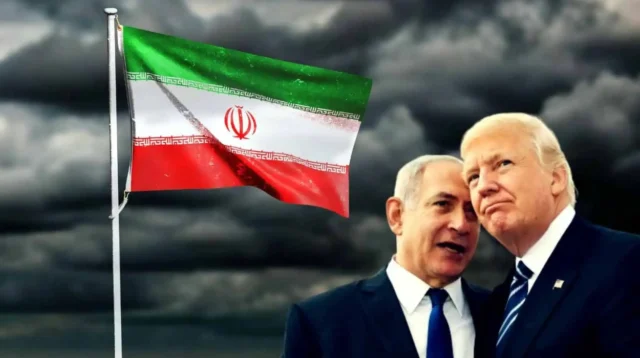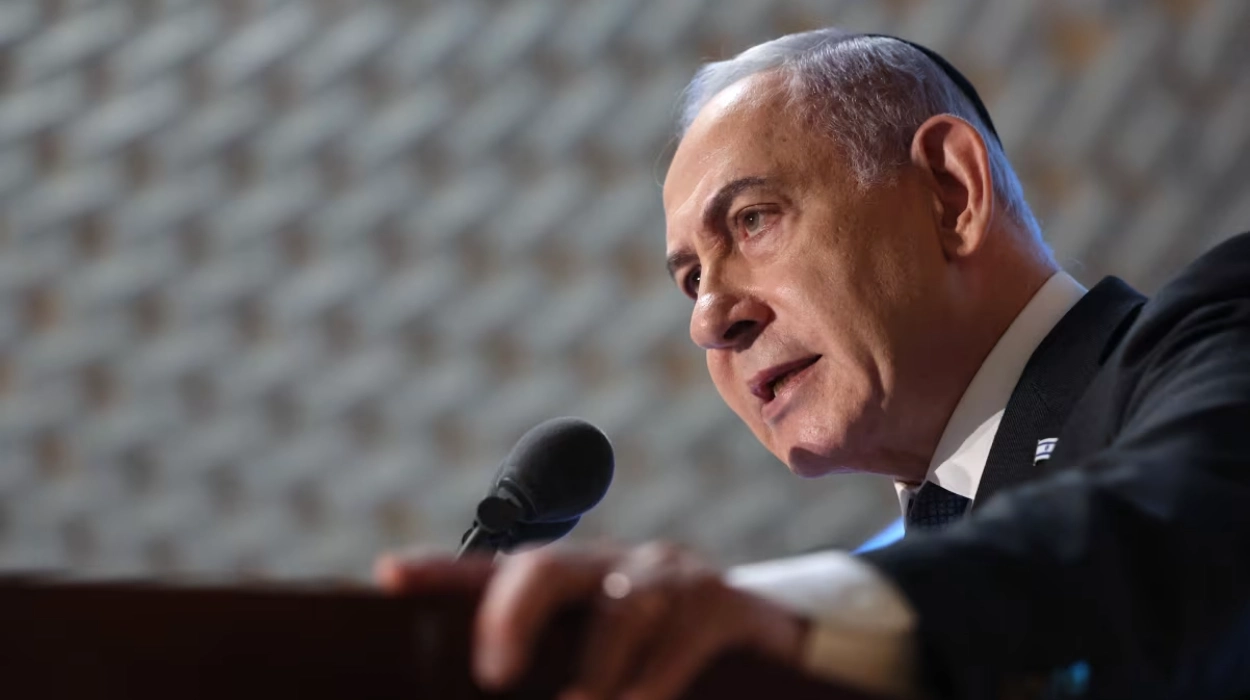
The upcoming meeting between US President Donald Trump and Israeli Prime Minister Benjamin Netanyahu at Mar-a-Lago will establish a new diplomatic relationship between the two leaders. The partnership between Trump and Netanyahu goes beyond traditional alliance because it shows Trump has taken on an essential role in Netanyahu’s electoral plan. This marks the start of his political journey until 2026.
This is the hand of the man that the Democrats feel should be brought back to the United States, because he is such “a fine and innocent person.” They said he is not a member of MS-13, even though he’s got MS-13 tattooed onto his knuckles, and two Highly Respected Courts found… pic.twitter.com/31sNr2k1SK
— Donald J. Trump (@realDonaldTrump) April 18, 2025
Elections in Israel are officially scheduled for October 2026, but that date is far from certain. The two main threats to Netanyahu’s coalition stem from the escalating crisis about ultra-Orthodox military service and the March 2026 budget deadline, which might trigger premature elections. In light of this, Netanyahu is rushing to change public opinion before political reality sets in.
How has Netanyahu survived years of political and national upheaval?
In Israel’s unstable political system, Netanyahu’s sixth government crowns a political career spanning nearly eighteen years across multiple premierships. His survival has occurred in the face of unprecedented chaos, including large-scale demonstrations against judicial reforms in 2023, an attack by Hamas on October 7, 2023, which claimed the lives of over 1,200 Israelis, and a bloody conflict in Gaza that left Israel both internationally and internally divided.
Netanyahu has persevered, though. He has been able to reassert Israel’s regional deterrence while largely avoiding a full political reckoning over the intelligence and leadership failures that preceded October 7 because his coalition has outlasted every Israeli government of the previous six years. His guiding principle has been survival rather than resolution.
Why does Netanyahu need Trump to rewrite the October 7 narrative?
Netanyahu faces his most difficult political battle in the form of public opinion. The polls from October 2023 onwards show his coalition maintains a steady position between 49 and 54 seats, which does not reach the 61-seat Knesset majority needed to form a government. The damage from October 7 will require Netanyahu to develop his own diplomatic leadership and international significance to bring about a complete change.
That’s precisely what Trump offers. Netanyahu’s calculation is straightforward: international spectacle can make up for any harm done to domestic credibility. The endorsement of a US president, particularly one as divisive and media-dominant as Trump, helps divert public focus from unfulfilled mistakes to promises for the future.
Prime Minister Benjamin Netanyahu at the joint press conference with US President Donald Trump:
— Prime Minister of Israel (@IsraeliPM) February 5, 2025
"You are the greatest friend Israel has ever had in the White House. That’s why the people of Israel have such enormous respect for you."
Full remarks >>https://t.co/nVafaOIFpI pic.twitter.com/mllENrFjX1
What precedent exists for Trump’s role in Netanyahu’s campaigns?
The Trump–Netanyahu alliance is not new. During Israel’s turbulent election cycles between 2019 and 2020, Likud billboards prominently featured the two leaders shaking hands under slogans portraying Netanyahu as operating in a “different league.” At critical moments, Trump delivered symbolic victories that Netanyahu converted directly into political capital.
These included US recognition of Israeli sovereignty over the Golan Heights in 2019, the unveiling of Trump’s Middle East peace plan in 2020, and the Abraham Accords — all framed domestically as diplomatic triumphs secured through Netanyahu’s personal relationship with Washington.
This declaration is in the spirit of the Abraham Accords, signed at the initiative of President Trump.
— Prime Minister of Israel (@IsraeliPM) December 26, 2025
Prime Minister Netanyahu congratulated the President of Somaliland, Dr. Abdirahman Mohamed Abdallah, and praised his leadership and commitment to promoting stability and peace. pic.twitter.com/IhvwA1q71s
How has Trump’s intervention extended to Netanyahu’s legal troubles?
More recently, Trump has intervened directly in Netanyahu’s personal political survival by championing his pardon campaign. During an October address to the Knesset celebrating a Gaza ceasefire, Trump publicly urged Israeli President Isaac Herzog to grant Netanyahu clemency, dismissing the corruption charges as trivial matters of “cigars and champagne.”
That moment triggered a coordinated Likud-aligned push that culminated in Netanyahu formally requesting a pardon. In his video submission, Netanyahu explicitly referenced Trump’s support, arguing that legal relief would allow both leaders to pursue “vital interests” during a rare strategic window.
Israeli analysts described the episode as a de facto campaign launch — one managed, as one strategist put it, “by the best campaigner in the world.”
Why does Trump remain popular with Israeli voters?
The political analysis derives its support from empirical evidence. The Gallup poll from September 2025 revealed that 76% of Israelis supported US leadership, while only 40% of Israelis expressed confidence in their own government. Trump’s mediation work to establish the Gaza ceasefire boosted his reputation, which showed he could achieve what other leaders refused to attempt.
Netanyahu gains credibility through his alliance with a foreign leader who maintains high approval ratings because his domestic support base shows weakness.
What diplomatic vision are Netanyahu and Trump promoting?
Netanyahu will base his new campaign platform on three main objectives, which include expanding the Abraham Accords, promoting Saudi Arabian normalization, and reshaping the Middle East’s strategic framework. These aspirations fit in perfectly with Trump’s desire to win the Nobel Peace Prize. Israeli officials are actively pushing.
Knesset Speaker Amir Ohana together with US House Speaker Mike Johnson recently established an international parliamentary initiative which supports Trump’s nomination for the 2026 award. This initiative demonstrates how Israeli political interests align with Trump’s personal goals.
Where do Trump and Netanyahu’s visions diverge?
There are still significant fault lines despite common rhetoric. The Gaza ceasefire is in jeopardy because Netanyahu is up against strong opposition from right-wing coalition partners who are against more withdrawals, while Trump is pressuring Israel to move on to Phase 2. Hamas disarmament is still unlikely, and there is no workable international governance framework for Gaza.
Differences are just as noticeable elsewhere. Israel’s insistence on preserving a security buffer clashes with Trump’s practical approach to Syria’s new leadership. Washington prefers diplomacy in Lebanon, while Jerusalem questions Beirut’s ability to contain Hezbollah without escalating hostilities. Both leaders applaud previous conflicts with Iran, but given the recent backlash in the region, Israeli officials are still doubtful that Trump would approve another significant strike.
Is Gaza still the most politically dangerous arena for Netanyahu?
Gaza remains the most combustible front — domestically and diplomatically. Israeli sources suggest Netanyahu may seek approval for one final military operation before advancing the ceasefire, offering a last show of force to placate coalition partners before concessions become unavoidable.
At the same time, figures close to Trump — including Jared Kushner and Gulf allies — are growing frustrated with Netanyahu’s delays, wary that prolonged instability could derail broader regional ambitions.