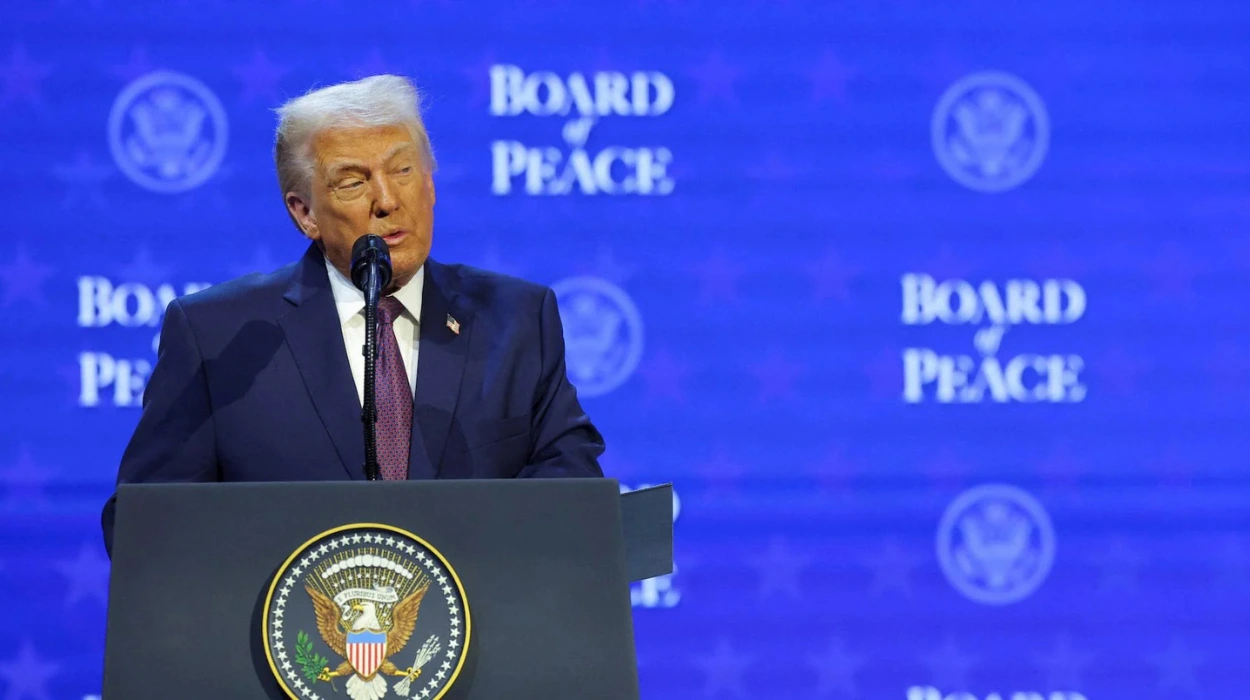
In its first meeting, President Donald Trump declared his intention to give the newly formed Board of Peace a commitment of 10 billion dollars. The pledge is meant to hasten the rebuilding process in Gaza after the weak truce that is going to cease major hostilities in late 2025. The initial combined total stands at nine other countries contributing at $7 billion, with nine others adding up to reach a total of $17 billion against an estimated $70 billion to get a complete recovery.
The announcement is indicative of the efforts to rebrand reconstruction leadership in a way that goes beyond conventional multilateral institutions. The administration in hosting the board at the renamed Donald J. Trump U. Institute of Peace indicated permanence as opposed to a one-time donor institution. More than 40 countries were present at the launch, which can be seen as a sign of wide diplomatic participation despite the fact that some of the Western allies were not present.
Funding Architecture and Early International Participation
The financial model of the board proposes a systematic system of contributions, the permanent membership demands having a contribution of one billion dollars. This design is supposed to connect the capital investment to the influence of governance. Proponents claim that it would encourage responsibility and fast movement of funds to cut bureaucratic delays.
The funding base is widened by the additional funding of the Gulf and regional partners, such as Saudi Arabia, Kuwait, Bahrain, Morocco, Kazakhstan, Azerbaijan, and Uzbekistan, which is valued at 7 billion dollars. There are also other contributions that are made by the United Nations which adds more variety to the stream but they are not so much compared to the overall reconstruction requirements.
This financial structure makes the initiative a hybrid structure of a donor consortium, a governance platform that aims at integrating state entities, regional partners and private institutions within a single framework.
Governance Design and Membership Thresholds
Mandated minimum permanent seats of $1 billion dollars is a structural break with multilateral models that are based on consensus. Opponents believe that this commodifies power, which can put the rich above the representative. Nevertheless, the management presents the system as a way of securing long-term commitment and not a mere participation.
Nabil Shaath, Chief Commissioner of National Committee Gaza Administration, admitted difficulties in operations by stating that reconstruction should be carried out step by step and in hard conditions. His comments highlight how tricky it would be to rebuild in an area that still experiences security instability and broken governance.
The board aims at preventing the financial deficits experienced in the past in the construction of reconstruction projects. The question of whether this will increase co-ordination or bring exclusivity in is a key debate on the effectiveness of the strategy.
The UN’s Ongoing Role in Gaza Reconstruction
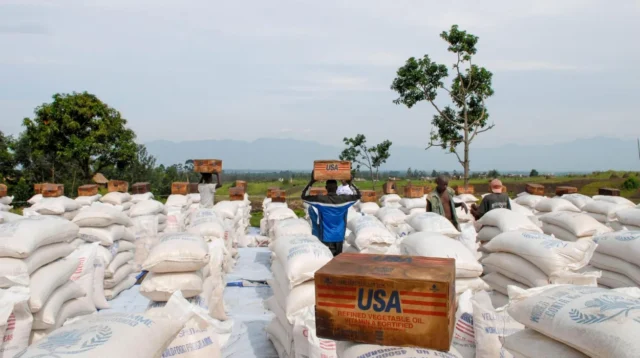
Since 2025, Gaza relief has been a leading role of the United Nations. It orchestrated the delivery of emergency humanitarian support to the tune of about 10 billion through UNRWA and other agencies by mid-2025. These were finances aimed at food delivery, health care, and temporary shelter when there was massive destruction of infrastructure.
Nevertheless, there were still operational difficulties. Access control at the border, complexity at security screenings, and diversion fears decreased the efficiency of delivery. The reconstruction funds had only been paid out at 40 percent of the pledges by end of 2025, which is indicative of procedural bottlenecks typical of large scale multilateral frameworks.
Humanitarian Coordination and Institutional Limitations
The UN promised another 2 billion dollars in Gaza relief in February 2026. Secretary-General Antonio Guterres invited the role of the private-sector involvement but insisted on not having disjointed channels of aid. His warning is based on the fear that similar projects would cause duplication, overlap or inconsistency of standards.
According to the UN officials, developed mechanisms offer transparency, neutrality, and international legitimacy. However, the delays of the emergency deployment may be caused by the bureaucracy of the decision-making process on the consensus level. This structural contrast develops a pivot point on assessing the Trump, $10B Gamble Board of Peace UN Gaza Efforts.
The nature of the strategic argument on reconstruction governance lies in the contrast between the fast capital commitments and multilateral procedures protection.
Security Oversight and Aid Integrity Mechanisms
The UN structure focuses on tracking systems that would help to avoid fund and material misappropriation. As much as these processes are protective, they may slow disbursement schedules. Oversight procedures are necessary, and time consuming in environments that are characterized by contested authority.
The Board of Peace model suggests lean governance that is incorporated in its governance model. Advocates believe that this minimizes tension between funders and executors. Opponents warn that less procedural layers can result in more risks with no strong transparency protection provisions in lieu of those found in UN systems.
Stabilization Forces and Security Architecture
In addition to financial pledges, five countries such as Indonesia, Morocco, Kazakhstan, Kosovo and Albania have committed their troops towards a proposed international stabilization force. This aspect is meant to offer security in the reconstruction stages, which is the demand of order in cases where post-ceasefire violence is reported.
According to Gaza health authorities, more than 600 people have already died since the ceasefire period commenced. One of the conditions adds to the argument that reconstruction cannot be underway without similar stabilization measures.
Troop Deployment Objectives and Regional Balance
The proposed stabilization force is not structured and composed of the traditional UN peacekeeping models. The involvement of the Muslim majority countries can give regional legitimacy, which can facilitate the acceptance of operation in Gaza.
Nevertheless, the lack of some of the Western states in the creation of the board indicates different geo-political estimations. There are others allies who are still apprehensive of overlapping institutional mandates or redefining peacekeeping functions outside the UN structures.
The integration of security provision and reconstruction funding is one of the characteristics of the Trump Gamble Board of Peace UN Gaza Efforts, the amount of which is 10B.
Coordination with Existing Security Agreements
The stabilization plans by the board overlap with ceasefire enforcement plans that will be put in place towards the end of 2025. It is also necessary to integrate with the local governance structures and international monitors to avoid overlaps or jurisdiction conflicts.
The implementation of security control versus humanitarian neutrality will define the ability of reconstruction sites to operate without the further escalation. Coherence in operations by the states involved will be pivotal towards maintaining investor confidence and protection of civilians.
Geopolitical Implications and Institutional Competition
With the formation of the Board of Peace there comes an alternative line of governance that comes into play alongside the UN. Instead of ousting multilateral institutions, it seems to be an extension to them, capital-intensive leadership, and focus partnerships.
This twin-track action is indicative of wider moves in world governance where interest groups of willing donors turn to issue-related platforms that bypass formal platforms. The financial scope of the board being initially in the range of $17 billion makes it a major player though not in the entire scope of the reconstruction effort.
Influence Distribution and Regional Alignment
The fact that the Gulf states and some of the non-Western contributors are included shows that the patterns of influence are becoming more changed in the field of Middle Eastern diplomacy. These alignments can inform future negotiations of the governance arrangements of Gaza.
Meanwhile, alignment with the current global systems is necessary to avoid disintegration. Long-term results will be based on institutional legitimacy, donor confidence, and operational efficiency.
Long-Term Reconstruction Viability
It will need sustained funding flows with an estimated amount of $53 billion still needed, and this will not be possible without donor participation and political stability. The reconstruction schedules may take several years to complete with a long lasting commitment that is not limited to what was promised.
Whether the board’s model accelerates progress or creates parallel structures that complicate coordination will depend on implementation discipline. Its success will hinge not only on financial capacity but also on governance transparency and alignment with local administrative structures.
As cranes begin to appear and stabilization forces prepare for deployment, the central test for Trump’s $10B Gamble Board of Peace UN Gaza Efforts lies in execution rather than announcement. The coming months will reveal whether concentrated capital commitments can complement established multilateral systems—or whether competing reconstruction models will reshape the architecture of post-conflict governance in Gaza.