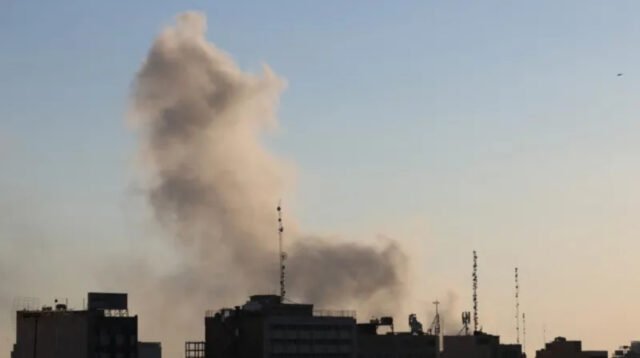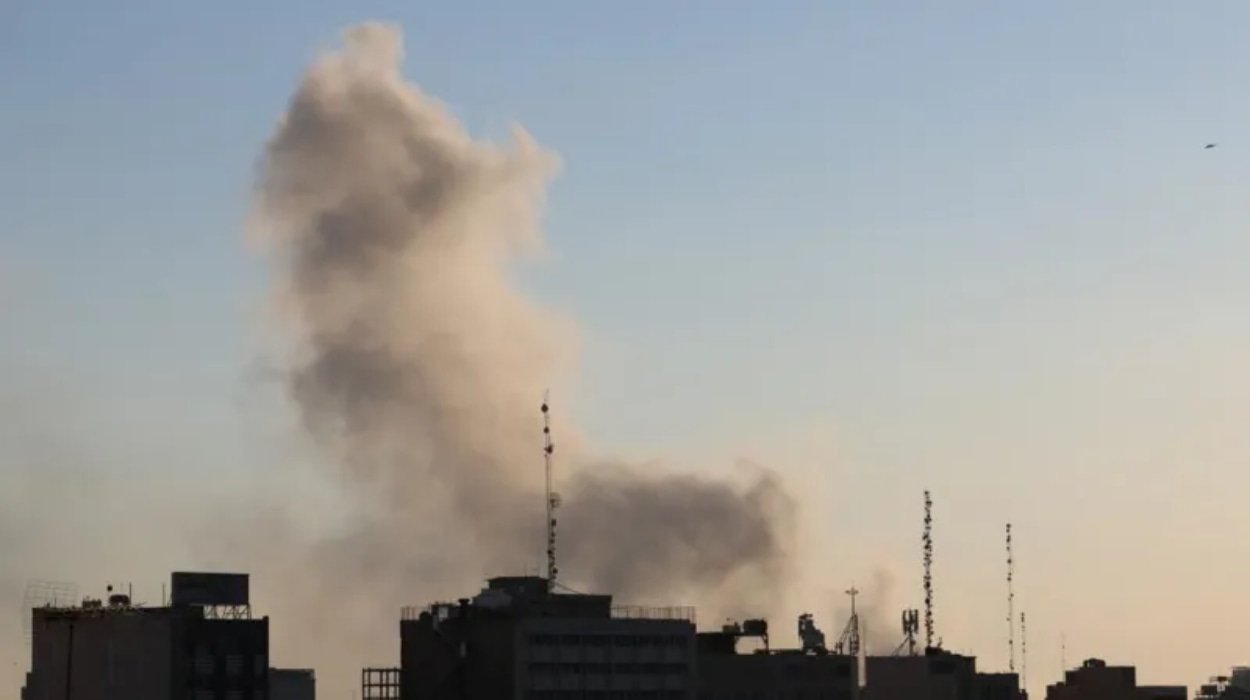
US-Israel attacks in Iran took a new curve after joint operations destroyed over 500 targets in Tehran, Isfahan, Qom, Karaj, and Kermanshah. The Israeli officials confirmed that they had used about 200 planes in what they termed as their biggest one-day sortie and U.S. B-2 bombers hit fortified facilities connected with Iranian nuclear infrastructure.
The intensity of the campaign represents the transition to a boutique deterring to continuous degradation. As stated by U.S. President Donald Trump, this was aimed at ensuring that Iran does not resume high-level uranium enrichments and that the missile systems that could threaten Israel and the bases of the U.S. in the region are neutralized. Israel Defense Minister Israel Katz described the strikes as eliminating existential threats, an expansion of the frame beyond immediate retaliation.
The operation was preceded by a 12 days aerial confrontation in June 2025, in which a number of Iranian nuclear facilities were damaged, though not destroyed. Both Washington and Jerusalem military planners have since stressed more operational integration and the February assault was the result of months of joint contingency planning.
Target Selection and Tactical Execution
The strikes were said to involve command compounds in the western district of Tehran Pasteur, the Pasteur area, and centrifuges production factories and missile bases in western Iran. High technology Israeli weapons such as air-deliverable ballistic weapons were used with U.S. bunker-busting ammunition to infiltrate hardened underground targets.
The kinetic attack was supported by cyber activities. The state media outlets in Iran were blocked momentarily and anti-regime messages were occasionally shown in local online platforms. Analysts consider this hybrid strategy as an attempt to merge the corrosion of infrastructure with mental pressure.
Immediate Iranian Response
Iran reacted by firing volleys of drones and ballistic missiles to Israeli soil and American installations in the Gulf. Layered missile defense systems intercepted most of them, but some projectiles were reported to have hit open spaces and had minor casualties.
The discrepancy in the influence highlights a growing technological disparity. Although Iran still has the capability to deploy numbers of missiles, the air defense nodes and command infrastructure is hindered by the destruction posing a challenge to retaliation.
Nuclear Containment or Political Transformation
Washington and Jerusalem public messaging is a mixture of nuclear containment and rhetoric which suggest more far-reaching politics. President Trump required the enrichment above civilian levels and the development of missiles to be suspended, as well as condemned the backing of the Tehran regime to the Hezbollah and Hamas groups.
The Israeli authorities justified the campaign as creating a possibility to allow the Iranian people to make their own destiny, a phrase that was taken by some observers to mean that they were ready to bring regime change. A difference between the disabling nuclear capability and a change of the political leadership is still strategic.
Nuclear Infrastructure Degradation
The central point in the operation was sites near Natanz which have long been involved in uranium enrichment. The evaluation of the damages is still initial and satellite shots indicate the presence of substantial structural consequences. In late 2025, intelligence reports revealed that Iran had sufficient materials to make weapons-grade conversion quickly provided that it received political approval.
It is not clear whether the strikes removed that break out capacity. Through redundancy and dispersion, the nuclear program of Iran has proved to be resilient in the past.
Proxy Network Calculations
In addition to nuclear plants, the campaign was aimed at command centers believed to be involved in coordination of regional proxies. The fire of rockets in the south of Lebanon reinforced March 2, attracting Israeli airstrikes in the southern suburbs of Beirut and Bequa Valley.
The role of Hezbollah widens the area of operation. The northern front adds the risks of escalation making it difficult to assume a quick, confined fight.
2025 Precedents and Escalation Pathways
It all changed in June 2025. The result of that dialogue was coordinated Israeli and U.S. attacks on three of the largest nuclear facilities following intelligence evaluations that indicated increased enrichment. The retaliatory missile attacks conducted by Iran were massive but, majorly, intercepted.
Between late 2025 and the end of December, tit-for-tat strikes were going on on a smaller scale. The level of U.S. troops in the Gulf was the highest since 2003 as it was an indication that the country was prepared to deter. The attempt to revive nuclear negotiations by diplomacy collapsed with each side accusing the other of non-compliance.
Diplomatic Breakdown
Direct negotiations using regional brokers broke down in December 2025. U.S. negotiators insisted on dismantling steps that are verifiable before Iranian authorities could agree on a renewal of limits, claiming that Iranian officials wanted sanctions relief as a precondition. Those strikes of February 2026 served to get that channel, at least in the short term, shut down.
Military Posture Evolution
The level of joint planning between Israel Defense Forces and the Pentagon was strengthened after June. Co-ordinating missile defense efforts and joint intelligence on the underground bases points to the fact that the operation of February was not reactionary but a result of planning, being practiced in established levels of escalation.
Regional Spillover and Strategic Risk
The bilateral confrontation between the US and Israel strikes against Iran has regional implications. Gulf countries, such as Bahrain and Qatar, which host American military installations have raised the level of security alert amidst attempted missile attacks. Even minor influences have a symbolic meaning, which stresses fragility despite hi-tech protection.
Another consideration in strategy is energy infrastructure. Any destabilization of Iranian export capacity or the Gulf transportation routes would spread across the market of the world and increase the volatility of the oil prices and impact an economy way beyond the Middle East.
Hezbollah and Multi-Front Pressure
Lebanese rocket fire brings in a second theater. Israel officials have also threatened that any longstanding attacks by the north would lead to wider operations. The arsenal of Hezbollah which is estimated to be in tens of thousands of rockets poses a different challenge to the long range ballistic systems of Iran.
Cyber and Internal Dynamics
Cyber elements of the campaign allude to internal destabilization interest. The digital disturbances and messaging campaigns seem to be more precise in terms of increasing opposition in Iran, yet the history proves that outside pressure is not necessarily the source of splitting the regime.
Strategic Outlook Under Uncertain Timelines
President Trump argued that the key combat activities might end in weeks. Military analysts, nevertheless, warn that it is not probable to demolish well-established nuclear infrastructure and curb proxy groups according to a brief schedule.
The conventional capabilities of Iran have been limited through frequent attacks but its asymmetric weapons are still intact. Sea harassment, cyber activities and proxy mobilization have provided channels of having a long-lasting contact without a face to face conflict.
US-Israel attacks on Iran are not just a single episode in a military action. They are indicative of a strategic re-balancing where nuclear deterrence, regional proxy-warfare and political signaling overlap. The next one will depend on the stability of the Iranian institutional framework, the integrity of their security apparatus, and the stability of their regional coalitions. Since the region is still absorbing the shock of the revenue of February, the big question is not merely whether a lot of infrastructure has been destroyed, but whether this campaign changes the strategic calculus of Tehran- or sets a pattern where containment and confrontation are interchangeable.