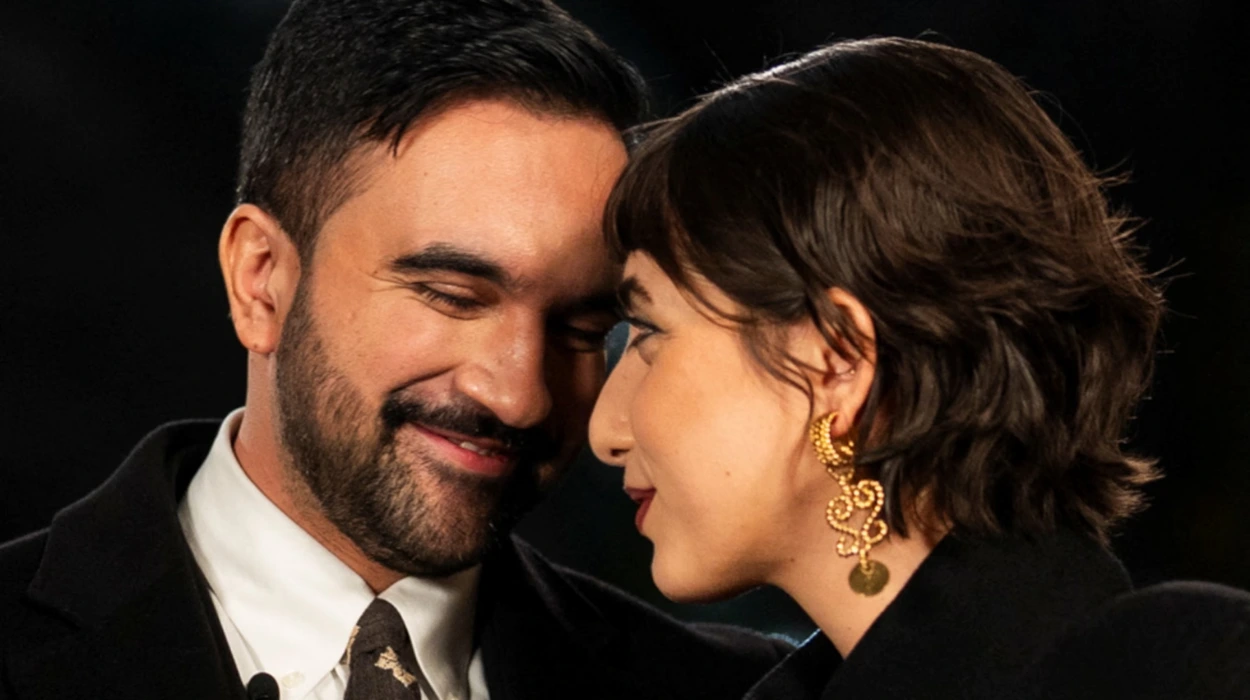
Zohran Mamdani was sworn in as mayor of New York City shortly after midnight on New Year’s Day at a private inauguration at an abandoned beaux arts station at City Hall, signaling a new era in U.S. history’s largest city by population, located in New York, USA. Mayor Mamdani started his new life at age 34, where he took his oath of office conducted by Attorney General Letitia James, administration sources quoted.
However, prefacing the event as
“the honor and the privilege of a lifetime,”
Mamdani continued by saying,
“The historic subway station represented the importance of public transportation in the social and economic fabric of New York. I begin my tenure with a dedication to all the working people who depend on public infrastructure to keep the city functioning.”
Why was the inauguration location symbolically important?
The selection of the disused City Hall subway station, which dates back to 1904 and was one of the first stations opened, was no coincidence. This was an indication of Mamdani’s administration’s priorities, according to a statement issued by his office.
Addressing the gathering after the oath-taking ceremony, the newly sworn-in Mayor highlighted the station as an “reminder that New York Once Dared to Build Beautiful Things That Transformed the Lives of Working People,” Justinsell quoted him as saying. Outgoing Mayor Eric Adams was present during the ceremony and later explained the reason behind it “to show there was a peaceful transfer of power.”
What made Mamdani’s swearing-in historically significant?
Mamdani was the first mayor in the history of the city to take an oath in office using the Qur’an to reflect his Islamic faith. The oath was placed on two copies of the Qur’an—the one that belonged to his grandfather and the one that belonged to the black historian and intellectual Arturo Schomburg, whose legacy was preserved at the New York Public Library.
The gesture also had significance because it was taking place within a city that was home to over one million Muslim citizens, against the background of high levels of political polarisation within the USA.
Who is Zohran Mamdani beyond the inauguration moment?
Mamdani was born and raised in Uganda and later in New York City. Mamdani is the son of renowned film director Mira Nair and Mahmood Mamdani, who teaches at Columbia University and is known for his work on the study of Africa. Mamdani became a U.S. citizen when he was still a teenager and has described his political ideas shaped by his upbringing within an urban environment affected by migration.
Prior to winning the mayoral seat, Mamdani was the assembly member of the New York State Assembly. He was known for being outspoken about issues such as housing affordability, labor protections, and public transportation. His earlier career, involving work as a housing counselor, introduced him to challenges of low-income renters, which he regularly references when tracing his political roots.
How did Mamdani rise from political outsider to mayor?
Mamdani’s ascension to City Hall came quickly, with little expectation that he might succeed. When the Democratic primary campaign started, he trailed the leader, former Governor of New York Andrew Cuomo, by over 30 points. In April, his position remained at 36%, while Cuomo took 64%.
Together, we'll stand up to an authoritarian federal government and deliver a city we can afford.
— Zohran Kwame Mamdani (@ZohranKMamdani) October 26, 2025
Thank you @KathyHochul, @AndreaSCousins and Speaker Carl Heastie. pic.twitter.com/27x14aeZzL
The dynamic of the race shifted when his campaign involved a huge grass-roots operation and a very successful use of social media, with Mamdani addressing over 10,000 volunteers, with all of them knocking doors in excess of 100,000 people in an attempt to invigorate first-time voters as well as people renting homes affected by increased living expenses post-COVID.
What policies defined Mamdani’s campaign?
Mamdani’s platform focused on the issues of affordability and public investment. His proposals included rent controls, free public transit, the establishment of grocery stores by the municipality to reduce the cost of groceries, and a Department of Community Safety which would focus on mental health support instead of traditional policing.
Political observers believe his appeal was very much in tune with the aspirations of young voters, new immigrants, and lower-middle-class families finding it ever more impossible to afford the prices of the big city.
What are Mamdani’s views on Donald Trump and national politics?
Mamdani has been a vocal commentator and a strong critic of President Donald Trump and has been accusing him of spreading division and divisiveness in the country and attacking democracy and targeting immigrants and minorities in the United States. During the presidential campaign, he focused on the fact that the aftermaths of the return of Donald Trump would result in drastic effects on New York City and other urban cities related to immigration enforcement and civil rights and climate policies.
The Trump administration continues to find new ways to raise costs on all of us. It’s time we have a City Hall that works relentlessly to ease the burden.
— Zohran Kwame Mamdani (@ZohranKMamdani) November 16, 2025
We will deliver on fast and free buses, universal childcare and a rent freeze because New Yorkers need the relief. pic.twitter.com/P4zPuWgptf
While also making clear that his concern remains in local governance, Mamdani has contextualized his own tenure as mayor within his broader struggle against, what he terms, authoritarian politics and economic inequality at home.