Cooperation with federal immigration authorities is rapidly becoming one of the most divisive political fault lines in the United States, intensifying clashes between President Donald Trump’s administration and Democratic-led states and cities. As Congress deliberates on restricting federal immigration measures, state governments are, on the other hand, diverging on whether they should even join Trump’s deportation drive.
In many of the Republican-governed states, there has been a flow of legislation requiring local law enforcement agencies to enter formal cooperation agreements with Immigration and Customs Enforcement (ICE). Conversely, many of the Democratic-governed states are attempting to prohibit these partnerships on their own turf, with vastly different ethical models of immigration enforcement.
Federal Pressure on Democratic Jurisdictions
What Trump and Congressional Republicans are doing is trying to pressure Democratic states into adopting policies that Republican states want, by repeatedly trying to withhold federal funding from states which do not cooperated fully in deportation policies, although the courts often prevent them from doing so.
Moreover, some Republican lawmakers now want to make sanctions, including criminal charges, against local officials in what is called sanctuary cities. The prospects for this, however, appear low since it has to clear a 60-vote hurdle in the Senate, which is extremely difficult.
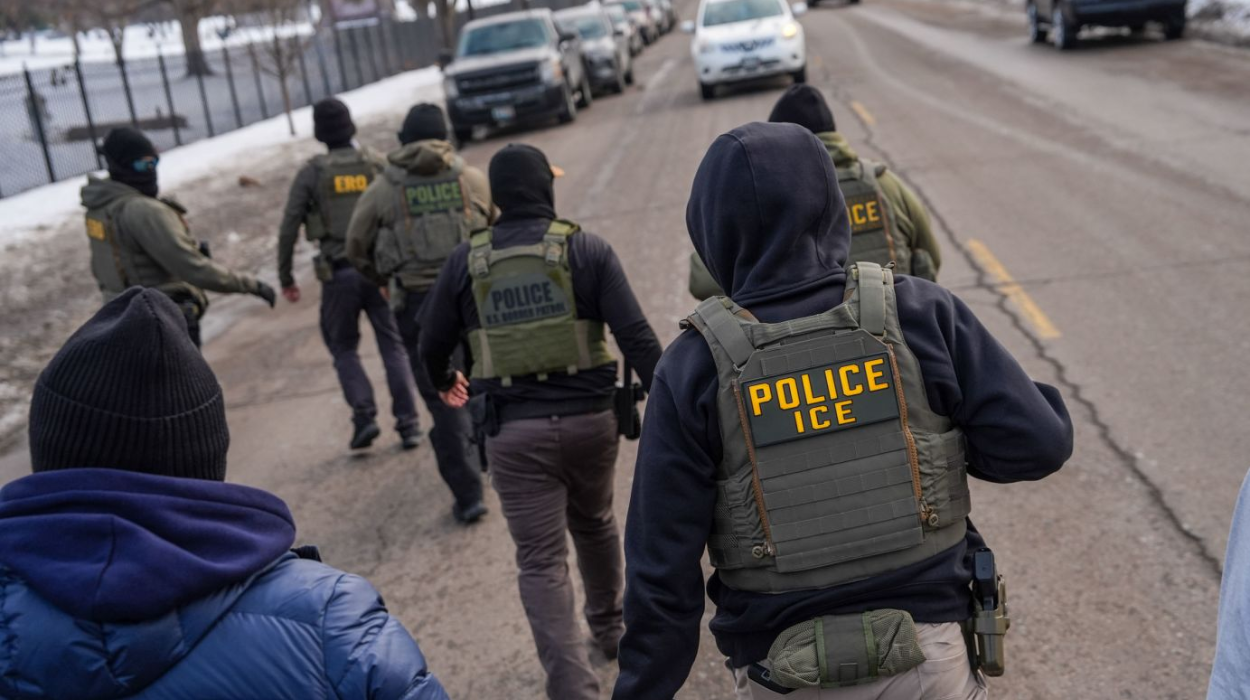
The administration has also organized its enforcement policy in such a way as to place pressure on Democratic regions. Attorney General Pam Bondi, for instance, suggested Minnesota officials could resolve unrest by handing over sensitive voter registration data to the federal government, a request the state rejected. Trump and border czar Tom Homan have similarly implied that cities allowing ICE full access to local jails would avoid militarized federal deployments that have disrupted major urban centers.
Public Backlash and the Limits of Coercion
These overbearing actions taken in cities like Minneapolis have sparked a high level of public outcry; thus, the political implications of a threat to other cities will fail miserably. The success of Trump’s deportation plan may depend on the level of coercion he has over local governments.
Immigration experts explain that, traditionally, 70% to 75% of ICE arrests come from transfers from local law enforcement agencies. Without widespread cooperation from local agencies, it seems politically impossible for Trump to accomplish the task of arresting 3,000 undocumented immigrants a day, or over a million annually.
Ahilan Arulanantham, co-director of the Center for Immigration Law and Policy at UCLA, emphasized that local and state law enforcement remain central to any mass deportation strategy.
Democratic Resistance and Shifting Political Dynamics
Democratic officials in states such as New York, New Mexico, and Maryland are erecting new barriers to ICE cooperation, using their leverage to challenge the administration’s agenda. Their pushback reflects how immigration politics have shifted since Trump’s return to power, with urban enforcement campaigns altering public perception.
Republican political consultant Charles Coughlin observed that the optics and political consequences of aggressive urban enforcement have changed dramatically since Trump’s election campaign.
Swing States Take a Cautious Approach
In battleground states, Democratic leaders are taking a more measured stance. Virginia Governor Abigail Spanberger repealed a previous order requiring local cooperation with ICE and canceled state agency partnerships, but stopped short of banning local agreements. Arizona Governor Katie Hobbs vetoed a Republican bill mandating ICE partnerships but did not pursue a statewide ban.
Similarly, Democratic leaders in Pennsylvania, Michigan, Ohio, and Wisconsin have criticized ICE tactics but avoided sweeping prohibitions, reflecting the political sensitivity of immigration in closely divided states.
Even in states limiting cooperation, Democratic governors emphasize that they still collaborate with ICE on violent offenders. California Governor Gavin Newsom and Minnesota Governor Tim Walz have highlighted the number of violent criminals transferred to federal authorities, countering claims that sanctuary policies protect dangerous individuals.
Complex Policies on Public Safety and Minor Offenses
Advocates note that policies restricting ICE cooperation vary widely across jurisdictions. Nanya Gupta of the American Immigration Council explained that most cities and states limiting cooperation still contact ICE when individuals pose serious public safety risks.
She argued that the administration’s push for expanded access to jails under the 287(g) program is primarily aimed at deporting individuals arrested for minor offenses or never charged with crimes. Even with full access, Gupta warned, there are not enough immigrants with criminal records to meet the administration’s aggressive deportation targets.
Expanded Federal Powers and Persistent Dependence on Local Agencies
Trump and congressional Republicans have significantly expanded federal deportation capacity. Legislation passed last summer funded the hiring of 10,000 additional ICE agents, and the Supreme Court allowed federal agents to consider ethnicity or language as factors in stops.
Despite these expansions, ICE still depends heavily on local agencies. Research by the Prison Policy Initiative found that nearly half of ICE arrests come from local law enforcement transfers, with Republican-led states such as Texas, Florida, and Georgia contributing far higher numbers than Democratic states.
Public Tolerance as the Key Constraint
Events in Minnesota demonstrated that public tolerance may be the biggest barrier to mass deportation, even more than funding or operational capacity. Arulanantham argued that large-scale, suspicionless detention and arrests are politically difficult to sustain, even when courts permit aggressive enforcement.
Public dissatisfaction has encouraged more Democratic leaders to resist federal demands. A recent Fox News poll revealed stark partisan divisions: 85% of Republicans support mandatory cooperation with ICE, while 83% of Democrats oppose it.