The diplomatic initiative known as the 15-point plan has become a central feature of the current phase of the Iran conflict. Introduced by the administration of President Donald Trump and conveyed to Tehran through intermediaries, the proposal is widely viewed by analysts as a hybrid instrument that blends negotiation with strategic pressure. The framework reportedly addresses nuclear restrictions, missile limits, regional proxy activity, and maritime security while offering conditional sanctions relief and monitored civilian nuclear cooperation.
Officials in Washington have described the proposal as a foundation for a possible settlement rather than a completed agreement. Yet the architecture of the plan reveals how the United States intends to define the initial boundaries of negotiation. By placing multiple strategic issues within a single structured package, policymakers appear to be seeking incremental commitments that collectively reshape Iran’s military and regional posture over time.
A framework tied to military leverage
The proposal has been introduced alongside a temporary pause in U.S. strikes targeting Iranian energy infrastructure. This pause has been presented publicly as a gesture designed to encourage diplomatic engagement, although American officials emphasize that it remains reversible. The linkage between restraint and negotiation illustrates how the plan functions as part of a broader coercive diplomacy strategy.
Analysts note that such frameworks often aim to narrow the decision space of the opposing side. By pairing potential economic relief with the threat of renewed military operations, Washington seeks to encourage Tehran to consider the proposal seriously while maintaining leverage during the early stages of diplomatic contact.
Strategic priorities embedded in the proposal
Reports circulating among diplomats suggest that the plan focuses heavily on limiting Iran’s nuclear enrichment activities and constraining missile capabilities. Additional provisions are believed to address support for regional groups and the security of the Strait of Hormuz, a route that gained heightened importance during disruptions observed in 2025.
These elements reflect long-standing concerns among U.S. allies and international observers about the intersection of nuclear development and regional security. By structuring negotiations around these themes, the plan attempts to link immediate conflict de-escalation with longer-term stability goals.
Trump’s narrative of emerging diplomacy
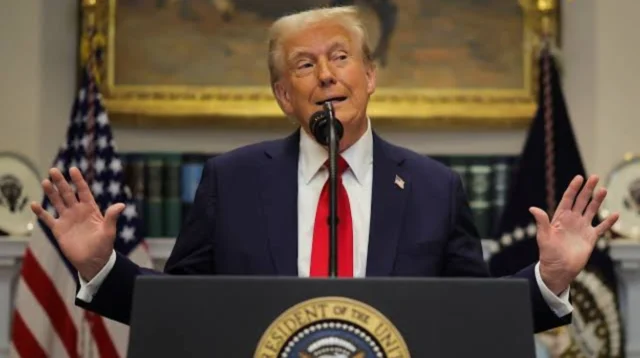
President Trump has portrayed the 15-point framework as evidence that diplomatic movement is already underway. Statements from the White House suggest that indirect communication channels indicate Tehran is evaluating the proposal despite publicly rejecting formal talks. Officials have said that interactions relayed through intermediaries demonstrate that “the right people are on the line,” signaling cautious optimism within the administration.
This narrative serves multiple functions. It reassures domestic audiences that diplomacy is progressing without abandoning pressure, and it signals to international partners that Washington remains engaged in finding a negotiated resolution rather than relying solely on military action.
Political signaling to allies and domestic audiences
The framing of the proposal as a diplomatic breakthrough also addresses concerns among U.S. allies about the long-term trajectory of the conflict. Governments in the Middle East and Europe have been monitoring developments closely since tensions escalated in 2025, particularly as disruptions in shipping and energy supply began affecting global markets.
By emphasizing that discussions are taking place, even indirectly, Washington positions the plan as part of a larger effort to stabilize the region. This messaging can influence how partners interpret the administration’s strategy and whether they continue to support its approach.
The risk of overstating negotiation momentum
Some analysts caution that presenting the proposal as evidence of active diplomacy may create expectations that exceed the reality of current talks. When political leaders frame a unilateral proposal as a negotiation in progress, there is a risk that misperceptions about the other side’s intentions may develop.
In the context of the Iran conflict, such misalignment could complicate future discussions. If Tehran views the proposal as an imposed framework rather than a mutually constructed dialogue, the gap between public narratives and diplomatic realities may widen further.
Iran’s public denial and strategic messaging
Iranian officials have responded to the 15-point plan with a firm denial that formal negotiations are taking place. Government representatives have stated that Tehran has only received proposals and requests through intermediaries and has not entered into structured talks with the United States since the war intensified earlier in 2026. This messaging reflects a consistent effort to preserve domestic political legitimacy while rejecting the premise of a U.S.-defined negotiation process.
The official stance also portrays the proposal as excessively demanding. Iranian statements emphasize that the framework seeks extensive limitations on nuclear and missile capabilities while offering conditional economic incentives that could be reversed. From Tehran’s perspective, accepting such a structure without substantial revisions could undermine its strategic autonomy.
Internal calculations behind the public position
Despite the outward rejection, analysts suggest that Iranian policymakers are carefully studying the details of the proposal. The temporary pause in attacks on energy facilities has provided a brief window in which the leadership can evaluate potential scenarios without immediate infrastructure damage. This period of relative stability allows internal discussions about how to balance deterrence with economic resilience.
Such deliberations are not unusual in Iranian diplomatic practice. Historically, Tehran has often combined public defiance with cautious behind-the-scenes analysis before formulating a detailed response.
Sovereignty and deterrence as core themes
Iran’s public messaging repeatedly stresses sovereignty and security guarantees. Officials have argued that any future arrangement must include assurances against further military action and recognition of Iran’s role in regional security dynamics. These themes have been consistent in Iranian diplomacy since tensions intensified during 2025, when economic and strategic pressures increased simultaneously.
The emphasis on sovereignty highlights why Tehran resists frameworks perceived as externally imposed. Negotiations that appear to require unilateral concessions risk being interpreted domestically as strategic surrender rather than pragmatic compromise.
The widening gap between threat and dialogue
The coexistence of Washington’s narrative of ongoing diplomacy and Tehran’s insistence that no negotiations exist creates a complex diplomatic environment. Each side interprets the same developments through different strategic lenses, which increases the possibility of misunderstanding intentions. When one party frames proposals as progress and the other describes them as unilateral demands, the resulting gap can complicate future communication.
Observers in regional capitals have expressed concern that this dynamic could lead to miscalculation. If policymakers assume the other side is closer to compromise than it actually is, decisions about military pressure or diplomatic outreach may be based on incomplete assessments.
Regional perspectives on the standoff
Governments across the Middle East are closely monitoring how the situation evolves. Countries dependent on stable energy routes remain particularly attentive to the interaction between diplomatic initiatives and military actions near the Strait of Hormuz. The disruption risks observed in 2025 demonstrated how quickly regional tensions can translate into global economic consequences.
Regional leaders have generally supported efforts that encourage dialogue, but they remain cautious about frameworks that could alter the strategic balance in ways that might trigger new rivalries or proxy confrontations.
International diplomatic expectations
European diplomats and multilateral organizations continue to advocate for negotiations grounded in transparent mechanisms and gradual confidence-building measures. Their perspective reflects lessons from earlier nuclear diplomacy, where progress often depended on sequencing commitments rather than immediate comprehensive agreements.
International actors also recognize that both sides face domestic constraints. Leaders must present any eventual settlement as beneficial to national interests, which requires careful management of political narratives as well as diplomatic substance.
The evolving tension shaping the next phase
The interaction between Washington’s proposal and Tehran’s denial reveals how diplomacy in wartime often unfolds in parallel narratives. One narrative emphasizes structured engagement backed by pressure, while the other stresses resistance and strategic autonomy. Each perspective influences how decisions are made within government institutions and how signals are interpreted across the region.
The coming phase of Iran war diplomacy may depend less on whether the 15-point plan remains unchanged and more on how both sides adapt their positions in response to shifting political, economic, and security realities. If the current moment evolves into sustained dialogue, the early exchanges surrounding the proposal may eventually be viewed as the opening stage of a longer negotiation process. Yet if mistrust continues to dominate the conversation, the gap between threat and talk could remain the defining feature of the conflict’s diplomatic landscape, leaving observers watching closely for the moment when rhetoric gives way to a clearer path toward stability.