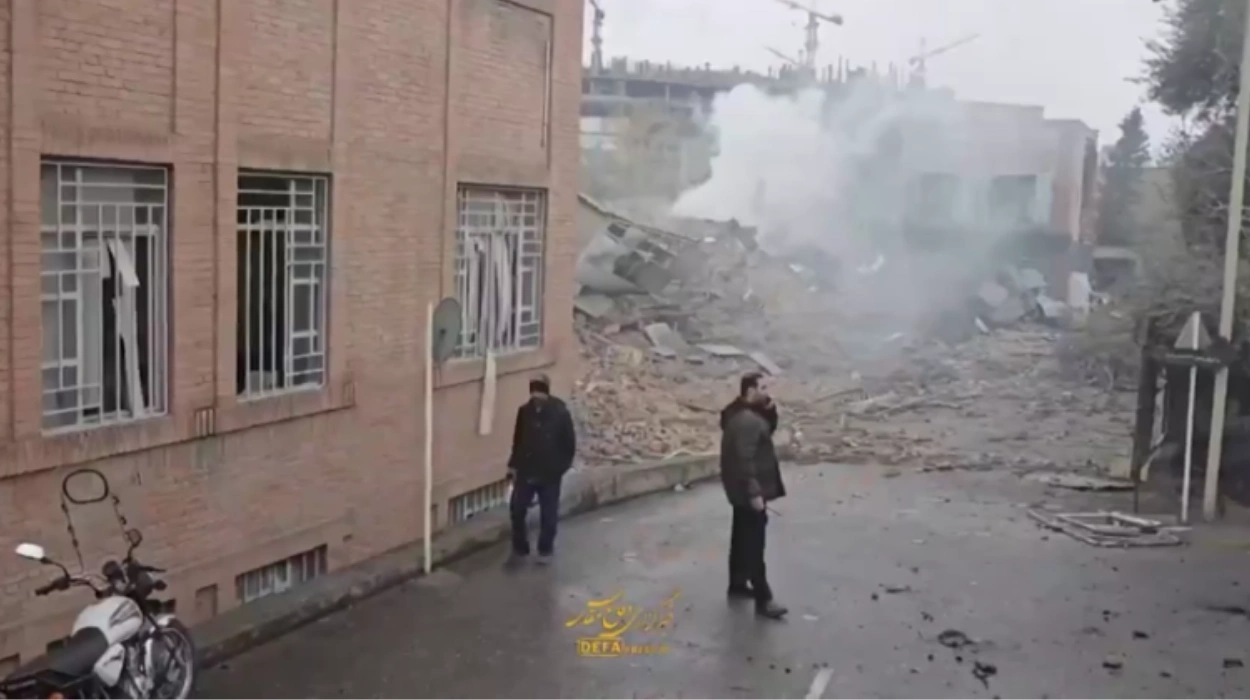
The US–Israel war against Iran has explicitly crossed into higher‑education spaces, with at least several Iranian universities including Tehran University of Science and Technology and Isfahan University of Technology reportedly struck by airstrikes since the conflict escalated in late February 2026. Semi‑official Iranian outlets such as Fars have reported that around 20 universities and their dormitories suffered damage in the first month, with officials highlighting targeted strikes on research facilities, laboratories, and student accommodation blocks. These attacks have disrupted academic operations while turning faculties and dorms into both symbolic and operational targets, eroding the traditional separation between civilian education institutions and military objectives.
Iran’s Foreign Ministry and intelligence agencies have denounced the assaults as part of a broader “knowledge-striking” strategy by the United States and its allies. Officials argue the goal is to undermine Iran’s technological and scientific capacities while demoralizing a generation of students and researchers. Some regional universities have begun reviewing security protocols, restricting access, and moving portions of their curricula online, signaling that the war is extending beyond conventional battlefields into the intellectual and research infrastructure of the country.
Targeting knowledge infrastructure
The strikes demonstrate a tactical shift where scientific output, rather than conventional military assets, is being treated as a legitimate operational target. Laboratories, high-tech equipment, and research centers associated with sensitive fields such as nuclear engineering and advanced computing appear to have been singled out, reflecting the strategic calculation that knowledge itself constitutes a component of national defense.
Symbolism and deterrence
Attacking university campuses also carries symbolic weight. Iranian officials portray these strikes as a challenge to national sovereignty and cultural integrity, suggesting that the destruction of academic spaces communicates broader vulnerability and exerts psychological pressure on the Iranian public. The targeting of students and dormitories underscores the war’s human dimension, amplifying public awareness of the conflict while fueling domestic narratives of resistance.
Iran’s narrative of retaliation and legitimacy
Tehran has framed the strikes as justification for widening its response, extending the conflict to US‑ and Israel‑linked campuses in the region. The Islamic Revolutionary Guard Corps has explicitly warned that “all universities of the occupier [Israeli] regime and American universities in West Asia” are now “legitimate targets,” advising staff and students to maintain a minimum distance from campus grounds. The Iranian government positions this stance as defensive: because Washington and Israel have attacked schools of science, technology, and engineering, it contends that allied academic institutions cannot claim immunity.
Domestically, this rhetoric reinforces Iran’s depiction as a target of a coordinated “knowledge war,” legitimizing increased surveillance, tighter campus security, and the monitoring of foreign collaborations. Internationally, it signals Iran’s willingness to challenge the assumed sanctity of Western‑linked higher‑education institutions, even at the risk of alienating students and academics dependent on these campuses. In Tehran’s calculus, universities are no longer neutral, but strategic nodes whose protection or destruction serves as instruments of deterrence and power projection.
Mobilizing nationalist sentiment
The government’s messaging serves to consolidate internal support for wartime measures. By framing attacks on universities as assaults on national scientific capacity, Tehran reinforces patriotic narratives and legitimizes intensified monitoring and control over campuses.
Redefining academic neutrality
The framing of educational institutions as instruments of national security challenges longstanding norms. Universities traditionally considered bastions of open inquiry are being integrated into Iran’s security strategy, with the government asserting that physical and intellectual assets are now part of the operational landscape of conflict.
How Iranian universities are adapting
Iranian universities are navigating a complex wartime environment. Many have moved to hybrid or fully online teaching, restricted in-person gatherings, and installed security checkpoints around research buildings, particularly those linked to engineering, computing, and nuclear programs. Administrators face pressure from intelligence agencies to monitor foreign-linked research, vet visiting scholars, and limit access to sensitive laboratories, justified as measures to prevent espionage and safeguard national security.
Faculty members report that topics with potential military relevance—cybersecurity, advanced materials, and dual-use technologies—have become politically charged, leading to self-censorship and narrower research agendas. Students and junior academics face the dual risk of airstrikes and domestic scrutiny. Authorities have warned that collaboration with “Zionist-linked networks,” including foreign-funded programs and social media platforms, could be construed as aiding enemy operations. Consequently, academic freedom is increasingly subordinated to national-security imperatives, reshaping both research agendas and personal safety calculations.
Operational changes in teaching
Class schedules, laboratory access, and research projects are being restructured around security concerns. Some universities have shifted critical experiments to smaller, controlled teams, while limiting the presence of international researchers.
Surveillance and compliance
Monitoring and reporting obligations have intensified. University administrators must ensure faculty and student compliance with state directives, effectively merging academic administration with domestic intelligence operations.
US, Israeli, and regional universities in the crosshairs
The implications of targeting academic spaces extend regionally. The US–Israel attacks on Iranian universities, coupled with Tehran’s warnings, have prompted heightened security reviews at US‑ and Israel-linked campuses across the Middle East. The American University of Iraq – Sulaymaniyah reported a missile strike causing structural damage, illustrating that the threat of campus attacks is tangible and immediate. US Embassy communications have cautioned staff and students about potential targeting, reflecting the widening geographical scope of the conflict.
Western-backed campuses in Qatar and other Gulf hubs have adjusted operations and upgraded cybersecurity defenses, anticipating combined physical and digital threats. Universities once considered neutral spaces are now strategic assets, viewed simultaneously as symbols and instruments of national power. Protecting these campuses has become a security priority, even as traditional academic missions are constrained by operational exigencies.
Regional preparedness
Universities are implementing crisis management protocols, reinforcing perimeter defenses, and coordinating with local authorities to manage potential threats. These measures indicate a growing recognition that educational spaces are now frontlines.
Cyber and hybrid threats
Alongside physical targeting, campuses face increased cyber threats. Research databases, communications networks, and administrative systems are being secured to prevent espionage or sabotage, further complicating the mission of higher education institutions in the region.
A new calculus for global academia
The current conflict highlights a broader trend: universities are increasingly integrated into national-security frameworks. Iranian campuses operate under intense surveillance, political scrutiny, and physical threat. US- and Israel-linked universities in the region must blend traditional academic missions with strategic contingency planning.
This evolving environment raises a normative dilemma for global academia. If strikes on universities become normalized in one conflict, they may set precedents for other regions, challenging the international principle that higher-education institutions deserve protection even during war. The events of early 2026 may ultimately be remembered as a turning point when universities ceased being bystanders and were formally recognized as operational nodes within the geopolitical contest, reshaping the boundaries between scholarship, security, and sovereignty.