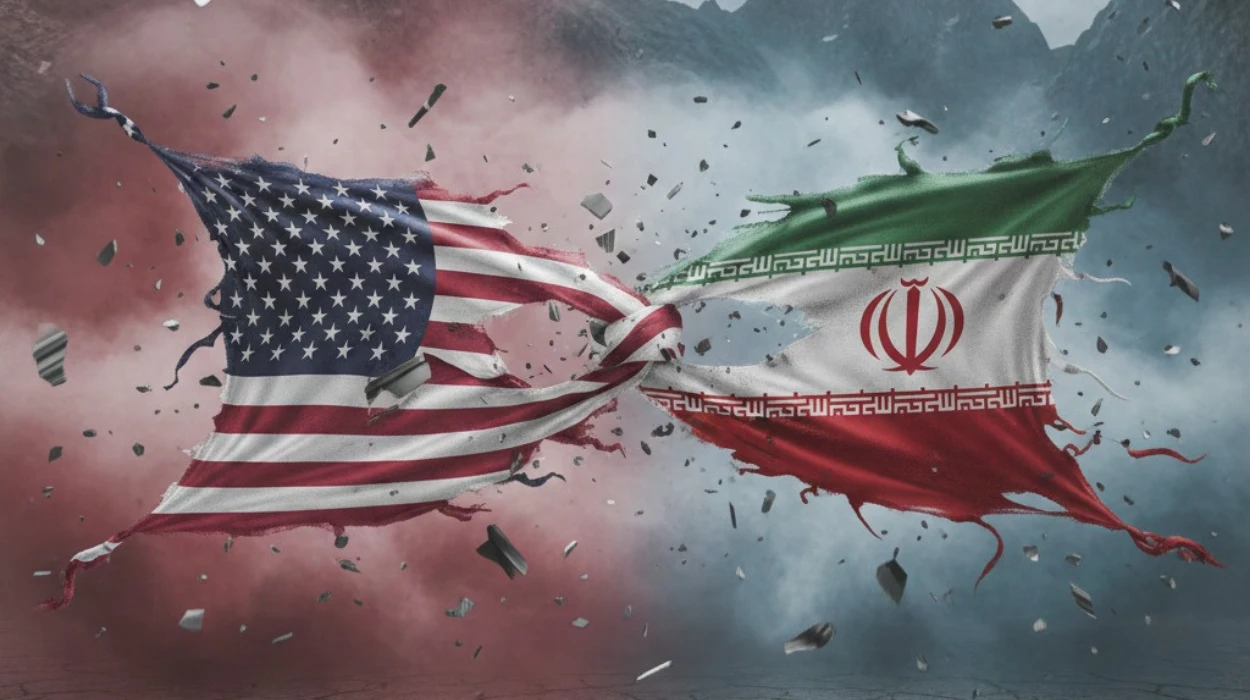
The proposals circulating between Washington and Tehran in 2025 reflect a distinctly maximalist character, emphasizing public signaling over immediate pragmatism. The US package, reportedly a 15-point plan delivered via intermediaries including Pakistan, places core demands on Iran: the immediate reopening of the Strait of Hormuz, significant curbs on ballistic-missile and regional-power projection capabilities, and neutralization of key oil-export infrastructure unless Tehran demonstrates sufficient willingness to meet US-defined conditions. President Trump has reinforced this framework in public statements, warning that the US could “obliterate” Iranian power plants, oil wells, and the Kharg Island export terminal if the Strait is not restored.
Iran’s counter-proposals have been equally rigid. Tehran demands a full US military withdrawal from Gulf waters, lifting of sanctions before any negotiation, and formal recognition of Iran’s sovereignty over the Strait of Hormuz, including potential revenue collection from passing vessels. The Iranian Foreign Ministry has publicly dismissed the US plan as “unrealistic, illogical and excessive,” while senior diplomats privately call it “misleading and deceptive,” reflecting internal debate about both optics and potential concessions.
US public objectives
The US approach signals both leverage and a minimum operational threshold for further discussions. By linking Iran’s oil-export capacity and strategic assets to the war’s termination, Washington communicates to allies and domestic audiences that it is unwilling to compromise core interests. Analysts suggest this is as much about reinforcing US credibility in the Gulf as it is about operational outcomes.
Iran’s minimum framework
For Tehran, the proposals serve to solidify domestic and regional support. Demands for reparations and sovereignty over the Strait allow the Iranian leadership to demonstrate firmness to domestic audiences, while signaling to Washington that concessions will require significant political costs. This balance between domestic validation and diplomatic maneuvering defines Iran’s strategic posture.
Why “unrealistic” dominates analysis
Regional and Western actors broadly view both packages as non-starters. Arab diplomats privately dismiss Iran’s demand for total US withdrawal as “unrealistic,” given longstanding US security commitments to Gulf allies. European partners, meanwhile, question the practicality of Washington’s linkage between Iran’s energy sector and the end of hostilities, seeing it more as containment than as a credible path to conflict resolution.
The maximalist framing is deliberate. Analysts tracking the conflict note that both Washington and Tehran operate in highly politicized environments, where domestic audiences closely monitor any negotiation signaling. By presenting seemingly extreme proposals, each side portrays itself as resolute, allowing quiet back-channel discussions to explore incremental compromise without public backlash. Intermediaries such as Pakistan, Egypt, and Turkey are pivotal in testing these boundaries, ensuring that the public frameworks do not preclude negotiation.
Domestic signaling and strategic posturing
US and Iranian leaders are acutely aware of the political optics. Presenting maximalist proposals reinforces narratives of strength and national interest domestically, which is crucial ahead of potential electoral cycles or internal factional debates. Such signaling allows each side to maintain negotiating credibility while leaving room for technical adjustments behind the scenes.
Intermediary facilitation
The use of third-party channels has historical precedent in Iran-US relations. Pakistan and Egypt, in particular, offer plausible deniability for both capitals, providing a mechanism to explore phased arrangements that are politically difficult to frame publicly. This creates a dual-track approach: maximalist public proposals paired with private testing of potential compromises.
The dance between posturing and possibility
While the proposals appear intractable, experienced mediators interpret them as a first-stage calibration of red lines and bargaining ranges. The US 15-point plan emphasizes missile and naval restrictions alongside pressure on the Strait, signaling the minimal security package the administration may accept. Conversely, Iran’s demands on sovereignty and reparations outline the baseline framework Tehran needs to present to its own hardliners as a concession-worthy outcome.
Even with public rigidity, both sides are effectively acknowledging the other’s positions, suggesting that each package functions as a working range rather than a closed-door rejection. This dynamic mirrors prior patterns in negotiations with Iran, including Geneva-style talks and the 2015 nuclear agreement framework.
Incremental steps and phased negotiations
Independent analysts from the Next Century Foundation and similar groups have advocated time-bound truce frameworks that resemble past negotiation architectures. These include synchronized, reciprocal steps that allow for partial concessions without creating political vulnerabilities for either side. Tehran’s prior willingness to negotiate missile and regional-power limitations demonstrates that some maximalist positions could be folded into incremental, technical arrangements if managed carefully.
Strategic openings versus entrenchment
The core question is whether leaderships treat proposals as genuine openings for phased compromise or as instruments to solidify maximalist positions until battlefield outcomes shift leverage. Both sides appear to employ a hybrid model, combining public maximalism with quiet flexibility—a strategy designed to avoid the appearance of capitulation while preserving potential for negotiation.
Signals beyond the written text
Communication strategies accompanying the proposals provide additional insight. US emphasis on Kharg Island and energy infrastructure signals capability and intent to exert economic pressure while retaining flexibility for short-term hostilities cessation. Tehran’s insistence on reparations and Strait sovereignty conveys resilience and slows any rapid-compromise narrative that might appear as concession.
The deliberate avoidance of labeling proposals as draft agreements, instead framing them as “unrealistic” or “excessive,” reinforces the narrative of resolve. This careful communication balances signaling to domestic constituencies with the need to leave room for negotiation via intermediaries.
Regional and global observation
For Gulf states and European actors, the key takeaway is not the extremity of proposals but the continued flow of communication. The persistence of back-channel discussions, coupled with public acknowledgment of proposals, signals that neither Washington nor Tehran is willing to abandon dialogue entirely. These interactions suggest the transition from maximalist posturing to practical compromise will likely occur quietly, outside the public spotlight.
The calculus of timing
The timing of any potential recalibration will be critical. Analysts note that maximalist frameworks provide cover for exploring stepwise concessions, allowing each side to gauge the other’s flexibility without signaling weakness. The eventual trimming of extreme demands will reveal a path that could stabilize the Strait and broader Gulf security environment, contingent on both political will and battlefield developments.
The ongoing phase illustrates a central paradox of modern diplomacy in high-stakes conflicts: maximalist public posturing often coexists with incremental private negotiations. The interplay between visible rigidity and behind-the-scenes adjustments will determine whether US and Iranian engagement evolves into a viable resolution, or whether the current impasse hardens into protracted uncertainty. The real story of the Middle East war’s next stage may be less about the headlines than about the subtle, strategic exchanges shaping the region’s political architecture and the security of one of the world’s most critical maritime chokepoints.