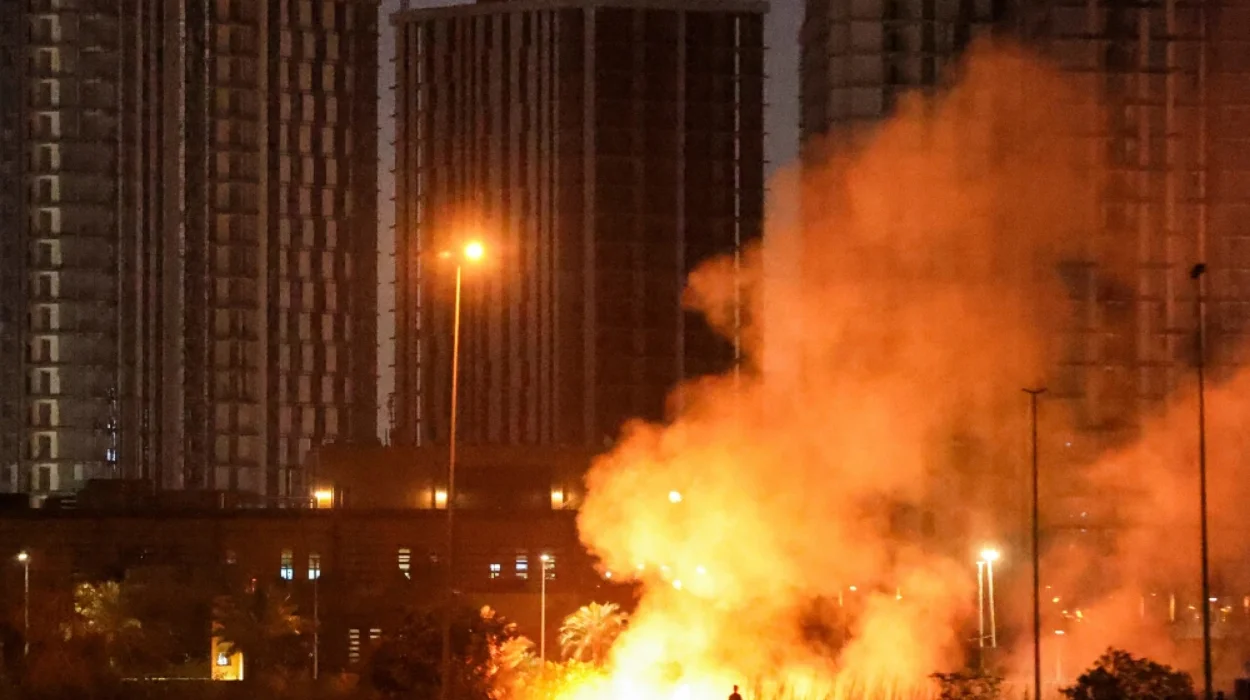
The question of Why U.S. embassies have become the front line of the Iran war reflects a structural shift in how modern conflicts are conducted. Diplomatic missions, once buffered from direct confrontation, are now embedded within the operational environment of regional warfare. In 2026, the distinction between civilian diplomatic presence and strategic assets has narrowed significantly, particularly in volatile regions influenced by proxy networks and contested sovereignty.
This evolution is tied to the changing nature of deterrence. Rather than relying solely on direct military engagement, actors increasingly target symbols of influence and presence. U.S. embassies represent both. They function as extensions of state authority while remaining physically exposed within host nations where control may be fragmented.
The transformation of diplomatic sites into operational assets
Embassies have gradually shifted from being passive institutions to active nodes within conflict ecosystems. Their role now includes crisis coordination, intelligence liaison, and logistical support, making them more relevant to adversaries seeking to disrupt U.S. influence without triggering full-scale war.
This transformation did not occur overnight. Throughout 2025, rising tensions across the Gulf and Levant regions demonstrated how quickly diplomatic facilities could become focal points during escalation cycles. By 2026, embassies were no longer peripheral to conflict dynamics but central to them.
Symbolism and strategic messaging
Targeting an embassy carries layered meaning. It signals that U.S. presence is contested and that host governments may be unable to guarantee security. These actions resonate beyond immediate damage, shaping perceptions of power and credibility.
Such attacks also serve as communication tools. They allow adversaries to send calibrated messages, escalating pressure without crossing thresholds associated with direct interstate conflict. In this sense, embassies function as both targets and transmitters within a broader signaling framework.
Proxy warfare and indirect escalation mechanisms
The prominence of embassies as front-line assets is closely linked to the logic of proxy warfare. In the current Iran-linked conflict environment, non-state actors play a decisive role in shaping outcomes. These groups operate with varying degrees of autonomy while advancing broader strategic objectives aligned with state sponsors.
This dynamic creates a layered battlefield where responsibility is diffuse, and escalation can occur without formal declarations of war. Embassies, situated within this environment, become accessible and impactful targets.
Proxy actors and calibrated pressure
Iran-aligned militias have demonstrated the ability to apply pressure through limited, deniable actions. Strikes on diplomatic compounds fall within this category. They generate political and security consequences while maintaining ambiguity about direct state involvement.
This approach allows for flexibility. Pressure can be increased or decreased without committing to a fixed escalation path. For Washington, responding to such actions becomes complex, as attribution may be contested and proportionality difficult to define.
Expanding the battlefield beyond conventional zones
The use of embassies as targets reflects an expansion of the battlefield into urban and diplomatic spaces. Conflict is no longer confined to military installations or front lines. Instead, it permeates areas traditionally associated with governance and international cooperation.
This shift complicates defense strategies. Protecting embassies requires coordination with host nations, intelligence sharing, and adaptive security measures. Yet, even with these efforts, vulnerabilities persist due to the open and visible nature of diplomatic missions.
Host state dynamics and sovereignty constraints
The exposure of U.S. embassies also highlights the role of host governments in conflict environments. Countries hosting these missions are expected to provide security, but their capacity to do so varies widely. In regions where state authority is contested, this responsibility becomes difficult to fulfill.
The result is a tension between expectations and realities. When attacks occur, questions arise about the effectiveness and willingness of host governments to enforce security commitments.
Capacity gaps and political limitations
Host states often face internal constraints that limit their ability to respond decisively to threats against diplomatic sites. Militias and armed groups may hold significant influence, making direct confrontation politically risky.
These limitations create persistent security gaps. Even when governments are committed to protecting embassies, their reach may not extend to all actors operating within their territory. This dynamic leaves diplomatic missions exposed to repeated threats.
Bilateral strain and strategic implications
Attacks on embassies can strain relations between the United States and host countries. Washington may interpret security failures as signs of weakness or insufficient commitment, leading to increased pressure on local authorities.
At the same time, host governments must balance external expectations with internal stability. Aggressive action against militias could trigger domestic unrest, creating a dilemma that complicates cooperation. This interplay reinforces the vulnerability of diplomatic infrastructure within contested environments.
Security responses and deterrence challenges
The response to increased threats against embassies has centered on heightened security measures and operational adjustments. In 2026, directives for comprehensive security reviews across multiple diplomatic posts indicate an expectation of sustained risk rather than isolated incidents.
These measures aim to mitigate vulnerabilities, but they also reflect a broader recognition that embassies are now integral to the conflict landscape.
Adaptive security frameworks
Security enhancements include reinforced perimeters, revised evacuation protocols, and increased coordination with military assets. These steps are designed to reduce exposure and ensure rapid response capabilities.
However, such measures have limitations. Embassies cannot be entirely hardened without compromising their diplomatic function. The need to remain accessible and operational constrains the extent of defensive adaptations.
The feedback loop of deterrence
Efforts to strengthen embassy security can inadvertently reinforce the logic of targeting them. Visible upgrades signal that attacks are having an impact, potentially encouraging further attempts to test defenses.
This creates a feedback loop where each side adjusts its approach based on the other’s actions. Deterrence becomes more complex, as success is measured not only by preventing attacks but also by maintaining credibility without escalating tensions.
The 2025 escalation pathway
The current prominence of embassies in the Iran-linked conflict is rooted in developments from 2025. That year saw a gradual erosion of the informal norms that had previously shielded diplomatic sites from direct involvement in hostilities.
As tensions increased, the range of acceptable targets expanded. Infrastructure, shipping routes, and foreign missions all became part of the strategic calculus.
Incremental normalization of risk
Repeated incidents throughout 2025 contributed to a normalization of risk around diplomatic facilities. Each event lowered the threshold for subsequent actions, creating a cumulative effect that reshaped expectations.
By the time broader hostilities intensified in 2026, embassies were already perceived as legitimate points of pressure. This shift underscores how conflict dynamics evolve over time, often through incremental changes rather than abrupt transformations.
Political signaling and domestic considerations
Embassy attacks also carry domestic implications for U.S. policymakers. They generate public attention and political pressure, forcing responses that balance security concerns with broader strategic objectives.
Decisions about reinforcing or evacuating embassies are therefore not purely operational. They are intertwined with perceptions of strength, commitment, and risk tolerance. This adds another layer of complexity to managing diplomatic presence during conflict.
A redefined front line in modern conflict
The emergence of embassies as front-line assets reflects a broader redefinition of warfare in the 21st century. Conflicts are increasingly characterized by indirect engagement, symbolic targeting, and the blending of civilian and strategic spaces.
In this environment, traditional boundaries between diplomacy and defense are less distinct. Embassies serve as both instruments of engagement and focal points of vulnerability, embodying the dual nature of modern statecraft.
As tensions continue to evolve, the role of diplomatic missions will remain central to how conflicts are conducted and perceived. The frequency with which security reviews are conducted, personnel are repositioned, and contingency plans are activated offers a revealing indicator of how deeply the conflict has penetrated the structures of international presence. Whether embassies can retain their diplomatic function while operating under persistent threat may ultimately shape not only the trajectory of the Iran-linked conflict but also the future norms governing the safety and role of diplomatic institutions worldwide.