The convergence between political rhetoric and religious authority has taken a more confrontational direction in the wake of comments by Donald Trump towards Pope Leo XIV. This episode is indicative of a wider change in the interpretation of moral voices in the contemporary political framework, especially in highly polarised societies.
Historically, the conflicts between political leaders and religious leaders were based on differences in policy in diplomatic terms. What is occurring now, however, is an indication of a shift towards more direct and personalised rhetoric, in which the legitimacy itself is a matter of contention.
Language of Delegitimisation
The pope is weak on crime and ineffective with foreign policy, which Trump packs into his framing as a weak person rather than a critical phase of critique into delegitimisation. It is an implicit attack on the right of religious leaders to have a comment to say on anything that the state does.
Reframing Moral Arguments as Political Bias
Moral positions are re-framed as ideological preferences by connecting papal utterances and the discourses of radical left. This change undermines the generality of ethical arguments, putting them under partisan lines.
The Vatican’s Position on Conflict and Diplomacy
Vaticans involvement in world affairs has been in a way that has put a greater focus in resolving conflicts by being morally responsible. This position has been amplified under the leadership of Pope Leo XIV, especially at the time when there is a growing tension in areas like the Middle East.
Although the Holy See has a position of formal neutrality, its promotion of restraint and dialogue can overlap with current geopolitical approaches, which leads to tensions with state actors having more aggressive policies.
Ethical Critique of Modern Warfare
In early 2026, Pope Leo sounded an alarm that war is being fashionable once again, with a note of concern that normalisation of military escalation is being normalised. His statements go further to situations of conflicts with Iran, emphasizing on protection of civilians.
Neutrality Versus Perceived Alignment
Although the Vatican takes a neutral position, some of the positions are considered to be indirectly directed at the United States and its supporters. This is a perception that makes its diplomatic role difficult.
Domestic Implications in the United States
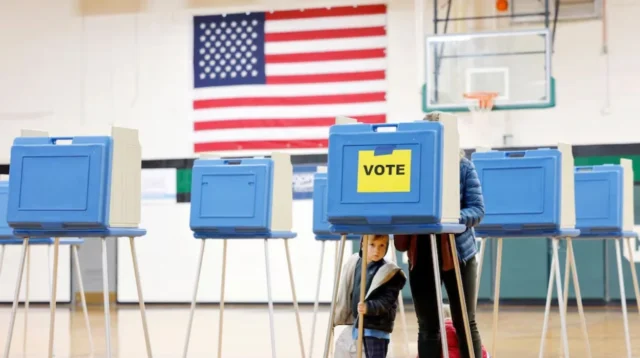
The clash has a lot of weight in the political arena of the United States. Religious identity, especially among the Catholics community, overlaps with wider ideological split defining voter behaviour.
Being the first American-born pope, Leo has not only impact on theological discussions but also on the cultural and political discourse, and thus he remains a special figure in the discussions at the national level.
Catholic Identity and Political Polarisation
This criticism appeals to constituencies where law-and-order policies are more important, and turns off those who subscribe to the Church agenda of social justice and humanitarianism.
Electoral and Cultural Dimensions
The politicisation of papal power brings new patterns to the electoral discourses. Religious leadership is turned into a political affiliation variable instead of an independent moral point of reference.
Historical Context of Church-State Tensions
The connection between the church and state has been changing in a cycle of cooperation and conflict. The modern strains are the product of historical developments, as well as the changes in communication and political policy.
The present episode is a continuation of the decades of growing religious activity in international affairs, especially after institutional changes in the Catholic Church.
Evolution Since the Second Vatican Council
The Council reinvented the role of the Church in the world promoting its involvement in social and political life. This was the stepping stone to papal intervention in international discussions.
Precedents in Modern US Politics
Historical conflicts between the US presidents and the popes were in a diplomatic manner. The current conflict is not following that trend, as it demonstrates the overall shifts in political communication since 2025.
Global Reactions and Diplomatic Undercurrents
The reaction of the international community to the exchange is a complicated diplomatic picture. Although the responses of the people are muted, the underlying inclinations indicate the greater implications of global governance and soft power.
European actors and multilateral institutions tend to think that the moral position of the Vatican is complementary to their diplomatic activities, even in cases where they do not engage directly with US political discourse.
European and Multilateral Perspectives
The European diplomats have been mostly advocates of restraint which has been in line with the Vatican positions without directly responding to the remarks of Trump.
Implications for Soft Power and Influence
The episode emphasizes conflicting types of influence. The United States wields military and economic influence, whereas the Vatican works with moral influence and worldwide influence.
Redefining the Boundaries of Faith in Politics
The skirmish portrays the ways in which faith and politics are being renegotiated in real time. With the growing complexity of global crises, there is a growing interplay of moral and strategic considerations.
Religious leaders are involved into arguments which state actors are used to dominate and political leaders are in retaliation on the extent of religious involvement.
Expanding Role of Religious Voices
The involvement in matters like war and justice by Pope Leo is an indication of the changing role of the Church in tackling issues globally, even to the embarrassment of the political establishment.
Limits of Political Tolerance
The political reaction shows that there is a limit to tolerance to religious criticism especially when it touches on national security and ideological interests.
A Contest Over Influence and Legitimacy
The exchange between Donald Trump and Pope Leo XIV reflects a deeper contest over influence in shaping public and international narratives. Political authority and moral leadership operate through different mechanisms, yet increasingly compete within the same arenas.
As global tensions persist and domestic divisions deepen, the interaction between these forms of authority is likely to intensify. Whether future engagements move toward dialogue or further confrontation will depend on how both political and religious actors navigate the evolving balance between critique, legitimacy, and influence in a world where neither sphere can fully detach from the other.