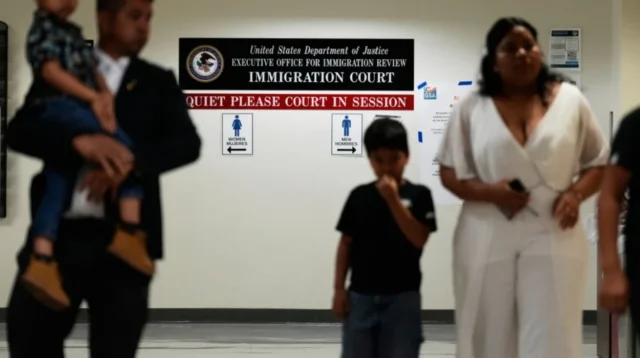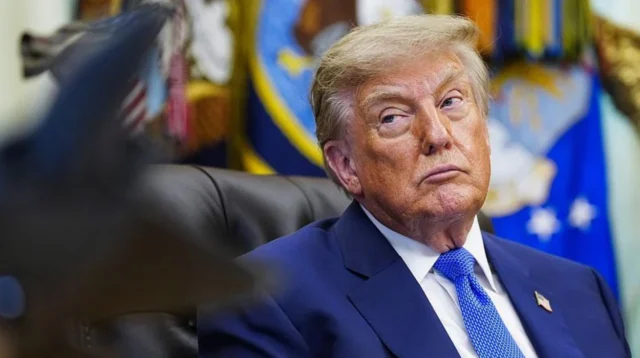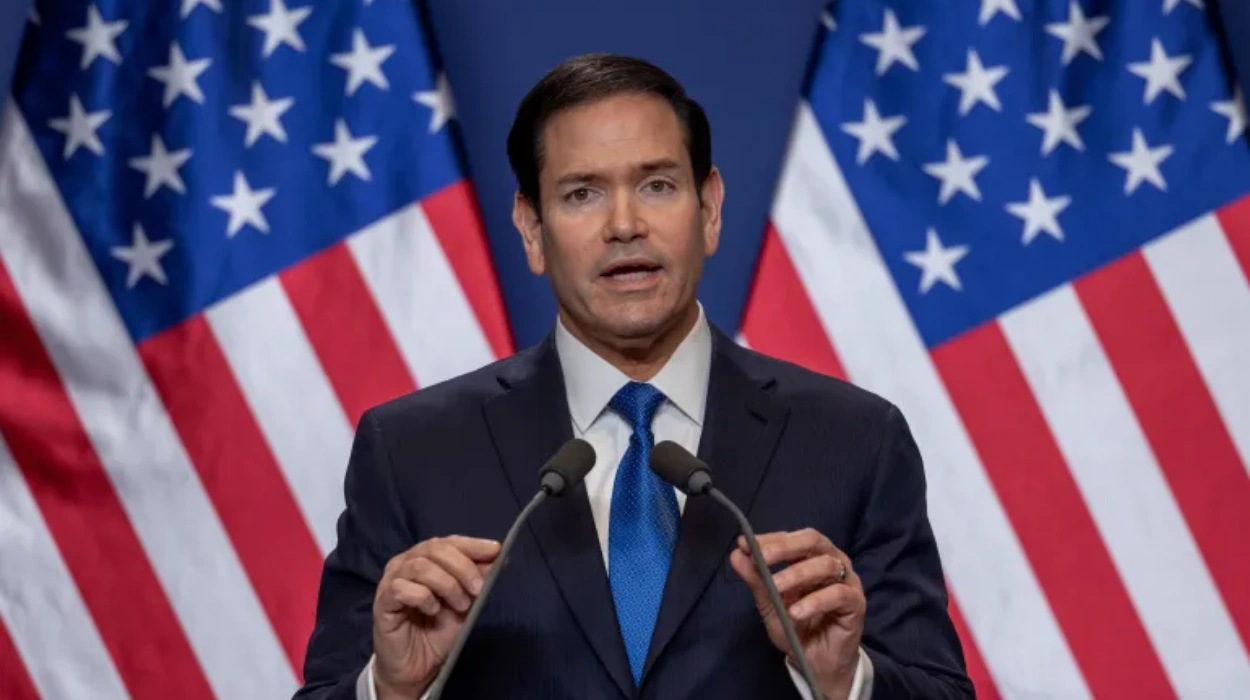
Visa Blacklists and the Weaponisation of US Immigration Policy have now entered a novel phase whereby the targeted restrictions are no longer solely a security issue but are actively used as a geopolitical instrument. The decision of the United States to revoke the visas of 26 individuals suspected of supporting adversaries in April 2026 would indicate the growth of the immigration policy beyond border control into a field of strategic signalling. The terms of the officials imply a purposeful broad interpretation of the term support, which includes financial, logistical, or ideological ties to actors considered hostile to US interests.
This evolution extends on the policy lines of travel that were evident across 2025, as travel bans and entry suspends became more indicators of geopolitical affinities than solely administrative or security standards. Previous restrictions on the issuance of visas to nationals of dozens of countries brought with them a model whereby nationality was used as a proxy variable to risk. The blacklist changes that framework further but changes the geographical generalisations with individualised political judgements which can be more flexibly applied.
From geographic bans to individualized targeting
The shift towards case-based blacklists as opposed to blanket restrictions suggests a change in the policy design. Widespread travel bans, commonly used in 2025, offered ease of administration but were not always very accurate. In comparison, targeted visa revocations will enable policymakers to exert pressure on individual persons without placing blanket policies on whole groups.
The change also enhances the symbolic influence of immigration preferences. The name of a black list means that there is direct responsibility, and sends a signal to networks connected to the blacklisted persons. Nevertheless, it also brings about ambiguity, with the inclusion criteria being opaque, which brings up the issue of consistency and proportionality.
Expansion of discretionary authority
These actions have a legal basis in the provisions of the current Immigration and Nationality Act which provides a wide powers to refuse or cancel visas based on foreign policy consideration. Although this power has been in existence since time immemorial, its application has been experienced in recent years with a lot of widening.
Consular discretion has now been expanded to other long-standing immigration adjudication areas, such as geopolitical alignment and perceived ideological affiliation. This growth brings about quickness in carrying out policies but decreases predictability because rulings can be based on shifting political agendas, as opposed to consistent legal standards.
Political signalling and strategic leverage
The Weaponisation of US Immigration Policy and Visa Blacklists demonstrate how immigration controls can be used as a means of political communication. In addition to its immediate administrative effect, visa determinations are becoming a way of sending messages to allies, adversaries and domestic audiences.
This role in signalling became more evident in 2025, as visa restrictions were associated with expanded policy goals such as enforcement of sanctions and regional influence policies. The 2026 blacklist is no exception, making immigration policy a part of a broader concept of coercive diplomacy.
Pressure on regional actors and networks
The fact that the attack was directed at people on the Western Hemisphere highlights the importance of visa policy in regional policy. The United States reaches out to transnational networks by connecting visa access to perceived assistance to adversarial parties.
This method is a supplement to other instruments like economic sanctions and trade restrictions. Their combination forms a multifaceted system of pressure that works concurrently on the financial, political and mobility levels. The policy has far-reaching consequences because, to the afflicted individuals and their networks, the access to visas is disrupted, which affects professional, academic, and diplomatic interactions.
Messaging to domestic and international audiences
Restraints on the visa policy also fulfill domestic political aims by exhibiting aggression on national security and control of immigration. Blacklists announced publicly contribute to the stories of vigilance and enforcement, especially during politically sensitive times.
These actions internationally are an indication of the desire to carry out any available means to protect perceived interests. Nevertheless, the lack of clarity in terms of criteria and evidence might complicate diplomatic relations since the countries that are impacted may view actions related to visas as politically-oriented, but not legally-grounded.
Legal ambiguity and due process concerns
The increasing use of visa blacklists casts doubts on the transparency of the law and the fairness of the procedure. Visa Blacklists and the Weaponisation of US Immigration Policy exist in an environment that favours executive discretion, which in many cases can restrict the chances of review or appeal.
This form of organization is a result of old traditions of sovereign authority over borders, but its increased application in politically sensitive situations creates new difficulties. The line between administrative action and political sanction is blurred as immigration decisions are more and more subject to foreign policy.
Limited transparency in decision-making
There is a low disclosure of evidence that is used to revoke or deny the visa. Although this strategy safeguards delicate intelligence, it also decreases accountability. Blacklisted individuals might not understand the reasons that support the blacklisting against them, making it hard to appeal against the decisions.
This is not the first time that the immigration policy has featured a lack of transparency, but in the cases when the decisions made have geopolitical consequences, those consequences are exaggerated. The lack of distinct criteria puts the danger of instilling the sense of arbitrariness, especially in the eyes of the foreigners.
Blurring of security and political criteria
Traditional distinctions between security screening and policy enforcement are obscured as political considerations are incorporated into the process of adjudicating a visa. Actions that do not qualify as criminal acts can nonetheless be viewed as reasons to exclude a person due to perceived support of antagonistic interests.
In 2025, the same was raised when visa cancellations were associated with the participation in protests or political expression. This trend may be further developed in 2026, indicating a more comprehensive definition of risk, which goes beyond traditional security frameworks.
Global implications and reciprocal dynamics
The Weaponisation of US Immigration Policy and Visa Blacklists have a wider impact than bilateral relations. With immigration controls becoming instruments of geopolitical rivalry, other states might follow suit, resulting in more fragmented global mobility regime.
This dynamic is indicative of larger dynamics in international relations, wherein economic, technological, and regulatory instruments are becoming more and more relied upon to wield influence. Immigration policy has now become part of this line as it both defines the movement of people and the projection of power by states.
Impact on academic and professional mobility
The image that visa accessibility might be conditional upon political affiliation influences decision-making of students, researchers, and professionals. The fear of possible revocation or denial will discourage people to interact with institutions in the US, especially in political sensitive areas.
This trend has been noticeable since 2025 as delays and cancellations of visas have impacted academic exchanges and international cooperation. In the long run, these patterns could reshape the global knowledge and innovation networks, shifting opportunities around.
Future trajectory of immigration as a policy tool
The trajectory of visa policy will likely depend on how governments integrate it with other instruments of statecraft. As geopolitical competition intensifies, immigration controls may become more closely aligned with economic and security strategies.
Whether this alignment leads to more effective policy outcomes remains uncertain. The increasing overlap between immigration and foreign policy introduces both opportunities and risks, shaping a landscape where mobility itself becomes a contested domain of influence.