The current US president, Donald Trump, is using a new tactic by tying homeland security funding to state compliance with broad-ranging election administration changes, threatening states with the withholding of tens of millions of dollars in funds unless they implement changes based on the executive order that the president signed in March 2025 regarding election integrity. It is important to note that this is part of the latest move by the administration to change the way elections are done in the United States through coercion.
The Department of Homeland Security is now working on developing a new set of grant policies which shall be issued to states at the end of June 2026. These policies require states to implement mandatory reforms regarding elections in order to qualify for critical homeland security grants. States which fail to do so will suffer instant penalties in terms of their grant allocations, with a cut of about 20 percent.
The Monetary Weapon: Homeland Security Grants at Stake
The financial pressure campaign is based on the fact that the Department of Homeland Security homeland security grant program includes the State Homeland Security Grant program and the Urban Area Security Initiative. The latter was set up following the September 11 attack in order to protect states and cities from terrorist threats. The new policy of the administration implies that about $28 million from the total budget for the election security program (about 3 percent of the total budget of the DHS Security Grant program) will be conditional on election reform compliance.
For states that refuse to implement the mandated changes, the penalty is severe. They would lose 20 percent of their total grant money, which could translate into millions of dollars in lost security funding. The administration’s approach effectively transforms homeland security grants into an enforcement tool for election policy, a practice that voting rights advocates and legal experts argue fundamentally distorts the purpose of these post-9/11 security programs.
It is not only the direct amount of money allocated for ensuring election security that is at stake ($28 million). The reform of the program of counter-terrorism measures after September 11th includes an approximate allocation of $1 billion from federal coffers, with notable redistribution trends forming in the relation of Democratic and Republican states.
Mandatory Election Reforms States Must Adopt
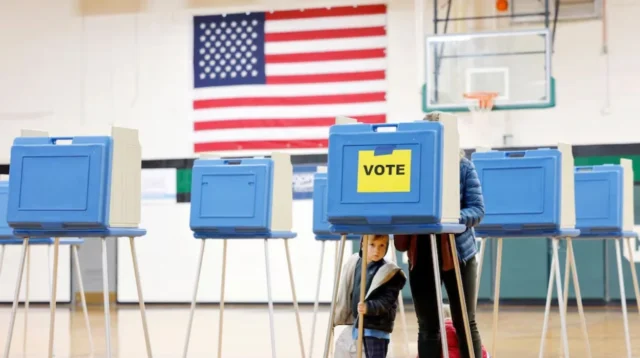
The new guidelines for the DHS grant mandate that states make six major changes in their election administration, all of which are directly related to the various clauses of Trump’s executive order. These changes completely change the way states handle voter registration, balloting process, and election validation process. States need to completely stop the use of electronic voting system and adopt hand-counted paper ballots. The reason for such a requirement is the discontinuation of the usage of the electronic voting machine that is extensively used nowadays in all states.
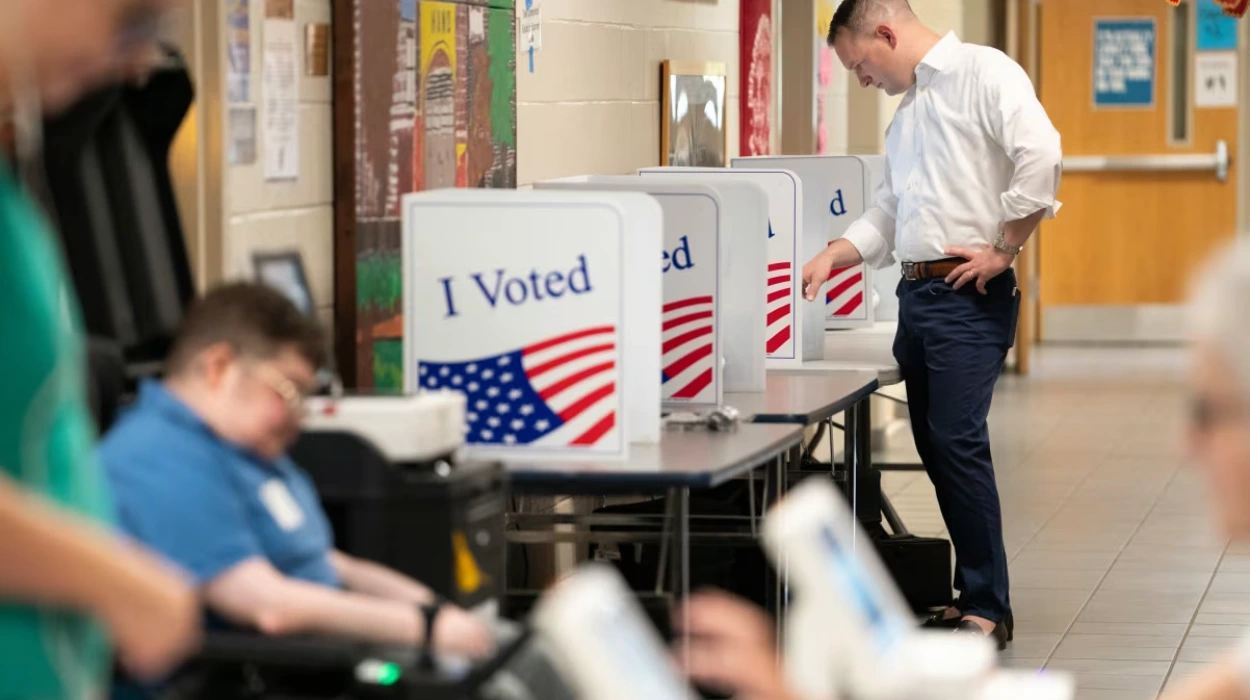
Voter roll verification becomes mandatory through the SAVE program, a DHS tool designed for Systematic Alien Verification for Entitlements. States must run their entire voter rolls through this database to identify potential noncitizen voters. The SAVE database has been controversial among voting rights groups who question its accuracy and warn it could mistakenly flag eligible voters as ineligible.
The citizenship verification of the polling workers has to be done through an approved federal government process. All the individuals working in the polling stations should undergo the process of citizenship verification before they can be allowed to do their job. This is a new form of screening since these workers are supposed to come from local neighborhoods but no federal citizenship verification has taken place. The manual election auditing has to be done following the procedures adopted during the time of the Trump administration and not the current state processes. Ballot timing should be standardized in such a way that the ballot received on election day will be counted.
Voters must provide official proof of U.S. citizenship, including passports or birth certificates, to register and vote. This requirement represents the most significant barrier to voting in the new framework, potentially disenfranchising citizens who lack these specific documents.
The Administration’s Stated Rationale and Claims
President Trump has defended the executive order as necessary to strengthen electoral integrity and prevent what he claims is noncitizen voting in federal elections. The order, officially titled
“Preserving Protecting Integrity of Elections,”
frames the reforms as protective measures for American democracy rather than restrictive policies.
“The president issued an executive order targeting election rules to strengthen electoral regulations and deter non-citizens from voting,”
according to the White House’s public explanation of the policy. The administration emphasizes that noncitizen voting is already illegal under federal law and subject to imprisonment and deportation, arguing the new requirements simply create additional verification layers.
The White House fact sheet reveals plans for federal-coordinated citizen registry creation.
“The White House fact sheet states DHS will collaborate with the Social Security Administration to compile a registry of verified U.S. citizens eligible to vote in each state,”
establishing a federal database that would override state-controlled voter registration systems.
Enforcement mechanisms are aggressive. The administration has directed the Attorney General to take action against noncompliant states.
“The enforcement threat includes the Attorney General withholding federal funding from noncompliant states and prioritizing prosecutions of officials and entities distributing ballots to voters illegally,”
creating potential criminal liability for election administrators who resist federal mandates.
Critics Warn of Mass Disenfranchisement and Constitutional Violations
The voting rights proponents, however, have fired back with scathing critiques, contending that these measures will result in the establishment of obstacles that will keep many citizens from exercising their right to vote. Handwritten ballot, voter identification, and SAVE check are some of the possible obstacles that can be placed before marginalized communities, the elderly, and poor people who do not easily have access to documents proving their eligibility. Numerous lawsuits have been filed in court contesting the method of the administration, raising the issue of whether the president constitutionally has the right to determine election procedures in the states through threat of funding.
“A federal judge called Trump’s funding threat an unconstitutional exertion of pressure on states since the president lacks formal authority to dictate how states conduct elections,”
according to the January 2026 ruling by U.S. District Judge John Chun. This judicial rejection represents at least the third ruling against the March 2025 executive order targeting state election processes.
The lawsuits frame the administration’s actions as political punishment rather than legitimate security policy. Twelve Democratic-led states have filed suits alleging the funding redistribution punishes states that did not cooperate with federal immigration enforcement priorities.
“Twelve Democratic states are suing, alleging political punishment”
for refusing to align with administration immigration policies.
Geographic Redistribution Shows Clear Political Patterns
The funding overhaul reveals stark geographic disparities that align precisely with 2024 election outcomes. Democratic strongholds face severe reductions while states that voted for Trump receive substantial increases, creating what critics describe as a politically motivated reallocation of security resources.
Washington, D.C. is being subjected to a 70 percent decrease in funding for terrorism prevention. Illinois experiences a 69 percent reduction. New Jersey sees a 49 percent reduction in funding. Such budget reductions are drastic when compared to earlier funding allocations that were determined on the basis of objective risk analysis. In contrast, states that backed President Trump in the 2024 elections are receiving percentage increases in their budgets. States like Wisconsin, North Carolina, and Ohio receive increased budget allocations through this new formula.
However, the pattern of cuts and increases aligns so precisely with electoral outcomes that legal challengers argue the policy violates constitutional principles requiring impartial federal spending decisions. The redistribution impacts security grants created after September 11 specifically to protect against terrorism, raising questions about whether election policy should determine terrorism prevention funding.
Legal Battles Could Block Implementation Before 2026 Midterms
Legal battles loom on the horizon to ensure that the executive order is not fully implemented before the November 2026 midterm elections. The judicial decision in early 2026 to nullify the administration’s tactics in coercing funding is a major hurdle to the implementation of the executive order, although the administration may choose to appeal this decision. All but one of the March 25, 2025 executive order is currently facing at least one lawsuit each in various jurisdictions. Judicial decisions from various state courts have raised issues about the constitutionality of the federal mandate.
The timing creates significant uncertainty for state election officials who must prepare for November 2026 while facing potentially contradictory federal mandates and court orders. States receiving the new DHS guidelines in June 2026 face a compressed timeline for implementing complex electoral reforms while navigating ongoing legal challenges that could invalidate those requirements.
Constitutional Crisis Looms Over State Election Autonomy
The administration’s strategy represents a fundamental challenge to traditional American federalism, where states have historically maintained primary authority over election administration. By attaching election policy requirements to homeland security funding, the federal government is attempting to bypass state autonomy through financial coercion rather than direct legislative authority.
According to constitutional scholars, this method contravenes the fundamental rules set through centuries of American governance. For one, the Supreme Court has traditionally been wary of the conditions set by the federal government on grants that go beyond the powers bestowed upon Congress or that force states into policies they would not choose to implement voluntarily. The dispute about the powers between the policies set by the federal government and those of the constitution of states still stands unresolved as courts deliberate over it.
What This Means for American Voters
If the reforms are implemented, American voters will face fundamentally different election procedures depending on their state’s compliance decision. The requirement for hand-marked paper ballots could slow voting significantly and increase processing times. Citizenship documentation requirements could prevent eligible voters from registering if they lack passports or birth certificates.
The verification system in the SAVE database could misidentify eligible voters as noncitizens and hence create obstacles for voter registration through tedious appeal processes. Manual audit requirement could slow down the results of elections by requiring states to verify information using methods not normally used when counting votes. Standardizing voting timelines implies that late ballots will not count, thus disenfranchising citizens who encounter delays in sending the ballot papers. Overall, the above measures constitute the most substantial federal interference in the electoral process since the Voting Rights Act of 1965.
The Trump administration’s election changes through homeland security funding represent a high-stakes confrontation between federal power and state autonomy that will shape American democracy for years. Whether courts block the strategy or allow implementation will determine the future balance of election authority in the United States.