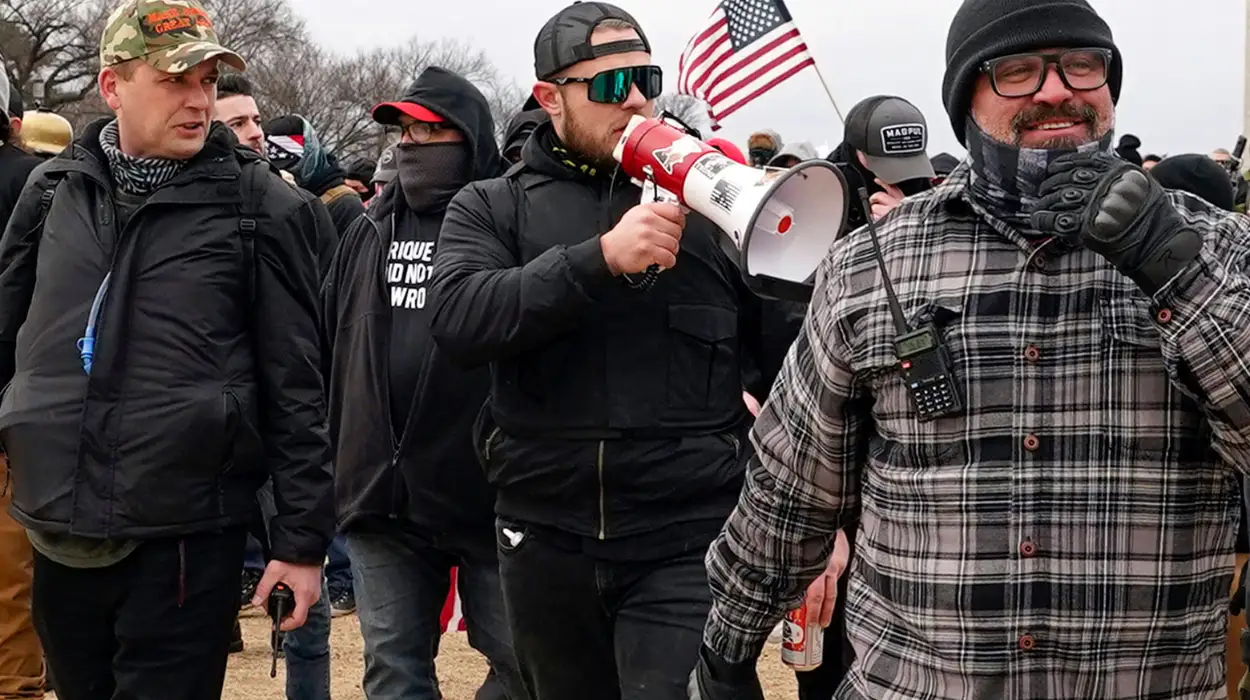
A federal judge appointed by Donald Trump has dismissed the remaining Jan. 6 conspiracy case against Proud Boys leaders, closing one of the most politically charged prosecutions stemming from the Capitol attack and reinforcing how quickly the legal legacy of Jan. 6 has shifted under the new Trump administration. The ruling, issued by U.S. District Judge Timothy Kelly, did not come from a fresh review of the facts or an appellate reversal on the merits. Instead, it followed a formal request from the Justice Department to vacate the convictions, leaving the court to decide whether it had any lawful basis to refuse. The judge concluded that he did not.
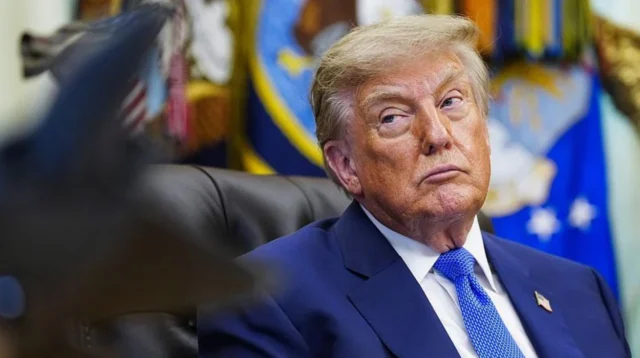
It does matter because this was not a judicial validation of the Proud Boys, and this was not a legal ruling about the legal insignificance of the events on Jan. 6. This was a procedural conclusion resulting from executive discretion, and this is why it is one of the best examples of the way in which the transformation in presidential power has changed the fate of those cases that once were the basis of Justice Department’s reaction to the events at the Capitol. Finally, this decision came in a political context, in which President Trump described those cases as politically biased and unjust, while his administration tried to reverse them.
What the ruling changed
The case carried a lot of weight due to the seditious conspiracy charge, which is among the most serious charges made regarding the Jan. 6 attack on the Capitol. From the report, the Proud Boys case was among the few cases of Jan. 6 where convictions were still intact despite President Trump having taken action through his clemency powers earlier. The decision to withdraw from the case by the Department of Justice marked the wiping out of one of the most significant successes achieved during the Biden administration’s prosecutions for Jan. 6. In this particular case, the Proud Boys associates include Enrique Tarrio, Joseph Biggs, Zachary Rehl, and Dominic Pezzola.
While Enrique Tarrio has undergone some changes as a result of Trump’s pardon decision, the other three are some of those whose convictions the DOJ wanted vacated. It therefore means that the entire decision must be seen as part of the overall effort of unraveling what was done before.
The timing is also important. Trump returned to office with a clear political incentive to reframe Jan. 6 as a chapter that should be closed rather than prosecuted further. The dismissal of the Proud Boys case gives that effort a legal endpoint with real symbolic weight. It shows that the executive branch can do more than soften punishment; it can also decide that certain convictions should no longer remain on the books at all.
Judge Kelly’s reasoning
Judge Timothy Kelly, a Trump appointee, said he had no legal authority to require the executive branch to continue prosecuting the case after the Justice Department asked for dismissal. That reasoning is central to understanding the ruling, because it places the emphasis on the separation of powers rather than on the substance of the underlying conspiracy allegations. In effect, Kelly ruled that once prosecutors chose to abandon the case, the court could not force the matter to remain alive.
One report summarized his position bluntly, saying he had
“no power to second-guess prosecutors”
once they decided to vacate the convictions. That framing matters because it suggests restraint, not endorsement.
The judge did not rewrite the history of Jan. 6; he merely accepted the fact that the court cannot overrule the government’s decision on how to litigate. It is a very fine line, legally speaking. Kelly had previously made a completely different judgment regarding the same case. He dismissed the First Amendment claims made by the Proud Boys and allowed for the main conspiracy charge to proceed. This particular judgment ensured that there was still an intact Jan. 6 case that could be pursued in court. Thus, the dismissal at hand does not contradict the previous judgments; it follows from a changed political and prosecutorial environment.
Why the case mattered
The Proud Boys trial was distinctive among many other January 6th trials in that it emphasized organizing, planning and leadership roles rather than just disorderly conduct and trespassing. Seditious conspiracy charges are rare and hard to prove, and this trial proved to be a critical test of how effective the federal laws would be in addressing any coordination in hindering the smooth transfer of power. This is the reason for which the result of this case holds a significant meaning beyond just the four individuals who were defendants. Additionally, the case was one of the issues within a broader discussion about whether the events of January 6th should be viewed as an assault on democracy or the overzealous prosecution of Trump supporters. Clearly, the current attitude of the Trump administration aligns with the latter narrative. By backing the motion for dismissal, it is making clear that the legal repercussions of January 6th need to be reduced or removed.
That has political consequences. For Trump supporters, ending the case may be seen as correcting what they describe as prosecutorial overreach. For critics, it looks like institutional forgiveness for one of the most serious challenges to Congress in modern U.S. history. The Proud Boys case thus sits at the intersection of law, memory and power. Its dismissal is not merely a technical court order; it is a statement about what the federal government now intends to preserve from the Jan. 6 record and what it wants to leave behind.
Pardons and the larger rollback
The pardon is inseparable from the wider pardoning and commutations carried out by Trump on his return to power. It has been reported that Trump pardoned over a thousand people who were found guilty in the Jan. 6 attack, and subsequent developments increased this trend to include other individuals. This context is important because it changed a potentially lengthy process of justice into a systemic rollback of prior enforcement. The Proud Boys case was one of the relatively few large Jan. 6 indictments which survived this first round of pardoning. From a practical standpoint, it turned this indictment into the last remaining stronghold for the more aggressive stance adopted by the Biden administration. Once the DOJ filed a request to vacate the indictment, the matter shifted from being a disputed courtroom proceeding to an administrative and political affair.
For journalism and public record purposes, this sequence should be reported carefully. It is accurate to say that the Proud Boys convictions were dismissed by a federal judge, but it is equally important to note that the dismissal happened at the Trump Justice Department’s request. That context prevents a misleading narrative that the convictions simply collapsed on legal appeal. They did not. They were abandoned by the government that once prosecuted them.
The statements that define it
The most important statement in the case, based on the available reporting, was the judge’s conclusion that he lacked the authority to overrule the executive branch’s decision. That is the legal heart of the ruling, and it explains why the order landed with such force despite its narrow reasoning. It also reflects the reality that much of the Jan. 6 legal aftermath now depends on the priorities of the current administration rather than the architecture of the original prosecutions.
One more significant position that was reported was taken by the Justice Department itself in its statement that the dismissal was in the interest of justice. This wording is commonly used in federal cases when prosecutors feel that the case should not go forward. In this context, however, the phrase had a much wider connotation, as it suggests that the administration considered these convictions expendable even in the case of charges relating to one of the most serious crimes associated with the Capitol invasion. The previous judicial denial of the Proud Boys’ First Amendment arguments should also be mentioned. The decision had helped clarify the legal basis for the prosecution – it was based on actions and not the political speech. Therefore, in this context, the dismissal cannot be perceived as recognition of legal weaknesses of the conspiracy case.
Broader political meaning
This case is one of the clearest illustrations of how much Trump’s return to power has affected the post-Jan. 6 legal landscape. The original prosecutions were built around the idea that the attack on the Capitol was an attack on constitutional order. The current administration’s response suggests a different priority: ending the legal aftermath and reframing the events as something the country should move beyond.
That shift will likely shape future reporting on Jan. 6 in two ways. First, it means prosecutors may become more hesitant to pursue aggressive theories if there is a risk that a later administration will unwind them. Second, it means the historical record itself may become more contested, as legal accountability gives way to political reinterpretation. The Proud Boys dismissal is therefore both a legal event and a historical marker.
The case also shows the strength of executive authority over federal criminal enforcement. A president cannot erase the facts of Jan. 6, but the administration can decide how forcefully to pursue the consequences. That power is now being used in a way that directly reshapes the aftermath of the attack. For defenders of the original prosecutions, that is a troubling precedent. For supporters of Trump, it is a long-promised correction.