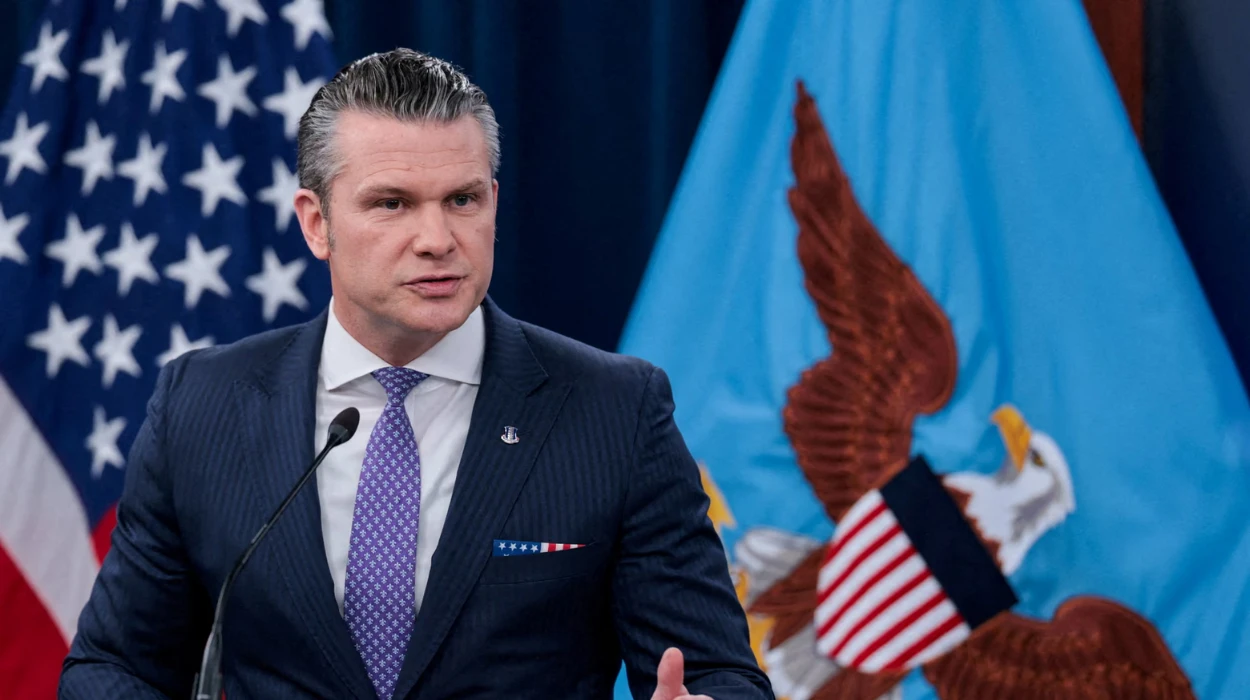
Defense Secretary Pete Hegseth’s appearance before the Senate Appropriations Committee became less a routine budget hearing than a political reckoning over the widening cost of the Iran war. What began as a request for more defense money quickly turned into a confrontation over war spending, transparency, and the growing human toll after the deaths of three American service members last week.
As the latest estimate by the government shows, “the cost is around $37.5 billion,” and this fact significantly raised concerns about the Trump administration’s policy in relation to the war and spending. The hearing happened in times when the Pentagon was under additional pressure due to the necessity to justify how the agency funds the ongoing war and how much it needs from Congress. In addition, according to the statement of Hegseth, the estimate includes some military pay and operations & maintenance costs until the end of the fiscal year – September 30, and not only what has been spent so far. This is important since the estimate is not only a historical one but also a projection.
The core issue with regards to the politics of the matter is that the cost has increased rapidly. By the month of May, the Pentagon had already pegged the costs at $29 billion, which means that the current amount represents an increase of almost $8 billion within just a few months. This serves to provide ammunition to those who are critical of the administration, particularly those who are critical of the administration’s management of Congress in matters related to emergencies and funding.
Senate backlash
The legislators were apparently livid with frustration, particularly the Democrats who expected an explanation of why the war was so expensive and what it expects from Congress at the moment. It was Senator Dick Durbin who demanded that the official give an estimation, which led to him revealing the figure of $37.5 billion during the committee meeting. This particular incident marked a pivotal moment in the committee meeting since it revealed how much confusion there was regarding the total cost of the war before.
When Secretary Hegseth came before the Senate today, I demanded he give me real answers on the cost of Trump’s war with Iran.
— Senator Dick Durbin (@SenatorDurbin) July 21, 2026
As this war drags on into its 5th month, it’s becoming increasingly clear this Administration has no idea on how to bring it to a conclusion. pic.twitter.com/tEN905Wbdy
The fiercest opposition was expressed by Democratic Senator Patty Murray, the most prominent Democrat on the committee, who attacked the funding request as well as the Trump administration’s effort to circumvent the ordinary rules of budgetary appropriation. In doing so, she objected not only to the amount of money requested, but also to the procedure, which, in many lawmakers’ views, amounts to an attempt to coerce the Congress into voting for more war funding while there has not been enough discussion of this. The importance of this procedural dispute is due to the fact that it illustrates how the conflict, which used to be only about the battlefield, has evolved into a struggle about the powers of the executive branch and control of the purse by Congress.
The anger displayed during the hearing was further fueled by the deaths of three U.S. servicemen in Iraq that recently occurred, and thus brought the cost of human lives of this war into the center of discussion. These deaths provided the lawmakers with yet another reason for questioning the success of the strategy and its costs imposed upon the country with no clear vision of the end result.
Hegseth’s case
Hegseth defended the estimate as an honest accounting rather than a political embellishment, telling senators that the number represented the war’s current and anticipated costs. He said the latest figure includes more than direct combat expenses, capturing military pay and other operational spending expected over the rest of the fiscal year. That framing suggests the Pentagon is trying to present the war cost as a living budget obligation rather than a fixed total that can be neatly capped.
His broader message was that the Pentagon needs additional funding to keep military operations steady and avoid disruptions in training, logistics, and force readiness. Reports from the hearing indicate he warned that if Congress does not provide more money, the department could face cuts that affect training and other core functions. That argument is familiar in defense budgeting: leaders often say war demands require immediate funding or risk weakening the force elsewhere.
There is, however, a political cost to that argument. When the administration presents the request as urgent, lawmakers may hear it as a tactic to minimize scrutiny and push through a large supplemental package with limited resistance. That is especially true because the Pentagon has already been accused of relying on emergency-style requests rather than using the normal budget process to explain priorities and trade-offs. The result is a credibility problem: the more urgent the request sounds, the more suspicious some lawmakers become about what is being left unsaid.
Funding fight
The sheer size of the funding request highlights the magnitude of the impact of the war on the defense budget of the Pentagon. According to news articles, the funding hearings are linked to the broader defense funding request, which is said to be somewhere between $80 billion and $87.6 billion, with much of the amount associated with funding for the war with Iran and replacement of weapon stocks. Another point to emphasize here is that the government is looking to allocate an especially large sum of money on the country’s defense, with some reports mentioning $1.5 trillion defense budget for fiscal year 2027. Those figures make clear that the war will have to be funded not in isolation, but will become part of the bigger debate about military funding.
The next source of criticism comes from beyond the official estimates of the cost of the war produced by the government. Al Jazeera reports that according to Moody’s Analytics, the domestic cost of the war is estimated to amount to $150 billion, once the increased prices of energy and other economic consequences are taken into account.
The Pentagon, meanwhile, appears to be trying to keep its own accounting focused on direct and foreseeable military costs. That approach may be technically defensible, but it also narrows the debate to a number that critics say understates the wider burden. In practical terms, the dispute is over whether the public should judge the war by what the Pentagon spends or by the full economic damage the war causes.
Human toll
The financial dispute cannot be separated from the battlefield reality driving it. The deaths of three American service members last week gave the hearing a sharper sense of consequence and made the war’s escalation feel less abstract to lawmakers. Military casualties often change the tone of budget hearings because they remind Congress that spending questions are inseparable from operational risk and loss of life.
This casualty rate makes the arguments from the skeptics even stronger because now they believe that Congress should ask for a more elaborated strategy before giving any money. Since this war is costing tens of billions of dollars and is creating new American casualties, skeptics believe that the government needs to present its plans to Congress.
Otherwise, the funding will be a blind check. At the same time, those who support the administration’s point of view claim that all the wars cost much and there are always surprises, and it is even riskier if there are funding gaps. This is the basic dilemma that is present in this discussion – whether the urgency comes before the caution or vice versa. It seems that Congress does not believe in the government’s explanation of this situation.
The immediate next step is whether lawmakers will approve the additional money Hegseth and other defense officials say they need. If the request advances, it could become one of the most politically charged defense funding fights of the year, because it combines war spending, transparency concerns, and questions about presidential war-making power. If it stalls, the Pentagon may have to defend how it manages operational needs under tighter fiscal pressure.
What this hearing makes clear is that the Iran war has entered a more difficult phase politically, not just militarily. The conflict is now being measured in dollars, casualties, and congressional distrust as much as in battlefield reports. For Hegseth, the challenge is no longer simply to say how much the war costs, but to persuade a skeptical Senate that the cost is worth paying.