President Donald Trump spent the week attempting to demonstrate the reach of American power through a high-profile United Nations address, meetings with world leaders and a White House summit with Chinese President Xi Jinping. The diplomatic activity produced significant headlines, but it also exposed a more complicated reality: a US president can issue threats, negotiate agreements and deploy enormous diplomatic and military resources without being able to determine how other governments respond.
Reuters reported that Trump faced resistance over Iran, Ukraine, China, Greenland and relations with US allies during the week. His attempt to encourage Russia and Ukraine to accept even a limited energy ceasefire made little apparent progress, while his arrangement with Denmark and Greenland produced a smaller outcome than his earlier demand to control the territory. The developments raise a broader institutional question for the United States. How much power does the president actually possess when foreign governments can reject American demands, Congress can constrain domestic policy and international economic conditions can limit the choices available to the White House?
Presidential declarations do not automatically produce government outcomes
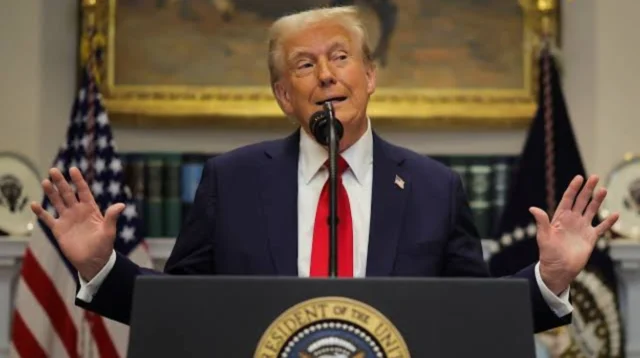
The Trump administration has placed considerable emphasis on presidential authority and direct negotiation. Trump’s approach relies heavily on personal diplomacy, public pressure and the threat of economic or military consequences. His UN speech again demonstrated that style, as he warned Iran of further military action if Tehran did not reach an agreement with Washington.
But presidential statements and government outcomes are not the same thing. A president can threaten action against another country, but implementation can depend on military planning, congressional funding, international cooperation and the willingness of the target government to respond. The same applies to diplomatic agreements. Even when a president announces progress, the practical value of an arrangement depends on what other governments actually implement. This distinction is particularly relevant to the events of the past week, when several initiatives produced partial or uncertain results rather than the decisive outcomes suggested by the administration’s public messaging.
The Iran conflict is becoming a test of executive authority
The war with Iran has become the most consequential example. Trump has presented the conflict as evidence of American military power and has argued that US action prevented Iran from obtaining a nuclear weapon. Iran maintains that its nuclear programme is peaceful. Yet the conflict has continued for months.
Reuters reported that the war has disrupted energy supplies and expanded beyond the initial theatre, including effects involving Yemen and the Red Sea shipping corridor. The continued conflict has therefore created consequences extending beyond the president’s original military objectives. That creates an important accountability question. If a military campaign continues for an extended period, the administration must increasingly answer questions about its objectives, costs, legal authority and end state. The longer a conflict continues, the more difficult it becomes to evaluate presidential power simply through individual military actions. The relevant question becomes whether the administration can establish a sustainable political outcome from the use of force.
Congress remains an important constraint
The limits of presidential power are not only international. The US constitutional system gives Congress significant responsibilities concerning funding, legislation and war powers. Those institutional responsibilities become increasingly important when a foreign-policy campaign produces continuing military and economic costs.
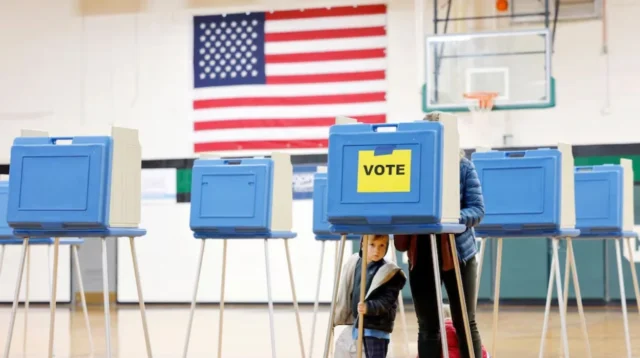
Trump’s foreign-policy agenda therefore operates within a political system where Congress can influence the resources available to the executive branch and determine whether particular policies receive legislative support. Reuters reported that Trump’s Republican Party faces the November midterm elections with control of Congress at risk. That matters because congressional control can affect the administration’s ability to sustain policies requiring legislation, funding or continued political support. The president may control the executive branch, but the executive branch does not operate independently of the wider constitutional system.
The Xi summit shows another limit
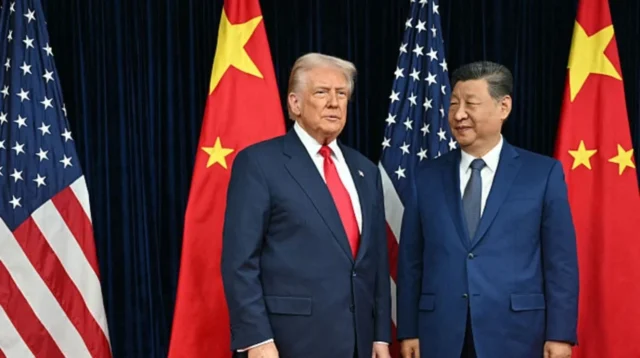
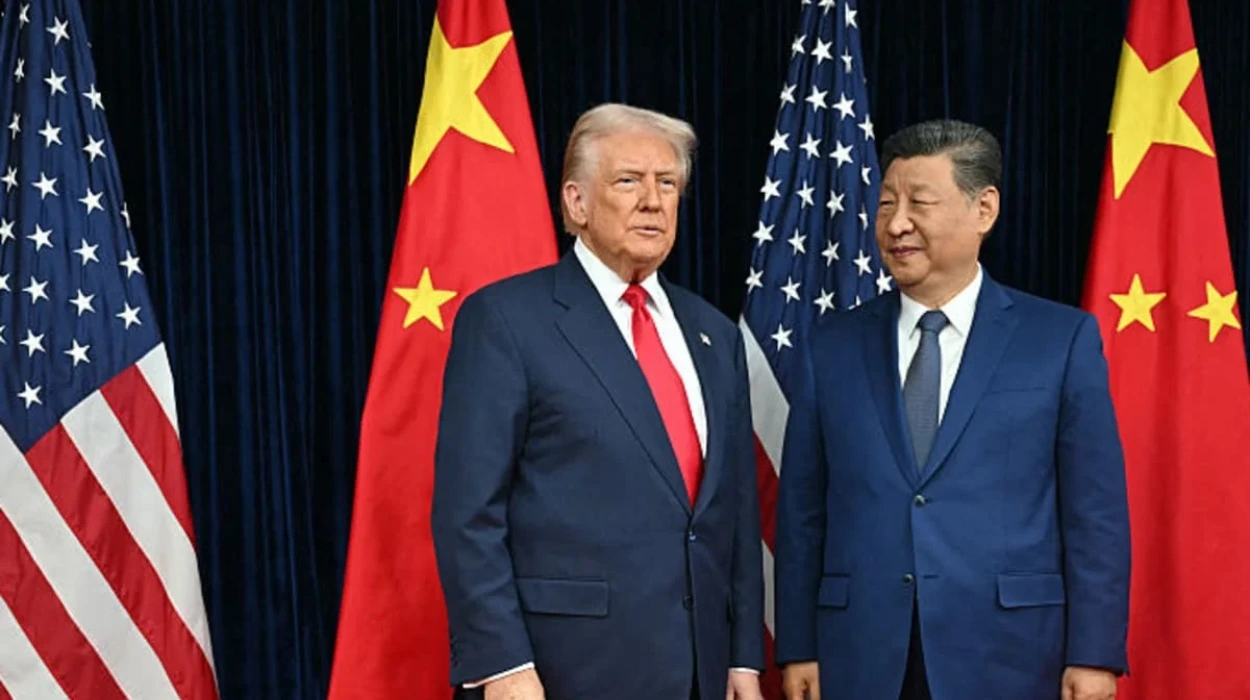
Trump’s meeting with Xi Jinping provides a different example of presidential constraints. The summit was designed to demonstrate engagement between the leaders of the world’s two largest economies. Yet the most tangible reported result was a two-month extension of an existing trade truce. Major disagreements involving artificial intelligence, Taiwan, trade and Iran remained unresolved.
China also retains important economic leverage. Beijing’s control over rare-earth minerals has become particularly significant because those materials are important to technology and automobile manufacturing. Reuters reported that Trump’s previously confrontational approach toward China has been tempered by Beijing’s ability to restrict supplies of critical materials. The institutional significance is straightforward. Presidential authority does not eliminate economic interdependence. Even the White House has to account for the practical consequences of decisions made by another sovereign government.
Foreign governments can reject Washington’s demands
Another feature of the week was the degree to which foreign governments openly resisted Trump’s preferred outcomes. Brazilian President Luiz Inácio Lula da Silva criticised foreign interference and argued for cooperation rather than military patrols in addressing regional security problems.
Ukraine and Russia did not accept Trump’s push for a limited energy ceasefire. Canada, European governments, China, Iran and Russia have also demonstrated that they retain their own policy choices even when Washington applies diplomatic or economic pressure. Reuters cited Eurasia Group president Ian Bremmer as arguing that governments are increasingly willing to reject Trump’s demands compared with the previous year. This is an important distinction between influence and control. The United States can exert substantial pressure on other governments. But influence is not equivalent to authority over sovereign states.
Greenland demonstrates the difference between a demand and an agreement
The Greenland issue offers a particularly clear example. Trump previously demanded that the United States acquire Greenland and had threatened the possibility of force if necessary. During the diplomatic week, however, he announced an arrangement with Denmark and Greenland involving an expanded US military presence on the island.
That represents a materially different outcome from outright US control. Reuters described the arrangement as falling short of Trump’s earlier demand to “own” Greenland. The development illustrates how negotiations modify presidential objectives. A president can begin with a maximal demand, but the final arrangement depends on the government on the other side of the negotiation. For transparency and accountability purposes, this distinction matters because public announcements can create an impression of control that later agreements do not necessarily support.
The United Nations provides another institutional constraint
Trump’s appearance at the United Nations also highlighted the tension between presidential power and international institutions. His speech strongly defended US military action and criticised international bodies that he views as constraints on American sovereignty. He also renewed his opposition to the International Criminal Court’s authority over US military personnel.
But international institutions continue to provide forums where other governments can challenge US policy. The UN General Assembly allows governments to publicly respond to American actions. The Security Council provides another diplomatic arena. International organisations also create mechanisms through which governments and independent investigators can document disputes involving US actions. The president can reject those institutions’ authority in particular circumstances, but doing so does not eliminate their ability to scrutinise or politically challenge US policy.
Economic consequences can constrain foreign policy
The Iran war has also demonstrated that foreign-policy decisions can produce domestic economic consequences. Reuters reported that the conflict has driven up US gasoline prices and contributed to pressure on Trump’s domestic political position.
That creates another form of constraint. A foreign-policy decision can be made at the presidential level, but its consequences are experienced by consumers, businesses and voters. Higher energy costs can affect household finances, transportation costs and inflation expectations. These effects can eventually become political issues for Congress and the administration. Foreign policy therefore cannot always be separated from domestic governance.
The China relationship shows why leverage is not unlimited
The Xi summit also demonstrates that the United States and China possess forms of leverage over one another. Washington has substantial economic, technological and financial capabilities. Beijing controls important manufacturing capacity and critical mineral supply chains.
That mutual dependence means that neither side can necessarily impose all of its preferred outcomes. Reuters reported that the summit produced little apparent progress on several major issues despite the extensive diplomatic ceremony surrounding Xi’s visit. For the US government, this creates a transparency issue around how diplomatic success is measured. A summit can produce agreements and positive public statements, but the public also needs to know what was actually resolved, what remains disputed and what commitments are enforceable. Diplomatic symbolism and policy outcomes should not be treated as the same thing.
Ukraine shows the limits of pressure without agreement
The Ukraine issue presents another test. Trump sought to persuade Russia and Ukraine to agree to a limited halt in attacks against energy infrastructure. Reuters reported that the effort gained little traction.
The situation demonstrates that even when Washington has significant diplomatic and economic leverage, both parties to a conflict retain their own calculations. The United States can propose terms, apply pressure and offer incentives. It cannot unilaterally impose an agreement on Russia and Ukraine without the parties accepting the arrangement. This also creates an accountability question for the administration. When a proposed agreement does not materialise, the public needs to understand whether the obstacle was a disagreement over terms, unwillingness by one side, insufficient US leverage or a broader failure in the negotiating strategy.
Presidential power depends on institutions beneath the presidency
The events of the week demonstrate that presidential foreign policy is implemented through a much larger institutional system. The State Department conducts diplomacy. The Pentagon executes military policy. Intelligence agencies provide information. Congress controls significant funding and legislative authorities. Federal agencies manage sanctions and economic restrictions. Allies provide military and diplomatic cooperation.
The president can direct much of this system, but cannot make the underlying institutions disappear. That is particularly important when foreign policy becomes prolonged or controversial. Institutional checks become more significant as the costs of a policy increase.
Public accountability depends on measurable outcomes
The administration has defended its foreign policy by pointing to achievements and arguing that Trump’s approach is producing results. A White House official told Reuters that Trump was focused on results rather than posturing and rejected the suggestion that his foreign policy had reached an impasse. The official also argued that leaders sometimes make different statements publicly from what they tell Trump privately.
That claim cannot be independently assessed simply from public speeches. It highlights an important transparency problem, however. If diplomatic achievements depend on private conversations, the public may have limited ability to evaluate what has actually been agreed. This makes measurable outcomes especially important. Agreements that are written down, implemented and independently observable provide a clearer basis for assessing presidential claims than private assurances that cannot be verified.
The midterms add another institutional test
The November midterm elections introduce another potential constraint on the administration. Reuters reported that Trump’s Republican Party faces the possibility of losing control of Congress.
The electoral result will be determined by voters, not foreign governments or the White House. But a change in congressional control could alter the domestic political environment in which the administration conducts foreign policy. Congressional committees could increase scrutiny of military operations, spending, sanctions, diplomatic decisions and executive authorities. This does not mean that a particular electoral outcome will automatically produce a particular foreign-policy result. It means that congressional composition is an important institutional factor in determining the checks available to the executive branch.
Why the week matters for democratic accountability
The significance of Trump’s diplomatic week extends beyond whether individual initiatives succeeded or failed. It demonstrates how presidential power operates within a system of competing institutions and sovereign governments. The president has substantial authority over diplomacy and executive action. But Congress controls important resources and legal authorities. Courts can review executive actions. Federal agencies operate under statutory mandates.
Allies and adversaries can reject US demands. International institutions can challenge American policy. And voters ultimately determine who controls the elected branches of government. These constraints are not necessarily evidence that presidential power is weak. They are part of how power is distributed within the American political system and the international system. The transparency question is whether the administration clearly distinguishes between presidential decisions, negotiated agreements, preliminary proposals and outcomes that have actually been implemented.
The coming months will provide a clearer test of how much of Trump’s diplomatic agenda can be converted into durable policy. The Iran conflict remains unresolved. The Ukraine process has yet to produce the limited energy ceasefire Washington sought. The US-China relationship continues to involve major disagreements despite the latest summit. And the Greenland arrangement demonstrates that negotiations can produce outcomes substantially different from the president’s initial demands.
Congressional politics will add another layer of uncertainty as the November midterms approach. For DCT, the central issue is therefore not whether Trump’s diplomatic style is strong or weak. It is whether the administration can convert presidential authority into durable, transparent and measurable government outcomes while operating within constitutional checks, congressional oversight and the independent decisions of other governments. The events of this week provide a useful case study in that distinction: presidential power can shape the agenda, but institutions, Congress, economic realities, allies and other sovereign states ultimately help determine what that power can achieve.