American artificial intelligence firms are escalating their push into Washington at a pace that reflects how central federal policy has become to the future of the industry. OpenAI, Anthropic, Google and Microsoft have sharply increased lobbying spending, with the newest filings showing record sums being deployed to influence the rules that will govern AI safety, model oversight, export controls, cybersecurity and data-center expansion.
The surge is more than a routine expansion of corporate advocacy. It signals that the biggest players in AI now see the policy arena as one of the most important battlegrounds for market access, product deployment and long-term business strategy. The growing spending spree also underscores a broader reality: Washington is no longer treating AI as a niche technology issue, but as a matter of economic competition, national security and regulatory design.
Record spending and rising stakes
This is most obvious through the sheer scale and scope of the lobbying bills being filed. In the first six months of 2026, OpenAI has spent $2.22 million in federal lobbying expenses, more than twice what it has spent in the same six months of 2025. Meanwhile, Anthropic spent $3.53 million in federal lobbying in the first six months of 2026, almost three times its expenses during the same time period the previous year. The sum spent in the second quarter of 2026 was $3.17 million, which is a 23% rise compared to the previous quarter.
The significance of these numbers is in how much they demonstrate that the lobbyists have become a central component of business operations rather than a peripheral aspect. Lobbyists are now considered an important cost in the same manner as engineering and public relations. For example, Anthropic’s lobbying expenses in the first six months of 2026 have been higher than those in all of 2025, while in the second quarter of 2026, OpenAI’s expenses have been its highest in any quarter to date.
The spending increase also reflects how quickly the policy environment is tightening. As lawmakers, regulators and White House officials weigh how to govern advanced AI systems, firms are competing to influence everything from safety testing to export rules. The result is a lobbying market that looks increasingly like an arms race, with each major company trying to ensure its voice is heard before the rules harden.
Policy fights driving the campaign
There is more at stake for the firms than just publicity. They want to influence the content of the federal AI policy itself. Among the key topics are export control, cybersecurity standards, safety requirements, model testing, liability exposure, and possible data center regulations. All of those questions have huge commercial implications, ranging from the speed at which models can be deployed overseas to the cost of running AI infrastructure within the US. That is precisely why the lobbying effort is so wide-ranging.
In addition to OpenAI and Anthropic, other major players such as Google and Microsoft are lobbying, reporting expenditures approaching their highest quarterly rates since 2020. Meta continues to be the leading tech lobbying spender overall with $5.99 million in the quarter, while Google spends $3.57 million and Microsoft $2.69 million.
The case made by the industry is simple, though its intricacies are complex. Businesses seek regulations that guard against any kind of misuse without stifling innovations and compliance issues that might discourage investments. On the other hand, it is argued that the absence of any guidelines would increase the possibility of the misuse of the AI technology with regards to misinformation, job losses, privacy, and national security. This is precisely why the present lobbying effort is important. It is not only an effort of influence. It is much more than that.
Washington becomes the main arena
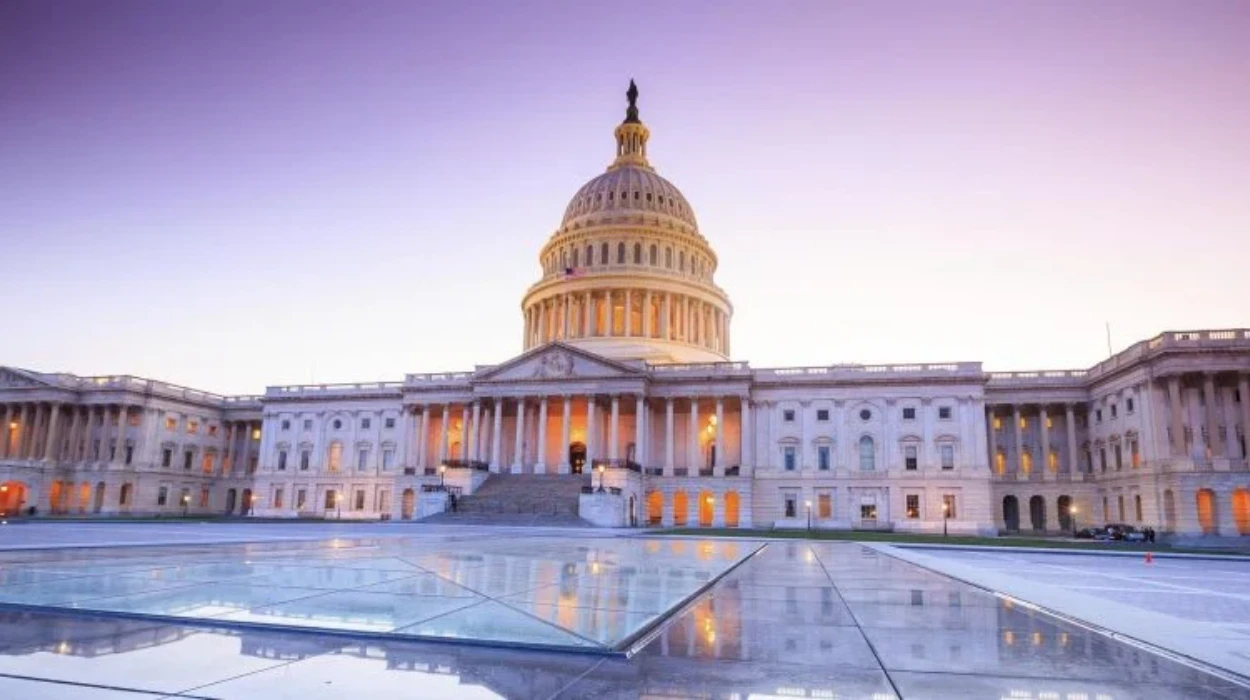
The size of the lobby campaign is an illustration of how embedded policy-making about artificial intelligence has become within the core of U.S. politics. Congressmen now consider the industry under the light of competition, security and economic resilience. This makes the process very important as early decisions made could influence the market for decades to come. What is more, AI companies are lobbying at a time when the calendar is making the power of lobbying even more valuable. The report refers to the election cycle as well as the upcoming scrutiny regarding going public as the other factors that contribute to the increase in lobbying.
In other words, the campaign is at once defensive and strategic. On the one hand, companies do not want restrictive regulation while on the other hand, they want to be perceived as credible stakeholders.
The broader tech sector has already demonstrated how expensive this kind of influence can be. A separate analysis said the biggest tech and AI firms collectively spent $109 million on lobbying in 2025, the first time the group crossed the $100 million threshold. Another review found that eight major tech, AI and social media companies spent $36 million on federal lobbying in the first half of 2025. Those figures suggest the current year is likely to set another record unless the pace slows dramatically.
The arguments behind the spending
Behind the money are competing narratives about what AI regulation should look like. Industry executives argue that the United States must remain competitive with China and other major powers, and that heavy-handed rules could push innovation overseas. They say that clear, flexible regulation is preferable to fragmented state-level rules or vague restrictions that create uncertainty for companies and investors.
However, the critics see things differently. According to them, the industry is investing heavily exactly because it is trying to make sure that its influence on regulation becomes more soft before any rules are adopted. This argument is particularly relevant in relation to the questions of advanced model testing, deployment and transparency requirements, which even the slightest demands will entail high costs for companies working on developing innovative products. The scale of investments suggests that for the companies, the outcome of the debates will become an integral factor in revenues, valuation and positioning.
Perhaps, one of the key aspects of the issue is that, nowadays, lobbying efforts in the field of artificial intelligence have become not only the question of technology policy per se. On the contrary, it has become intertwined with labor, international trade, infrastructures, immigration, military and industry policies, making each policy choice relevant to many sectors at once.
What the numbers reveal
The numbers are indicative of an industry that is transitioning from a stage of experimentation to one of institutional clout. With a first half spend of $2.22 million by OpenAI and $3.53 million by Anthropic, and a combined second quarter total of $3.17 million, there is no doubt that having influence on public policy is being increasingly seen as an absolute requirement today. Moreover, the numbers themselves reveal that the expenditure is not limited to one or two outliers but is being made by other industry leaders like Google and Microsoft as well.
This makes it clear that this lobbying campaign will only continue to heat up in the coming periods. Once the companies start investing to this extent, it will be very hard for them to stop since their competitors will continue to do the same.
There is also a reputational dimension. Companies want to be seen as responsible actors that are helping shape sensible policy. That is why the messaging around AI lobbying often emphasizes safety, innovation and public benefit, even while the practical aim is to preserve room for growth. In Washington, influence is rarely framed as influence. It is framed as expertise, partnership and public interest.
Bigger picture for AI politics
The broader significance of this lobbying surge is that it marks a turning point in how AI power is exercised. For years, the conversation centered on technical breakthroughs, product launches and competition among firms. Now, the fight has expanded into Congress, federal agencies and the regulatory apparatus that will decide how those breakthroughs are used. That makes lobbying one of the clearest indicators of where the real conflict is shifting.
It also follows that any efforts to manage AI will be undertaken amidst strong commercial pressures. Policy makers will have to weigh the importance of fostering innovation and mitigating risks, or try and find some middle ground. The businesses affected most by the decisions made by policy makers are taking an aggressive approach toward shaping this process. This is precisely why it is crucial to pay attention to the latest expenditure figures: apart from being purely financial data, these numbers reflect expectations regarding the next stage of AI politics. In other words, Washington is telling us that it is high time we stopped treating the matter of regulating AI lightly, or that it is simply too big a deal to overlook.