A quiet but consequential debate is now running through the Democratic Party: whether climate change should remain a front-and-center political message or be folded into a broader affordability agenda. The controversy, increasingly described as “climate hushing,” has prompted activists, academics, and senior Democrats to push back against what they see as a dangerous retreat from one of the party’s defining issues.
According to the latest statistics, Democrats have significantly toned down their mentioning of the climate change issue on social media, press releases, and during campaign rhetoric despite the fact that the climate problem is getting worse while Republicans continue to attack clean energy policies. For climate advocates, the strategy can turn out to be not only tactically wrong but politically flawed.
Why the silence is happening
The reasoning for this climate hush is quite simple. After the 2024 election, many Democrats believed that the cost of living was what mattered more to the voter than the climate talk, so the Democrats now talk about “energy affordability,” utility rates, and kitchen table economics. There are some Democrats and strategists who feel that the climate issue must be talked about only in terms of the cost of legislation, bills, jobs, and energy security and not as an independent crusade. This has become a common theme in the congressional faction of the party. According to a report by Inside Climate News, “climate references in Democrats’ press releases have plummeled since 2025,” owing to the constant attack on renewable energy in the Trump Administration and the increase in oil prices.
Activists push back
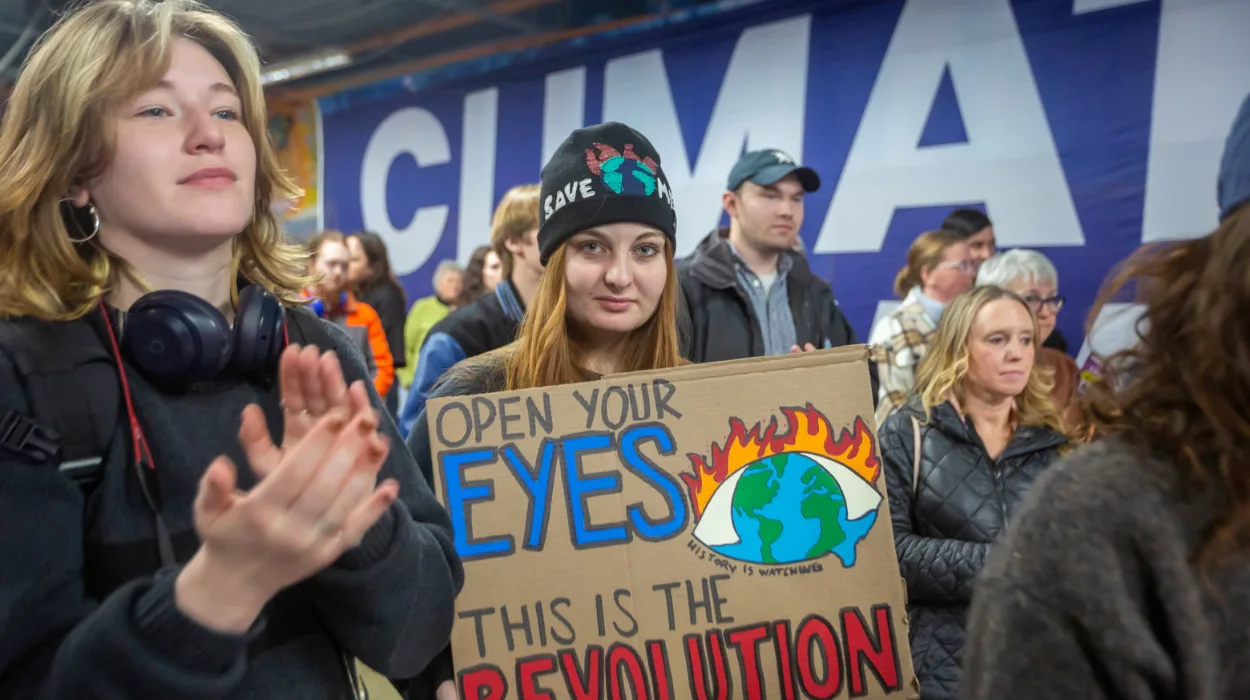
Climate activists and public-opinion researchers say Democrats are reading the room incorrectly. Anthony Leiserowitz of Yale’s Program on Climate Change Communication argues that many Democrats have become “scaredy cats” about talking climate, even though a December poll from his organization found 41 percent of Americans want candidates to talk more about climate change, compared with 22 percent who want them to discuss it less. That gap is central to the activist argument: talking less about climate may not be a winning strategy, and it may actually depress enthusiasm among supporters.
Sen. Sheldon Whitehouse has become the loudest Democratic voice against the retreat. In a social media thread and follow-up comments, he rejected the notion that Democrats should avoid climate messaging, saying,
“Anyone who thinks Democrats should avoid talking about climate change are wrong about pretty much everything,”
according to E&E News. He also warned that silence creates its own political climate, saying,
“When leaders don’t talk about something, enthusiasm falls among voters”.
Whitehouse’s broader argument is that climate is not a niche or symbolic issue but an economic one. He has repeatedly tied fossil fuel pollution to home insurance hikes, property values, storm damage, and family costs, insisting that Democrats can talk about climate and affordability at the same time. In his view, the party’s problem is not too much climate talk, but too much “poll-chasing” — a habit of mirroring voter sentiment instead of shaping it.
What the polling shows
New polls mentioned in the news story make this assumption invalid. According to Matto Mildenberger from the University of California, Santa Barbara, the 2035 Initiative conducted two surveys this summer, in which there were around 3,500 participants, weighted to represent the U.S. electorate. The researchers discovered that bringing climate change to the topic of conversation was “neutral to helpful” from a political perspective. Specifically, it was found that around two-thirds of the respondents approved of the federal government’s initiative to allocate money for investing in solar and wind power independent of whether it was described as tackling climate change, developing new energy resources, or fighting pollution.
What is more, it was found that over 60 percent of Republicans in the survey approved of such measures, and there was no decline in approval rates when the term “climate” was used. In fact, respondents preferred candidates who prioritized climate change by a margin of 4.5 percent. Thus, Matto Mildenberger concludes, climate is not nearly as politically risky as Democrats think.
Still, everyone involved agrees climate is not the top voter priority. The Grist reporting says Yale polling placed climate 12th out of 15 issues, behind the cost of living and health care, but ahead of foreign policy and AI. That ranking is the core of the debate: if climate is not a top concern, should Democrats emphasize it anyway, or keep it in the background while they work on the issues voters rank higher?
The Democratic split
However, the internal division within the Democratic Party does not actually hinge on the question of whether or not climate change is important; rather, it has to do with how to make it politically resilient. While some politicians feel that climate policy needs to be passed in quiet legislation and not become a partisan battle over identity, others, especially the “climate hawks,” think that if it goes away from the political discourse, so will any chance of passing anything in the future.
He has argued that clean energy is the “cheapest, cleanest, fastest” power to add to the grid, and he has stressed the slogan
“Cheap is clean, and clean is cheap”.
That framing reflects a broader Democratic instinct: keep the climate agenda, but dress it in economic language that avoids sounding doctrinaire.
Rep. Ruben Gallego has made a similar case, saying,
“The solution is: Come up with a solution that solves both the climate change problem and the energy problem”.
His point, echoed by other Democrats, is that climate politics need not be lost if they are translated into immediate household concerns. The challenge is whether that translation preserves the urgency of the issue or slowly erases it.
Whitehouse versus the reset
In Whitehouse’s view, it goes further than that. Democrats have made an error in their strategy by downplaying the climate discussion precisely when Republican initiatives have been damaging the climate institutions and clean energy investments. He points out that the attacks from the Trump administration on renewable energy, climate science and monitoring have only increased the need for public pressure on the government. In addition, he was critical of the efforts to narrow climate discussion to electricity costs only.
As reported by E&E News, he challenged the view that the focus on electric bills can replace the discussion of emissions from fossil fuels, stressing that Democrats will still have to deal with the fossil fuel lobby. However, it seems that he is not totally alone in his opinions. The reporting states that many other climate-focused Democrats believe that the Democrats need to connect the climate to economy and even say that it is finally “breaking through.” For example, Rep. Sean Casten stressed that the importance of climate problem implies that Democrats should discuss it all the time, but he also recognized that the most effective way could vary at times.
The bigger political risk
The central risk in climate hushing is not simply that Democrats may talk less about climate. It is that reduced public discussion can weaken the sense that climate remains a governing priority at all. Mildenberger argues that without debate and attention, Democrats may fail to pass meaningful climate policy when they next hold power. He points to the 2020 election debate over climate as part of the momentum that eventually helped produce the Inflation Reduction Act in 2022.
That argument is persuasive to activists because political salience often shapes legislative opportunity. If the issue is absent from campaign discourse, voters may assume it is settled, secondary, or too risky to revisit. Over time, that can narrow the window for serious action even when the policy solutions already exist.
At the same time, critics of climate-first messaging say public-policy success often depends on stealth rather than spectacle. They argue that climate provisions embedded in bigger economic or industrial bills may survive longer than highly partisan climate branding. The tension is clear: loud messaging can build urgency, but quiet policymaking can sometimes produce more durable results.