The Trump administration scheme of channelling legal representation for undocumented migrant children into a single, politically well-connected law firm in Texas failed spectacularly this week following the firm’s decision to pull out. Burke Law Group refuses migrant children contract: this is a solution to one problem and more questions arise on issues of due process, procurement and what is next for counsel for the tens of thousands of undocumented migrant children. This comes at a time when there are federal grants that have lapsed, outstanding payments and increased deportation efforts.
The offer, the refusal, and the official record
Federal officials confirmed that the Office of Refugee Resettlement (ORR) had approached Burke Law Group about a $150 million grant to represent unaccompanied children—roughly 1,800 in federal shelters and an estimated 22,000 more living with sponsors while facing deportation. On Tuesday night, the firm posted a brief statement on social media saying it had been approached “to fill a gap in legal services” and had considered applying for a “small portion” of the funding but ultimately decided not to pursue it. The next day, ORR issued a terse confirmation: “Burke Law Group has declined to apply and has not been awarded any grant,” the agency said in an emailed statement.
The timing is important. At first, media had carried news that the government was planning to grant a no-bid contract to Burke following the expiry of an extensive network of almost 100 legal providers at the end of July. The previous contract, run by the Acacia Center for Justice, had provided legal services to over 20,000 unaccompanied children across the country. When it expired, the legal providers had sounded warnings of immediate repercussions, even as states had begun to lose hundreds of children’s legal representation within days of the expiry of the contract.
Why Burke’s profile fueled controversy
Burke Law Group is a Houston-based firm with fewer than 30 attorneys and a practice centered on corporate transactions, environmental regulation, and government affairs. Until recently, immigration was not a core competency; the firm added an immigration page and hired two immigration lawyers as the contract story broke. That mismatch—between the scale of the assignment and the firm’s immigration bench strength—became a flashpoint.
The political affiliations of the firm were equally important. The founder of the firm, Marcella Burke, worked for President Donald Trump in his first administration as a lawyer in the EPA and then as a lawyer in the Department of the Interior. Another founding partner, Jeffrey Hall, is currently serving as an assistant administrator at EPA. The firm also included lawyers who were conservative such as Justin Shubow, who was an advocate of Trump’s mandate on classical architecture and was appointed to U.S. Commission of Fine Arts. Ilya Shapiro is identified as senior counsel. These affiliations created an impression that whether one firm can protect the rights of children when government is also part of litigation process.
The legal and humanitarian stakes for unaccompanied minors
Under the Trafficking Victims Protection Reauthorization Act (TVPRA) of 2008, the federal government is required to provide legal representation for children placed in deportation proceedings. That mandate is not merely procedural; immigration judges and advocates have long documented that counsel dramatically improves outcomes for minors, many of whom are trafficking survivors, victims of violence, or fleeing persecution. When the Acacia contract expired on July 31, 2026, providers warned that tens of thousands of children faced hearings without lawyers. In New York alone, more than 700 children in the city and over 1,400 statewide were at risk of losing representation. Michigan reported more than 500 children affected.
The funding dispute deepened the crisis. Providers said the Department of Health and Human Services had withheld $65 million in appropriated funds, forcing some organizations to turn away new clients and pushing others toward closure. A coalition of frontline groups warned that without immediate federal action,
“tens of thousands of unaccompanied immigrant children are at imminent risk of losing access to legal representation and will be forced to self-represent against trained government attorneys.”
One advocacy headline captured the fear starkly: “Children are going to die,” advocates decry migrant-child legal contract.
Interim fixes and the December cliff
Following Burke’s resignation, the administration gave out a $20 million temporary contract up until December to the U.S. Committee for Refugees and Immigrants (USCRI) as a stopgap measure for representation. While USCRI attorneys started representing the cases in court last week, the change was not seamless as well. Providers found themselves confused because most of the USCRI attorneys had not yet met the children whom they are supposed to represent.
This is reflective of a general fact that immigration representation for minors is highly relationship-based and requires establishing of trust, trauma-informed intake, and collaboration between sponsors and shelters, all of which cannot simply be turned around. However, even with the temporary arrangement made by the government, there is another hard deadline approaching. The temporary arrangement will expire in December without any publicly announced plan of continuation. If the government fails to act on that deadline, the whole process may go back to how it was during July.
Procurement, politics, and the optics of a no-bid award
The initial plan to award Burke a no-bid, single-award contract drew immediate criticism from good-government and immigration advocates. Consolidating representation for thousands of children under one firm—especially one with minimal immigration experience—raised red flags about competition, oversight, and the appearance of patronage. The firm’s own statement did little to quell concerns; it acknowledged being approached “to fill a gap in legal services” but offered no explanation for declining beyond noting it had considered only a “small portion” of the grant.
ORR’s confirmation—
“Burke Law Group has declined to apply and has not been awarded any grant”
—closed the loop on this specific award but did not address the underlying procurement strategy. The broader question remains: why pursue a single-firm solution for a statutorily mandated, nationwide service that had previously been delivered by a diverse network of nearly 100 providers? The answer likely intersects with the administration’s broader immigration enforcement posture, which has emphasized speed and centralization. But speed, in this context, risks colliding with due process.
The court order, unpaid fees, and the path to stability
Some steps towards stability were taken through legal action. Following a lawsuit filed by healthcare providers for nonpayment, the US government was compelled by a judge in California federal court to release the held back money on Aug. 6; by midweek, some had begun to receive part of their money, about six out of the nine months owed. This move might temporarily help some organizations survive, but it does not address the fundamental issue of a lack of contract.
Legal aid leaders have been explicit about what they need. In late July, frontline providers warned that the Trump administration had
“withheld payment from legal service providers representing unaccompanied children in an effort to force them to turn over sensitive, privileged information about the children they represent.”
That allegation, if true, would pit the government’s investigative interests against attorney-client privilege—a conflict that cannot be resolved by swapping one contractor for another.
What this means for children in immigration court
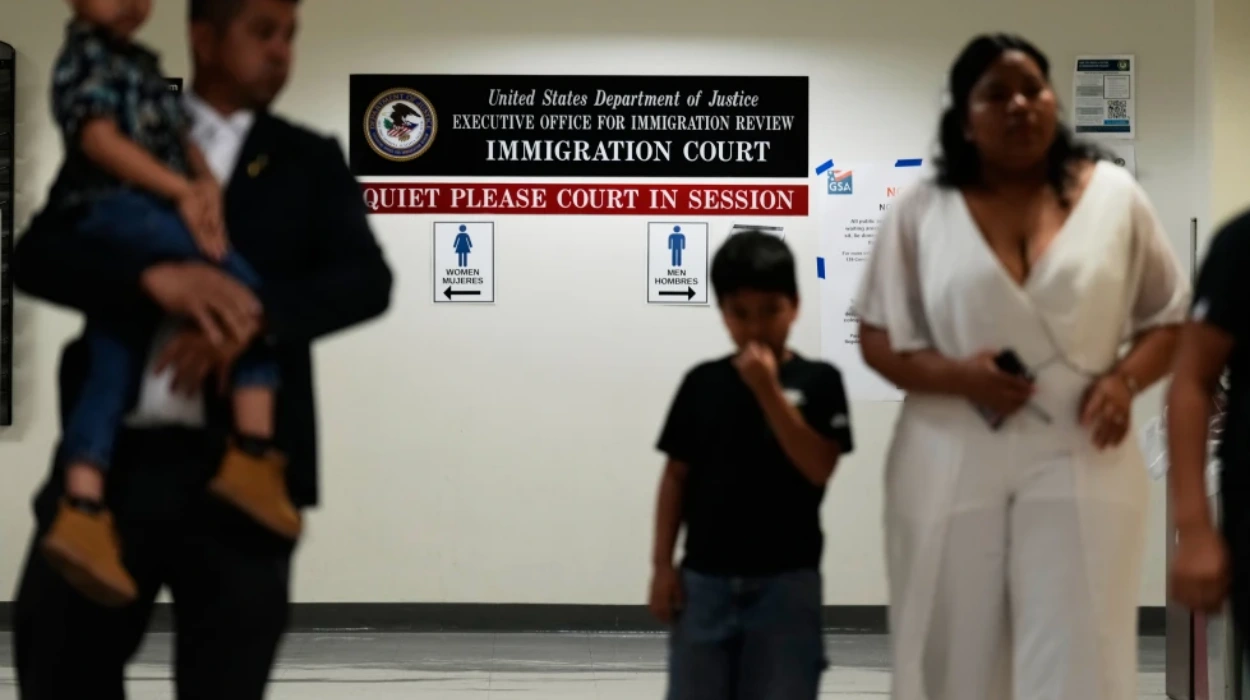
But for the time being, the immediate threat of a complete breakdown of the counsel has passed, although not the risk itself. Kids who are housed in federal facilities and those living with their sponsors will continue appearing before immigration judges, within a matter of weeks after arriving at the border. In the absence of consistent and experienced representation, the chances are much higher of being late on deadline, of filing the application incorrectly, or of failing to make credible fear arguments. The implications could not be more serious since asylum, SIJS, or another kind of relief may be literally life-saving and prevent deportation back to danger. What advocates say is that the answer to the problem is not one politically connected law firm but the reestablished network with full transparency, proper funding, and clear ethical standards.
As one advocacy briefing put it, the collapse of funding would force children to
“self-represent against trained government attorneys.”
In a system where the government controls detention, transport, and prosecution, that imbalance is profound.
The road ahead: policy choices and accountability
The fact that Burke has withdrawn from the process means that one controversial chapter has been dropped but the problem still remains. The government could now go ahead and choose between two options – either commit to a model of competing providers with awards and performance measures, or continue with consolidation based on the principle of controlling versus capacity.
As for the legal community, it will be waiting to see whether the interim USCRI contract is used as a bridge to some kind of permanent system or just another quick fix before yet another shift in December. The issue of accountability is another very important one. In case the government decides to centralize representation, it has to show how it will control the conflict of interests, attorney independence and privileged communication. In case it decides to decentralize, it should finance the providers properly and pay its bills.