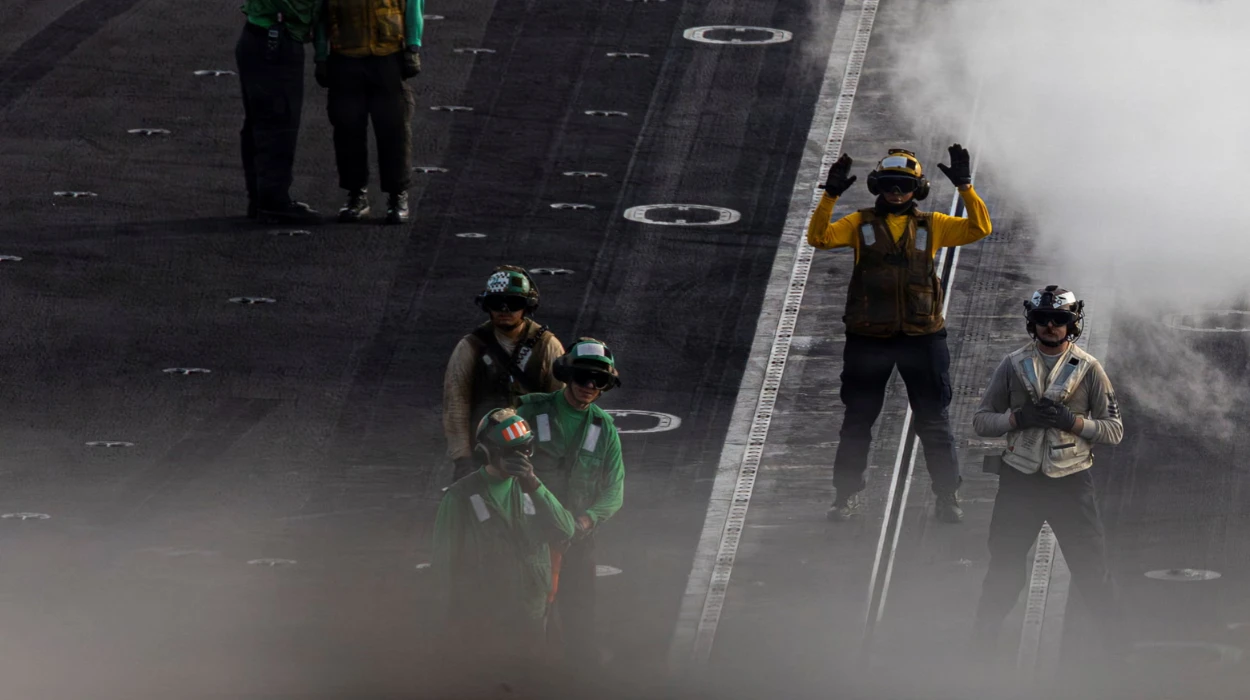
The USS Abraham Lincoln, a Nimitz-class nuclear aircraft carrier, has become the focal point of a growing controversy within the US Navy, as reports of deteriorating living conditions and a mental health crisis among its 5,000-strong crew clash with official denials from the Pentagon. For nearly nine months, the carrier has been at sea, primarily in the volatile waters of the Middle East, supporting US operations in the ongoing war with Iran. This extended deployment, which has seen the ship go more than 250 consecutive days without a significant port visit, is now being described by veterans and experts as a “giant floating city” pushed to its breaking point. The situation has sparked a fierce debate between lawmakers, military families, and senior defense officials over the human cost of modern naval warfare and the limits of sailor resilience.
The Human Toll of a “Floating City” at War
Life on an aircraft carrier is well-known for being extremely tough; however, the situation on board the Lincoln seems to be even more complicated than usual. According to Armen Kurdian, retired Navy captain who served on the same ship two decades ago, the aircraft carrier can be seen as “a giant floating city” accommodating around 5,000 people and providing 15,000 meals a day. Although he admitted that plumbing failures and broken machines are typical things, he also noted that these troubles may “have a depressing impact.” The problem in general, in his opinion, lies not in the duration of the deployment but in its continuous character.
“That will take a toll on people when you don’t get to stand on dry land for a while,”
he said, highlighting a fundamental human need that has been denied to the Lincoln’s crew since they left San Diego in November 2025.
This sentiment is echoed by higher-ranking officers. Retired Vice Admiral Robert Murrett pointed out that typical carrier deployments are closer to six months and almost always include port visits for rest and recuperation. The Lincoln, he noted, has had
“none of that since they left San Diego last November”
and has been under combat conditions for much of the time.
“That’s very, very tough on a crew,”
Murrett stated, underscoring the unique pressure of sustained combat operations without a break. He described carrier life as a “huge, compressed environment” with a lot of stress and inherent danger, a description that takes on a more ominous tone in light of recent events.
A Cascade of Failures: From Plumbing to Mental Health
However, the reports coming from the Lincoln ship are far more than the issues of simple aging and wear and tear of the equipment. Reports indicate lack of hygiene products such as toothpaste or soap, food shortages, and problems with contaminated water supply. This means that the crew cannot be supported at the base level in their activities. Coupled with malfunctioning toilets and moldy showers, these problems result in a situation, which is physically and psychologically difficult for the sailors. Perhaps the worst part of the story is the mental condition of the sailors, as multiple reports in Navy Times and Stars and Stripes mention several cases of suicide attempts made by the sailors onboard. There was even one case of man overboard, where the sailor had to be recovered and examined. One can only imagine the psychological burden carried by the spouses after hearing such statements as one of the sailors saying to his spouse that he hopes “doesn’t wake up tomorrow.”
The Official Line: Denial and Dismissal
In the face of these harrowing accounts, the official response from the Navy and the Department of Defense has been one of firm denial. The US Navy has acknowledged that
“extended deployments place a significant strain on our service members and their families”
but has simultaneously asserted that,
“Based on information available to the command, we have not identified an increase in reported suicidal ideation or suicide attempts aboard the ship.”
These arguments, stated in many ways, make up the basic argument for the Pentagon’s defense. The officials assert that the vessel has a “comprehensive support system” which includes “religious, medical, and psychological specialists,” along with “deployment resiliency counselors” and “chaplains.” Moreover, they state that in spite of the supply chain problems, the sailors have had constant access to drinking water, air conditioning, and healthy food.
Defense Secretary Pete Hegseth has been even more dismissive, labeling the media reports as “completely misrepresented.” He stated unequivocally,
“We make sure that every ship, every crew, every captain has everything we can provide them at every single moment.”
Hegseth praised the sailors for enduring “high seas” and “austere conditions with less port calls,” saying he has
“more respect and gratitude for those sailors than anybody.”
This rhetoric, while intended to show support, has been interpreted by critics as a refusal to acknowledge the severity of the problem, prioritizing a narrative of strength over the reality of suffering.
A Political Firestorm: Lawmakers Demand Answers
The disconnect between the reports from the ship and the official denials has ignited a political firestorm on Capitol Hill. Senator Richard Blumenthal (D-CT), a member of the Senate Armed Services Committee, sent a formal letter to Defense Secretary Hegseth and acting Navy Secretary Hung Cao demanding a full accounting of the conditions on the Lincoln. He cited the sailor and family reports of
“shortages of basic supplies, water contamination, plumbing issues, deteriorating mental health, deck safety concerns”
and mail disruptions. Blumenthal posed six specific questions to Pentagon leadership, including what metrics the Navy uses to track fatigue and morale, and set a 27 August 2026 deadline for a response. His message was clear:
“The men and women aboard the Lincoln have answered the call to serve their country… The Department owes them not only adequate supplies, maintenance, and support during this deployment.”
Representative Jason Crow (D-CO) was even more direct in his criticism, calling the strain on sailors and families “completely unacceptable” and stating it harms both health and military readiness. He accused President Donald Trump of showing
“time and time again that he does not care about our servicemembers”
and demanded a plan to end the “reckless war with Iran.” These statements reflect a growing bipartisan concern that the well-being of the crew is being sacrificed for political and strategic objectives, a charge that the administration vehemently denies.
The Psychology of Uncertainty and the Limits of Resilience
Beyond the immediate physical conditions, experts point to the psychological toll of uncertainty as a critical factor in the crisis. Retired Rear Admiral Nancy Lacore, who was recently ousted by Hegseth, drew on her own experience to explain the mental crushing weight of a deployment with no clear end. She recalled a time when her own expected return date was suddenly canceled, calling it “mentally crushing.” She said Lincoln sailors have “experienced that uncertainty repeatedly” as end dates kept shifting. Her warning was a direct challenge to the Navy’s narrative of unbreakable resilience:
“Our Sailors are tough and resilient. But their resilience shouldn’t be taken for granted or used as an excuse to keep asking more of them without a clear end in sight.”
This theory finds its backing in behavioral science. Terri Tanielian, a senior behavioral scientist specializing in deployments, stated that although long separations were challenging, not knowing when the troops will come back made the situation even more difficult both for the troops and their family members. She cited examples of long deployments in which mental strain was increased because of unexpected changes to the expectations of return dates. The issues that occurred in the Lincoln deployment, according to Tanielian, were “heartbreaking,” and it was necessary not only to counsel but also ensure adequate rest and exercise for the troops.
A Precedent of Strain and a Future at Risk
This problem does not seem to be a single case but rather a symptom of a wider issue of increased pressures associated with navy operations. At the beginning of 2026, the USS Gerald R. Ford has completed its mission and returned back home after 326 days away from port, which was the longest operation time for the US Navy carrier since Vietnam War. Similar to the case of the USS Abraham Lincoln, it had been involved in several issues during the mission including the outbreak of fire onboard and problems with food supply. There is ample academic evidence of this crisis. For example, in 2024, the research carried out by the Naval Postgraduate School, involving 873 sailors, demonstrated the connection between bad mood and shortened sleep. Additionally, the Naval Medical Research Center has carried out another 2024 study involving 58 submariners, who, during 30 days of the operation, slept only 6.6 hours per day and felt their mood deteriorating by the end of the mission.
This study adds a scientific background to the mentioned above concerns about exhaustion and poor morale among the crew of the USS Abraham Lincoln. The consequences of this crisis are much higher than those related to the 5,000 people onboard. An exhausted and psychologically unstable crew is a potential source of accidents and mistakes that may result in tragic outcomes of the combat operation. The mention of “deck safety concerns” points at this very issue. It would be extremely unwise on the part of the Navy’s leadership to ignore the mentioned problems and label them as exaggerations.